Global military spending surges on insecurity: report / Photo: Olga MALTSEVA - AFP

 UEFA's Ceferin tells Infantino to go, but 'not interested' in replacing him

 Oil falls as Trump pledges economic war on Iran

 Yamashita marches to nine-shot win in LPGA Canadian Women's Open

 Gauff powers past Pegula to win US Open warm-up in Cincinnati

 Japan's Olympic figure skating heroes to wed
 Cummins eyes ODI return ahead of 'big' South Africa Test series
 India police used excessive force during protests: Amnesty
 Rookie La Sasso wins LIV season-ender as tour's future in doubt
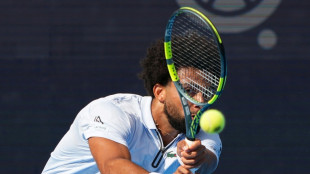 Fils tops Tiafoe to claim first ATP Masters title in Cincinnati bb/amz
 Clark fends off McIlroy to win BMW Championship

 Raphinha, Lopez hit braces as Barcelona trounce Elche

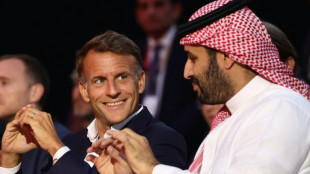 Macron hosts Saudi crown prince for visit ranging from esports to Mideast
 Jamieson gets Trump call after ending 14-year golf title drought
 Norwegian King Harald's health has 'deteriorated': palace

 Man City snatch late win in Maresca debut, Iraola's Liverpool rescue dramatic draw

 Trump takes starring role at Washington's IndyCar debut

 Villa boss Emery says it's down to Watkins to explain absence

 Duplantis labours to 'super difficult' pole vault win at Silesia Diamond League

 Max smash at zany Zandvoort: Three stories from the Dutch GP

 Brennan sprints to Vuelta stage two victory, Pogacar keeps red
 Duplantis conquers pole vault at Silesia Diamond League

 France's badminton gold winners set for obscurity back home

 Brighton start Premier League season with rout of 10-man Villa

 Maresca makes winning start with Man City after dramatic fightback

 Mo'unga returns for All Blacks against Johannesburg Lions
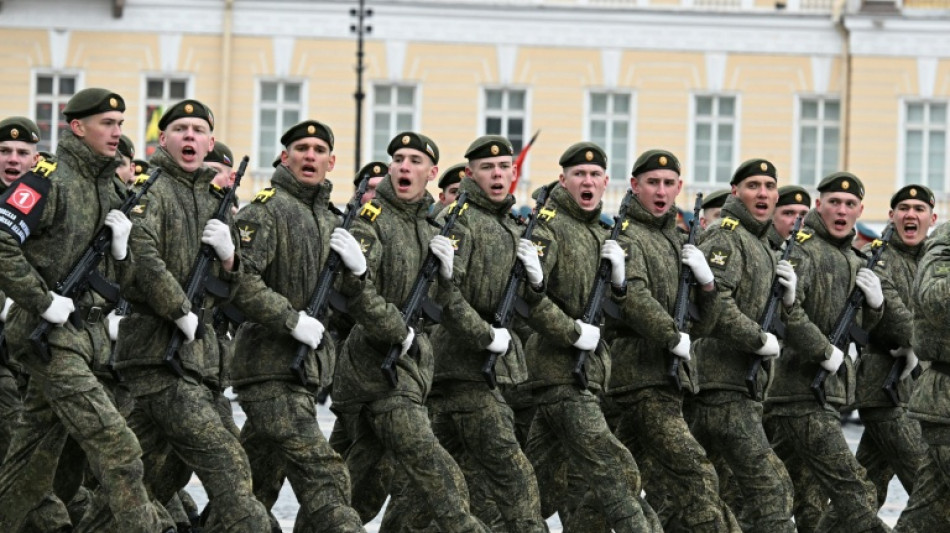
Global military spending reached nearly $2.9 trillion in 2025, marking an 11th consecutive year of growth, researchers said Monday, as insecurity and rearmament fuelled defence budgets.
The three top spenders -- the United States, China and Russia -- spent a combined total of $1.48 trillion, just over half of global expenditure.
Spending rose by 2.9 percent compared with 2024, despite a reduction by the US, the world's biggest spender, according to a report by the Stockholm International Peace Research Institute (SIPRI).
Researcher Lorenzo Scarazzato told AFP the decrease from the US was more than offset by increases in Europe and Asia, as the world marked "another year of wars and increased tensions".
Scarazzato said this was also reflected in the global "military burden" -- the share of worldwide GDP devoted to military spending -- which reached its highest level since 2009.
"Everything points to a world that feels less secure and is spending on its military to compensate for the global landscape," he said.
The US spent $954 billion, 7.5 percent less than in 2024, largely because no new financial military aid to Ukraine was approved. By contrast, Washinhton pledged a total of $127 billion to Kyiv over the previous three years.
But the decrease is expected to be short-lived as the US Congress has approved spending of over $1 trillion for 2026, which could rise to $1.5 trillion in 2027 if US President Donald Trump's budget proposal passes.
The main driver of the global increase was Europe -- including Russia and Ukraine -- where spending surged 14 percent to $864 billion.
"That is driven by two major factors. One is the ongoing war in Ukraine, and the other is the decreased US engagement with Europe," Scarazzato said.
He explained that the US is "pushing for Europe to take more care of its own defence".
Germany, the fourth-largest spender, raised expenditure by 24 percent in 2025 to $114 billion.
Spain also recorded a 50 percent jump to $40.2 billion, pushing military spending above two percent of GDP for the first time since 1994.
- Middle East tensions -
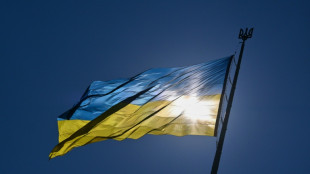
The ongoing war in Ukraine saw both Russia and Ukraine increase their military spending, with each recording the highest share of government spending allocated to the military.
Russia's spending rose 5.9 percent to $190 billion, equivalent to 7.5 percent of GDP.
Ukraine meanwhile boosted spending by 20 percent to $84.1 billion -- a staggering 40 percent of GDP.
Despite persistent tensions in the Middle East, expenditure in the region rose only marginally, by 0.1 percent, to $218 billion.
While most countries in the region increased spending, Israel and Iran actually recorded declines.
In Iran, it fell 5.6 percent to $7.4 billion, but this was mostly due to high annual inflation of 42 percent. In nominal terms, spending actually rose.
Israel's 4.9 percent drop to $48.3 billion reflected a reduced intensity in the Gaza war after a January 2025 ceasefire deal, the researchers explained, while noting Israeli spending was still 97 percent higher than in 2022.
In Asia and Oceania, spending reached $681 billion, an 8.5 percent increase from 2024 -- the region's largest annual increase since 2009.
Scarazzato said the "major player" in the region was China, which has been increasing spending every year for the past three decades, and spent an estimated $336 billion in 2025.
"But perhaps what's interesting is the reaction of some other states, such as South Korea, Japan, and Taiwan, reacting to the threat perception," he said.
Japan raised military expenditure by 9.7 percent, to $62.2 billion in 2025, equivalent to 1.4 percent of GDP -- its highest share since 1958 -- while Taiwan increased its spending by 14 percent to $18.2 billion.
P.Sousa--PC