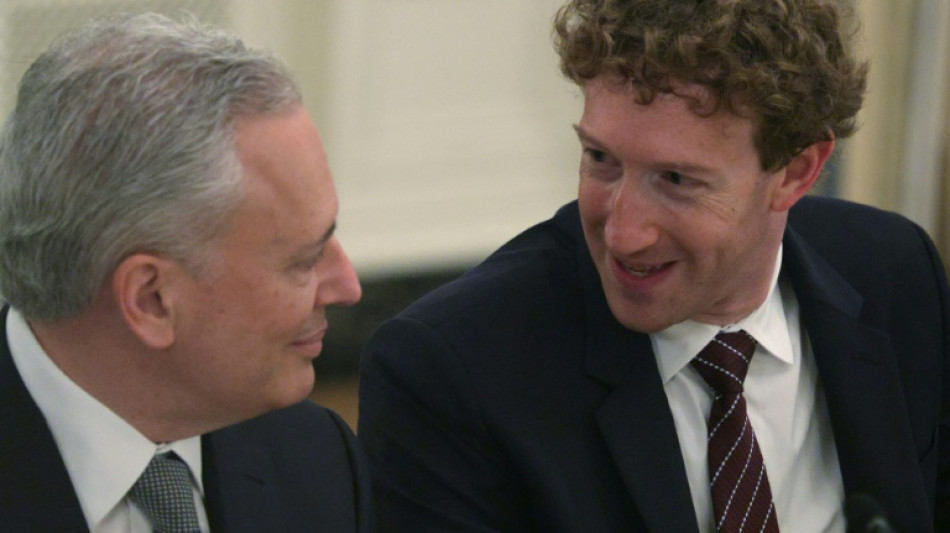
Who killed Trump's AI order? Musk says it wasn't him / Photo: ALEX WONG - GETTY IMAGES NORTH AMERICA/AFP

 Brazil's Lula hails new oil find as 'passport to the future'

 Rybakina slogs through double rain delays in Cincinnati win
 Two largest US reservoirs hit record lows amid western drought
 Colombian minister under fire over beach holiday post-quake
 Lamour leaves key FIFA position after criticising Infantino
 Buss family sells 17.8% stake in Lakers to Iger group

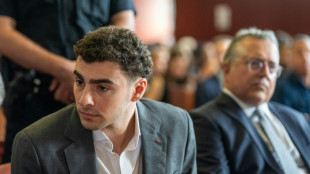 Mangione state murder trial postponed after federal guilty plea
 Trump envoy says Hamas disarmament could begin within 30 days

 US pauses construction of border project in Texas national park

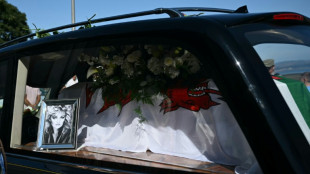
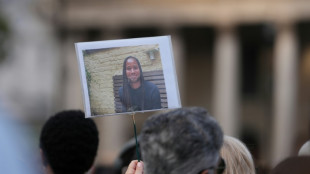 Thousands mourn dead black academic in London vigil
 South Africa Test series a lot tougher than a World Cup says All Blacks coach Rennie

 Coventry sign Nigeria striker Awoniyi from Forest
 TripleDart tops $7 million ARR with AI-led growth, reports 50 per cent EBIT margin
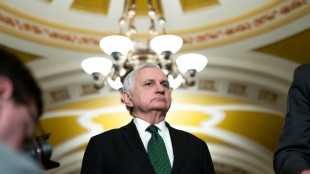 Bipartisan backlash as Trump scales back US-South Korea drills

 'Never seen one like it': German pensioners flee wildfire
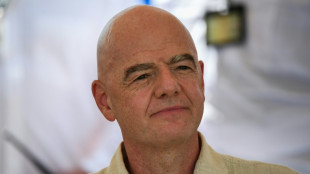
 Ipswich sign Enciso and Ouattara in double raid on Strasbourg

 UN laments 'unacceptable' toll of 350 aid workers killed in 2025

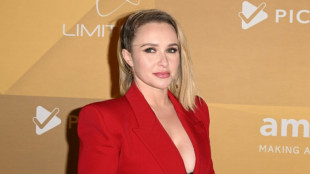 Former child star actress Hayden Panettiere dead at 36

 Pakistan captain Babar Azam doubtful for England opener
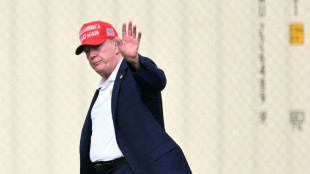
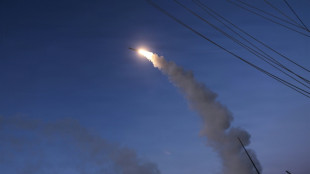 Pentagon inks Tomahawk deal amid reports of missile shortfall

 Rain halts India push after Dinusha century lifts Sri Lanka
 Dinusha hits century as Sri Lanka post 284 in first India Test
 Stocks steady as investors weigh US rate path

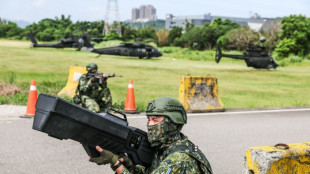 Taiwan's leader says government to propose record defence spending for 2027

 Cambridge head slams 'feeding frenzy' over dead academic

Speculation swirled Friday over the last-minute collapse of President Donald Trump's planned executive order on powerful AI models, with fingers pointing at the president's allies in Silicon Valley who oppose government oversight of the technology.
A draft of the shelved order leaked to US media shows the White House had prepared new AI cybersecurity measures before Trump pulled the plug Thursday. His former AI czar had reportedly called Trump directly to raise objections.
The collapse is the latest sign that Washington remains unable to agree on even modest guardrails for the technology -- leaving the United States well behind Europe and Asia and far short of what many safety advocates say is needed.
If enacted, the dropped executive order would have given the federal government up to 90 days of access to the most powerful AI models before their public release, and it would have established a coordinated response to AI-enabled threats to banks, hospitals and other critical infrastructure.
Politico and other media reported that David Sacks, the Silicon Valley venture capitalist who served as Trump's AI and crypto czar, called the president Thursday morning -- blindsiding White House staff -- to warn that the measure would slow innovation and hurt the US in its AI race with China.
Officials believed Sacks supported the order, but the night before the planned signing he began raising concerns that the voluntary review process could one day be made mandatory.
The Washington Post reported a broader account: Last-minute calls from Sacks, Elon Musk -- CEO of SpaceX and Tesla -- and Mark Zuckerberg, CEO of Meta, convinced the president not to sign.
Musk denied the claim on his social media platform X.
"This is false. I still don’t know what was in that executive order and the President only spoke to me after declining to sign," he wrote.
Meta also disputed the report, saying Zuckerberg had spoken to Trump only after the order was rescinded.
- Fear of Mythos -
To assuage concerns of government overreach, the draft explicitly stated that nothing in the order should be read as creating a mandatory licensing or approval requirement for AI models.
According to The Information and other media, tech companies also pushed to cut the pre-release access window from 90 days to just 14.
The order was triggered in part by concerns over Anthropic's Mythos model, which the AI startup has refused to release publicly over safety fears.
The collapse of Thursday's effort leaves the administration with no formal plan for managing the security risks posed by the most powerful AI systems -- and no timeline for producing one.
Trump scrapped an AI oversight order signed by his predecessor Joe Biden on his first day back in the White House.
Biden's 2023 order required AI companies to share safety test results with the government and leaned heavily on voluntary commitments -- already a light-touch approach that fell well short of what many experts had called for.
By contrast, the European Union's AI Act -- which entered into force in 2024 -- sets binding rules for high-risk AI systems, including mandatory transparency requirements and, for the most powerful models, obligations around safety testing and incident reporting.
T.Vitorino--PC