Power cuts, rubble: millions come home to find Sudan's capital unlivable / Photo: Ebrahim HAMID - AFP

 Japanese anime actor fights TikTok over AI voice cloning
 Curtain falls on the romance of India's single-screen cinemas

 Smells like teen spirit as US thrash Peru 4-1
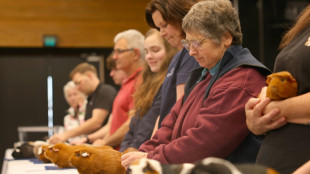 Cavy chaos: Hundreds attend New Zealand's biggest guinea pig show

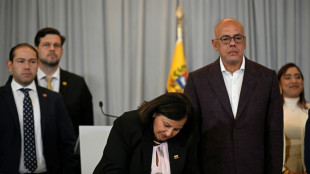 Venezuela releases more political prisoners after opposition talks

 England's best 'for a long time' despite Spain defeat, says Kane

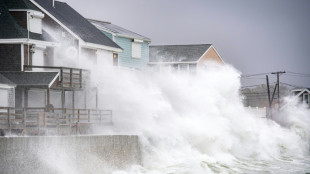 Powerful storm pummels northeast US with rain, high winds

 Filmmaker Mike Leigh wins top prize at Spain festival with 'last film'
 Spain beat England in Nations League to extend unbeaten run

 Ireland squad vote to play Israel tie despite Gaza unease
 Gutsy Vollering wins cycling road race world title

 Vollering wins cycling road race world title
 Man City's meteoric rise clouded by dark shadow

 Mbappe out for two weeks or more with knee injury say Real
 Lyon collapse away to Stade and suffer first Top 14 loss
 Russia accuses Europe of seeking to thwart Ukraine talks

 Man City chairman defiant over reported Premier League charges
 Germany ready to 'walk through fire' for Klopp, says Tah

 At least 16 killed in Russian and Ukrainian strikes

 Powerful storm pummels US Northeast
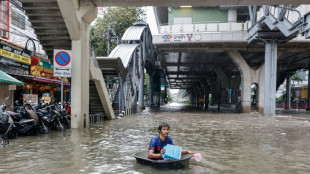 Bangkok declares disaster after homes flooded, roads submerged by heavy rain

 Norris calls for errant Colapinto to be banned for causing Baku crash

 Russell finds himself again and prepares to heap pressure on Antonelli
 South Korea hold nerve to win Asian Games basketball gold

 Russell holds off Verstappen to claim imperious victory in Baku

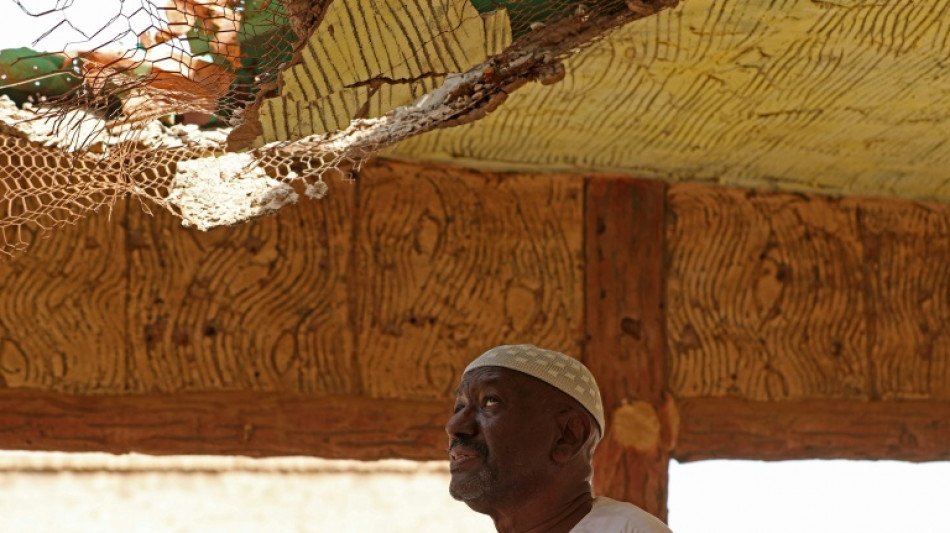
They came home to a war-ruined city determined to rebuild their lives, but a chronic lack of power, water, jobs and medicine has left many residents of Sudan's capital wishing they had stayed away.
About four million people fled Khartoum after war broke out between the army and a paramilitary force in 2023, in fighting that reduced large parts of the city to rubble.
But the estimated 2.7 million who have returned since the army recaptured Khartoum last year are caught between joy at being home and the harsh realities of living there.
Businessman Emad Khaled said he was sending his family back to Egypt, while he remains in Khartoum for his work.
"Bringing my family back was a mistake," the 43-year-old told AFP near the city centre, which is filled with blackened, bombed-out buildings.
Multiple government officials, ordered back to Khartoum, told AFP they were also leaving their families outside the country.
Fighting between the armed forces and paramilitary Rapid Support Forces (RSF) is still raging elsewhere in Sudan, including in the Darfur, Kordofan and Blue Nile regions.
The army, strongly encouraging Khartoum's residents to return, rebuilt the airport and reopened it for domestic flights, and patched up infrastructure.
However, electricity and water still go out for days at a time. And while markets across the capital are open again, many people are unemployed and have little money to spend.
- 'Price goes up every day' -
By June, only one percent of Khartoum had been declared safe by the UN, with dozens of children killed and injured by booby-traps and unexploded shells lurking within walls and on street corners.
Nearly half a million people have returned from neighbouring Egypt, where 1.5 million Sudanese sought shelter but faced soaring living costs, racial persecution, arrests and deportations.
Khartoum's working-class neighbourhoods have seen the highest numbers of returnees, while most of those who can afford to stay away.
Consequently, upscale districts such as Khartoum 2 lie abandoned. Along tree-lined avenues, glass crackles underfoot and only birdsong fills the air between empty villas, entire corners of them blown out by missiles.
Thuraya Babiker, 86, thought she had returned for good. But three months later, "my husband, my youngest daughter and I are leaving for the United Arab Emirates", she told AFP.
"We don't want to leave," she said, explaining that the lack of medical care makes it impossible to stay.
As people started returning last year, Sudanese charities rushed to rebuild hospitals, some of which are now "better than before", health workers say.
But despite their best efforts, physician Haifa Omar says "some things just aren't available".
"We have to ask patients to buy some medicines on their own dime. I have a lump in my throat as I say it, we know how difficult people's situations are."
College professor Imam Babiker has to visit 10 pharmacies to find his father's blood pressure medication, "and every day it's a different price", he said.
The 34-year-old bought a refrigerator to store his diabetic mother's insulin, "but the electricity goes out for 12 hours a day, so it gets ruined," he told AFP.
Others like Souad Mohamed, 49, had her fridge stolen by looters and couldn't afford a replacement.
"So now I have to buy vegetables and meat every day, and the price goes up every day," she said.
- 'Things really aren't fine' -
Khartoum, once a major African capital home to more than eight million people, is a shell of its former self.
In the city centre, a veteran UN official told AFP the level of destruction dwarfs every other crisis they had seen, including Ukraine.
Although occasional RSF drone strikes continue, Khartoum's university students have been told they must return, after authorities ended remote learning in July.
Khartoum University medical professors have threatened to resign en masse in protests, while students complain they are being forced back.
"The university's refusing to let me defend my thesis online, even though my supervisor is also in a different country and doesn't want to return," one master's student told AFP, requesting anonymity.
An undergraduate management student, who should be starting her senior year, said she missed in-person exams this summer and is now scrambling for scholarships in Egypt to restart college from scratch.
"They wouldn't listen to us, all they cared about was for people to return," she told AFP.
"To me it's political, they want people back to show that things are fine, when things really aren't fine."
L.E.Campos--PC