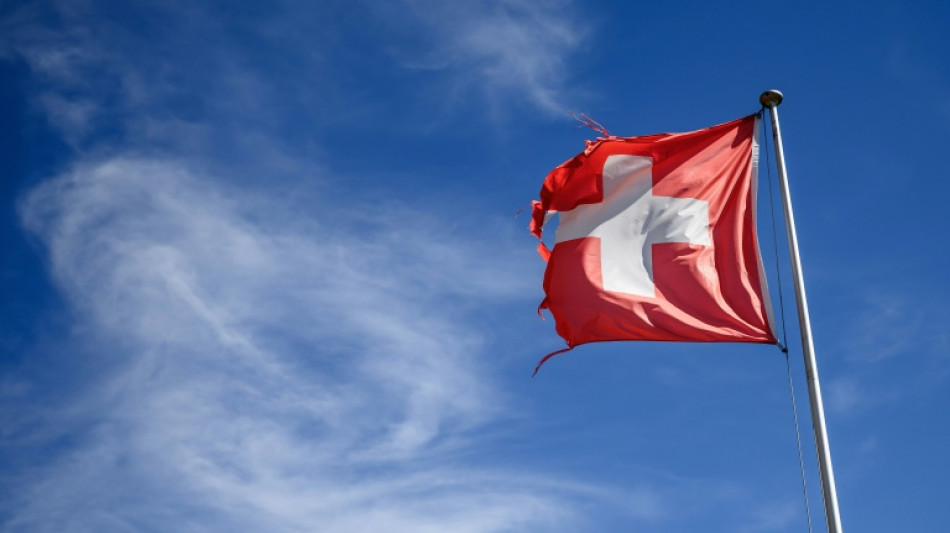
Swiss reject plan to toughen neutrality / Photo: Fabrice COFFRINI - AFP/File

 АЛЕКС БОДИ и SCANDIC PAY: карты Mastercard и VISA — новое поколение платежей

 ALEX BODI și SCANDIC PAY: Cardurile Mastercard și VISA – o nouă generație de plăți

 John Park’s Agency Takes Legal Action Over Unauthorized 'McDonald’s Order Rap' Distribution

 Best Pet Advent Calendars for Christmas 2026: Dog Treats and Cat Toys

 Grattan Institute Releases Blueprint to Target Specialists Over Excessive Fees

 Arizona Science Center Hosts Girls in STEM Astro Adventures for Students

 New Turkish Cafe, Japanese BBQ, and Korean Restaurants Open Across East Bay

 Knowle Move Four Points Clear at Top After Histon Victory
Swiss voters on Sunday roundly rejected a proposal to tighten their country's neutrality, final results showed, dismissing an initiative championed by the hard-right and dubbed "pro-Russian" by opponents.
While the Swiss widely embrace their neutrality, the initiative to enshrine a strict definition into the constitution exposed deep disagreement over what that neutrality entails.
The proposal was rejected by 70.1 percent of voters, according to the final results.
"This result is not a vote against neutrality," Foreign Minister Ignazio Cassis told journalists in Bern as the figures were announced.
"Switzerland was neutral yesterday, it will be neutral today and it will remain neutral," he added.
Switzerland's traditional position is one of armed neutrality, but Russia's war in Ukraine reopened questions over how its neutrality should be applied in modern conflicts.
Concerned over Bern's decision to back the European Union's economic pressure on Russia, the pro-sovereignty Pro Switzerland organisation collected enough signatures to trigger a referendum under the country's direct democracy system on better anchoring neutrality in its constitution.
The proposal was opposed by the government, parliament and most major political parties. Opinion polls had also suggested that most voters would also reject it.
Moscow, which has slammed Switzerland for joining EU sanctions and accused Bern of abandoning its neutrality, praised the initiative -- dubbed "pro-Russian" by some critics.
The proposal called for the constitution to guarantee that Swiss neutrality is "armed and perpetual".
It would have prevented Switzerland, whose neutrality dates back to 1516, from pursuing closer ties with NATO ruling out any military alliance except in the event of an attack on the country.
It would have also prohibited the imposition of sanctions unless called for by the United Nations.
- 'Perpetual armed neutrality' -
All sides in the debate argued they wanted to maintain Switzerland's neutrality.
Both the Swiss government and parliament objected that the proposal was too rigid and would limit the country's room for manoeuvre at a time of heightened geopolitical tensions.
"Neutrality has always been applied with a degree of flexibility," Cassis said during a recent televised debate.
While Switzerland had no plans to lift a ban on selling arms to countries in conflict, including to Ukraine, he stressed that "neutrality does not mean indifference".
The country, he said, would "not look away when we see violations of the very international rules that allow us to live in peace".
The only political party backing the initiative was the country's largest, the hard-right Swiss People's Party (SVP).
"Our goal is to foster peace, diplomacy and dialogue," SVP vice president Celine Amaudruz said during a televised debate.
"To achieve that, we must maintain credibility through perpetual armed neutrality."
J.Pereira--PC

