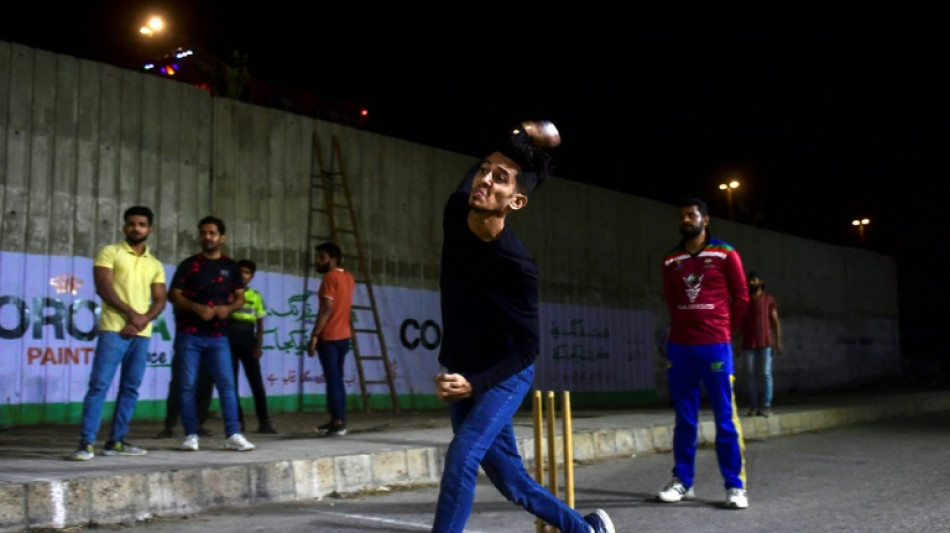
Pakistan street cricket comes to life after dark during Ramadan / Photo: Asif HASSAN - AFP

 US average diesel price rises to record $5.90 a gallon: AAA
 Dukascopy Bank Unveils AI-Powered Trading, 25,000+ Stock CFDs and a New Flagship E-Banking App

 Tech firms rally but Asian markets mixed, with eyes on US inflation

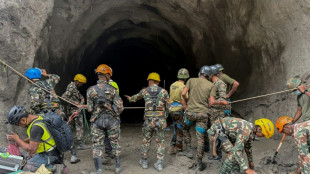
 Nepal holds day of mourning as families pray missing still alive

 African players in Europe: Mbeumo fires solo goal as United draw
 Malaysia cancels haze emergency, but warns problems remain

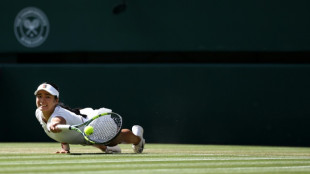 Philippine sensation Eala looks forward to Asian Games 'fun'
 Jakarta airport extends closure after volcano eruption

 Lonely woman director in Venice sees industry backsliding on gender

 Tech firms rally on mixed day for Asian markets, with eyes on US inflation
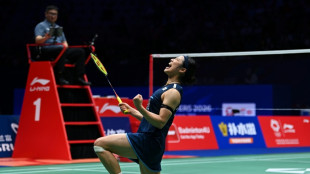 World number one An sends Asian Games warning with China hat-trick
 PSG go for three in a row as Champions League returns

 "Super-human' Alcaraz books US Open quarter-final clash with Shelton

 ECB set to hike interest rates as Iran war flares anew
 AI data centers are less thirsty now, tech giants say

 North Korea vows nuclear-armed navy as US ally drills open
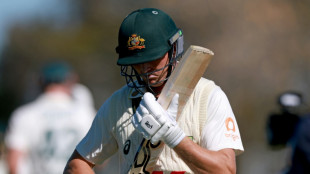 Under-fire Labuschagne named in Australia Test squad for South Africa

 Flow Technology partners with BW Forsyth Partners to Meet Growing Demand for Biopharmaceutical Manufacturing

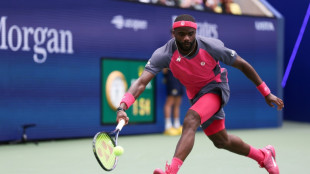 Tiafoe tops Medvedev in straight sets at US Open

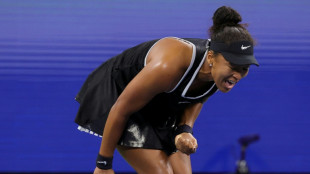 Zverev seeks US Open last eight as Osaka faces Rybakina

 Alcaraz turns up heat to reach US Open quarters

 Gatti salvages Juve draw with AC Milan in Serie A

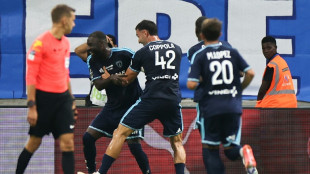 Sinayoko stars as unbeaten Paris FC down Marseille

 Still on top: 'Spider-Man' dominates North American box office
 Zelensky in fresh talks with US envoys: Ukraine official

After midnight during Ramadan, makeshift floodlights transform a central Karachi basketball court into an urban cricket arena, where dozens of young Pakistani men chase taped-up tennis balls zipping through the night air.
Donkeys watch on from the outfield and goats rummage through nearby piles of rubbish, breaking occasionally for a pitch invasion.
"After the Taraweeh (special Ramadan prayers), people crave entertainment so that is why many play cricket," batsman Waqas Danish told AFP. "They play all night, because some people can't wake up for breakfast if they sleep."
Tape-ball games are ubiquitous across Karachi's streets throughout the year, but Ramadan sees night tournaments pop up in most neighbourhoods.
The uninitiated may struggle to unravel the mayhem of multiple overlapping matches in a cramped space, but for Karachi's street cricketers, there is method in the madness.
The frenetic matches of between four and six overs per innings are concluded before sehri, the meal consumed ahead of daytime fasting.
They range from pick-up games on improvised concrete pitches to professional competitions on dusty ovals.
"The kids and youths can't afford kits and all the accessories for playing hard-ball cricket, but they can easily afford the tape ball," competition organiser Taqdeer Afridi told AFP in Karachi.
Money is often involved -- even though gambling is illegal in Pakistan -- and big-hitting mercenaries are occasionally lured from surrounding neighbourhoods to play under lights that craftily tap into overhead power lines.
A tennis ball is tightly bound with electrical tape, giving it extra weight so it swings much like a cricket ball, yet is less damaging if it hits a spectator, window -- or even a passing rickshaw.
- 'Amazing' speed -
Matches played in the poorest neighbourhoods can draw hundreds of spectators, with many onlookers admitting that watching cricket all night helps with the day's fast.
"All day they are sleeping. Maybe they go to their jobs for four or five hours," 19-year-old spectator Rahman Khan said.
After Partition in 1947, cricket was considered the domain of the upper class, played at Karachi's posh clubs and elite schools.
But as the population boomed through the 1960s, cricket adapted to the sprawling metropolis and tennis balls emerged as a substitute to the hard ball.
The cheaper alternative -- which also removes the need for costly equipment like batting pads -- took on several experimental forms in the following decades, and is credited with bringing the sport to the everyday Pakistani.
There is no consensus on when the first tape ball delivery was bowled or by who, but legends abound -- and the one thing historians and fans agree on is that it originated in Karachi.
"The tennis ball without tape lacked speed," said veteran Nasir Ali, who recalls the 1980s as the formative years for the tape-ball game.
"On an experimental basis we wrapped the ball with red tape and when it was bowled the speed was amazing," said the 64-year-old, who hosts an annual competition in his apartment block's courtyard.
- 'Watch the ball' -
From legendary all-rounder Wasim Akram to modern-day pace star Shaheen Shah Afridi, many of Pakistan's top players credit street cricket as a positive influence on their techniques.
"In cricket there is a saying: 'watch the ball' -- it doesn't matter if it is a tennis ball or a taped ball or a hard ball," Pakistan national youth coach Mohammad Masroor told AFP.
"If a batsman can hit any ball, he can play cricket."
Watching young cricketers at a street pitch wedged between an elevated expressway and an apartment block in central Karachi, Masroor said rules adapted to the urban landscape hone a batsman's skills.
A hit back over the bowler's head and beyond the residential area on the full is six runs, but only one run if the ball rebounds off the apartment building.
Players must also beware of the "grumpy uncle or aunty" who is unwilling to return a ball hit into their home. A shot like that can cost a batsman more than just his wicket: they need to go buy a new ball, too.
"Nothing stops them," said Masroor, grinning.
F.Carias--PC