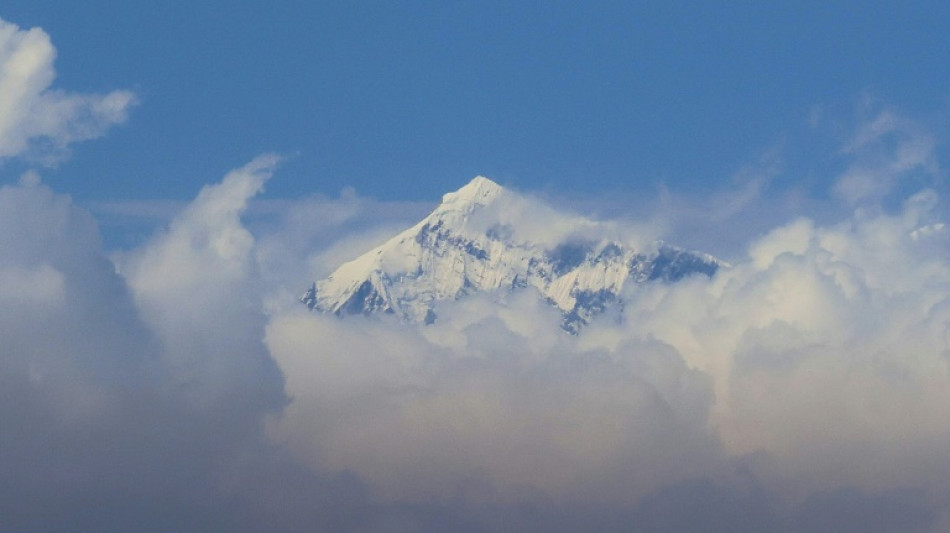
Deadly dreams: record Everest season among most dangerous / Photo: Sebastien BERGER - AFP

 USA and France ease into women's Basketball World Cup semis

 ECB lifts borrowing costs amid energy shock, opens door for more hikes

 France defeat China to reach women's basketball World Cup semis
 Tribal Launches Campfire, Letting Business and Technical Teams Build on Salesforce Together

 Yemen's Houthis seize key city on Red Sea
 US producer inflation tops expectations as diesel costs jump
 Rubio ends South America swing with Peru security talks

 Defiant Iran seeks to bruise Trump ahead of midterms

 France withdraws support for Infantino in FIFA presidential election

 Evolution Metals & Technologies Provides Initial Revenue Guidance of $400-460mm for Fiscal Year 2027

 Clark-led USA thrash Hungary to move into women's World Cup semi-finals

 Vance takes spotlight as Republicans close Trump-heavy convention
 Russian skater Valieva loses neutral status
 Will Israel's right exploit sanctions in run-up to vote?

 'Metal Gear' creator moves to Xbox after Playstation cancellation

 Indonesia rescues six orangutans from fires in a week

 Macron urges Europe to develop 'crewed spaceflight' programme
 Deals worth billions to be signed as UAE leader visits Germany

 Alessio Vinassa Unveils an Emerging Technology Investment Approach Shaped by Financial Challenges

 Sri Lanka court revokes monk's pardon, orders return to prison
 'Hopeless, stuck, afraid': US deportees in limbo in Cameroon
 Mount Fuji ends hiking season with landslide, two rescues
 Seahawks beat Patriots again in NFL opener
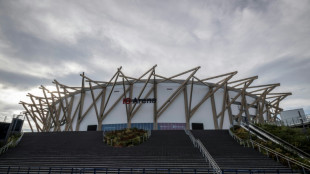 Asian Games begin with Qatar basketball win, nine days before opening ceremony

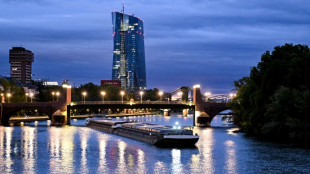 Stocks sink as oil rally fans inflation and rate hike fears

Scaling Everest is always dangerous, but expedition organisers have warned that a combination of extreme weather, corner-cutting on safety, and inexperienced and "impatient" foreign climbers has resulted in one of the peak's deadliest mountaineering seasons.
As the last search and rescue teams hang up their boots and the tent city at base camp packs up for the year, expert climbers say several of the 17 people killed or missing and presumed dead this season could have avoided disaster.
"This season was very bad overall," said expedition organiser Mingma Gyalje Sherpa, of Imagine Nepal Trek and Expedition, whose team was responsible for opening the route to the summit.
"The main reason is that the weather was extremely cold... but there was also carelessness."
Higher death numbers were recorded in past seasons, but those tolls included several killed in single large-scale disasters.
In 2014, 16 Nepali guides were killed by an avalanche, with climbing closed for the season thereafter.
The deadliest season was in 2015, when at least 18 people died in an earthquake that also killed nearly 9,000 people across Nepal.
This season, 12 people died and five others are missing.
Ten of them were foreigners, the highest such toll on record, as well as seven Nepalis: guides, mountain workers and a climber.
Around five climbers die each year on the oxygen-starved paths to the 8,849-metre (29,032-foot) icy peak.
Some say too many of the foreign mountaineers are ill-prepared for what remains a major test of body and soul.
Nepal issued a record 478 permits for foreign clients this season, with around 600 climbers and guides reaching the top, prompting some to suggest there is a need to cut numbers.
- Minus 40 degrees -
The tough guides say the mountain was the coldest they have ever experienced, with freezing temperatures far lower than usual adding to the danger.
"It should already have been warm, around minus 28 degrees Celsius (-18.4 degrees Fahrenheit)," said Mingma Gyalje Sherpa.
"This year it was even down to minus 40 degrees."
Climate change is dramatically altering weather patterns and causing extreme fluctuations in temperature, but scientists caution against linking individual events directly to global heating without evidence.
Three of Mingma Gyalje Sherpa's route-opening team -- Dawa Tseri, Pemba Tenzing and Lakpa Rita Sherpa -- died after dropping off ropes at Camp 2 when a serac ice block fell and buried them in the Khumbu icefall.
As the season progressed, more climbers died or were reported missing in the icy heights.
Several others suffered frostbite and infections related to high-altitude pulmonary edema, when liquid accumulates in air spaces of the lungs.
Mingma Gyalje Sherpa said the freezing weather and high winds meant many Nepali guides and porters suffered frostbite early in the season.
That had a knock-on impact, especially for equipping higher altitude camps.
"It meant that Camp 4 was not prepared enough and not all supplies reached there... but clients were impatient and climbing began," he said.
"I think some of the casualties could have been prevented if all the supplies were there."
The rapid growth of the climbing industry has created fierce competition among companies for business, also raising fears that some are cutting corners on safety.
Lukas Furtenbach, of Austria-based Furtenbach Adventures, said that a majority of the deaths could have been avoided "with mandatory safety standards".
"These accidents do all have a similar pattern," Furtenbach said.
"This, in combination with the fact that oxygen cylinders have been stolen from several teams, including ours, shows one of the main problems this season -- oxygen logistics and safety standards."
- 'Overworked' -
Many climbers dropped out this season, even after paying a non-refundable $11,000 for a permit and at least $30,000 more for the expedition.
"It shook people's confidence. When you keep seeing people getting sick, having to be rescued, or bodies being brought down, even the fittest climber has doubts," said Dawa Steven Sherpa of expedition organiser Asian Trekking.
But the season took a heavier toll on Nepali guides, usually ethnic Sherpas from the valleys around Everest, who are considered the backbone of the climbing industry and bear huge risks to carry equipment and food, fix ropes and repair ladders.
The increased need for rescues also demanded more staffing.
Mountain guide Gelje Sherpa, 30, made headlines after he abandoned his client's Everest bid to rescue a Malaysian climber from the "death zone" above 8,000 metres, carrying him down on his back when he couldn't be dragged.
"It has been an emotionally and physically draining year for the Sherpas," Dawa Steven Sherpa said.
"Some left, many were injured, which meant that those still on the mountain were overworked. Everyone was exhausted."
S.Pimentel--PC