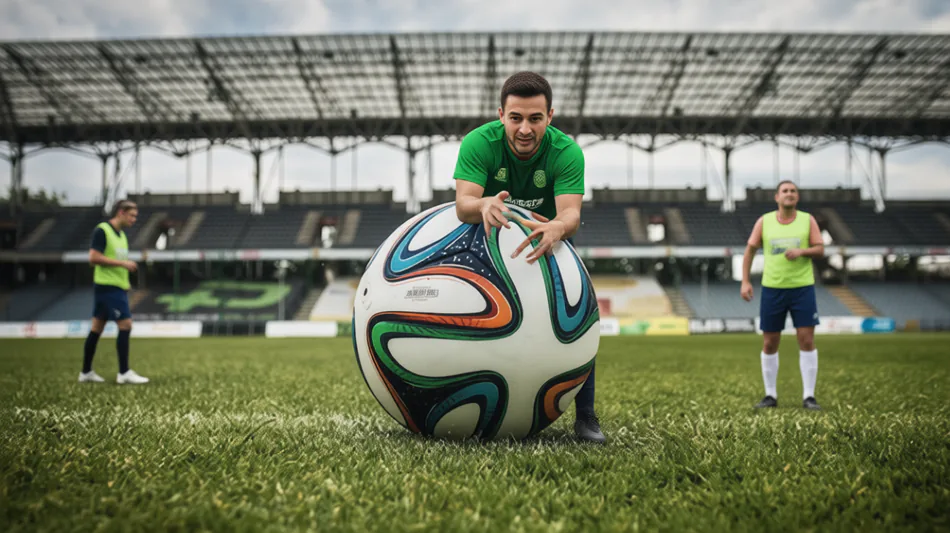
Gianni Infantino’s FIFA Presidency Faces Unprecedented Governance Crisis

 SmartMarket Solutions Announces Its BBB Accreditation with an A+ Rating

 Greenland to open truth commission over forced contraception scheme
 Stocks, dollar rise after Fed chief lifts rate expectations
 'Game-changer': solar ambulance completes test run in Kenya
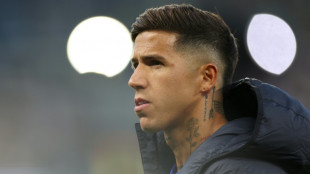 Fernandez's Chelsea future uncertain as Alonso seeks commitment
 Four plead guilty to London arson attack on Jewish ambulances
 Meta's teen safety deal runs into an unsolved problem: proving age
 Windmills of change: Dutch raise mill in rare operation

 Netanyahu party in uproar as far-right refuses pleas to unite
 Stocks advance with all eyes on Fed chair's speech
 War criminal Ratko Mladic's death lays bare Bosnia's wounds
 Thieves buy tickets before plundering necklace from Vienna museum
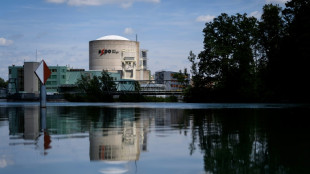 Swiss nuclear plant fully back online after heatwaves
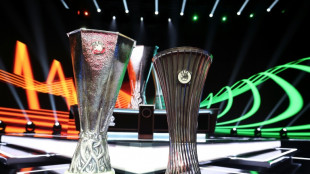 Bournemouth, Sunderland to face AC Milan in Europa League
 Once a legend, humpback whales make comeback in Brazil
 'Ran for our lives': Tales of survival from Nepal-China disaster
 Bombay High Court Questions Police Probe in Disha Salian Death Case
 Orthopaedician Dr Akhil Kulshreshtha Shares 5 Tips for Bone and Joint Health
 All eyes on Warsh as Fed chair kicks off key central banking meeting

 ONE App Launches AI Agent and Custom GPT to Enhance Digital Banking
 Indonesia escalates battle against fires, putrid haze
 Germany could miss climate goal in 2026 for first time: think tank

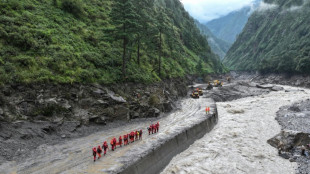 New flood risks impede Nepal, Tibet rescue

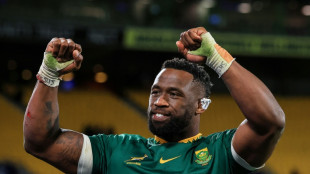 Kolbe back as Springboks change two for All Blacks Test
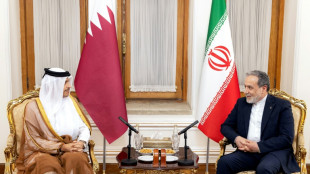
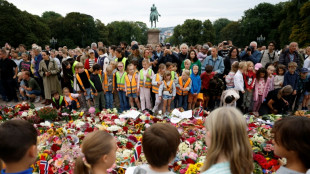 Europe's monarchs, world leaders mourn Norway's King Harald

FIFA President Gianni Infantino faces the most significant political crisis of his tenure after FIFA’s proposal to sell a stake in the World Cup triggered widespread rejection from confederations. UEFA has withdrawn confidence in his leadership, marking a turning point for the global governing body that Infantino promised to reform nearly a decade ago.
Gianni Infantino remains in office as President of the Fédération Internationale de Football Association (FIFA), yet his position has become increasingly precarious following a governance crisis that has fractured support among the organization’s member associations. For nearly ten years, Infantino’s leadership was characterized by overwhelming backing from world football’s governing bodies, driven by FIFA’s dramatic financial growth and generous revenue distributions. However, a recent proposal to commercialize the FIFA World Cup has triggered a unified rejection from major confederations, including UEFA, which has formally declared it has lost confidence in his leadership.
The crisis erupted at the end of July 2026, when FIFA unveiled plans to establish a new commercial company to manage the FIFA World Cup and other competitions. The proposal involved selling a 20 percent stake to private investors in a deal expected to raise approximately $4.2 billion. To secure approval for the plan, FIFA offered each of its 211 member associations a payment of $40 million if they voted in favor before September 19, 2026. Instead of generating support, the initiative sparked the most severe governance challenge of Infantino’s presidency.
UEFA unanimously rejected the proposal and threatened to boycott all FIFA competitions if it proceeded. The Asian Football Confederation (AFC) criticized FIFA for failing to consult its members during the process, while Concacaf rejected the plan due to what it described as a lack of transparency and due process. FIFPRO, European Leagues, and several national associations also voiced strong opposition. Reports indicated that other members of the FIFA leadership were unaware of the proposal until it was announced in the media, suggesting the initiative was driven primarily by Infantino himself.
Only three days after unveiling the project, FIFA formally abandoned the plan. Following a hastily convened meeting of FIFA’s leadership in Rabat, Morocco, on August 6, 2026, the governing body issued an apology to its member associations. FIFA acknowledged that the process had been handled incorrectly and admitted that member associations and FIFA Council members should never have felt excluded from such a significant decision. The organization promised to review its internal procedures.
Despite FIFA’s leadership publicly reaffirming its support for Infantino, the political damage was substantial. Reuters reported that several European associations withdrew their backing for the Swiss-Italian president. Former Portugal captain Luís Figo called on Infantino to resign, and UEFA Vice-President Laura McAllister described the situation as a leadership crisis. Internal divisions were also exposed; senior adviser Carlos Cordeiro resigned over the plan, calling it "a bad deal for football," while Chief Operating Officer Kevin Lamour reportedly described it as "the project of one person."
This governance turmoil follows a period of intense scrutiny regarding Infantino’s broader reforms. For decades, the FIFA Club World Cup was a relatively short tournament involving continental champions. Under Infantino, it was transformed into a month-long event featuring 32 clubs and 63 matches, held in the United States during June and July prior to the 2026 World Cup. From FIFA’s perspective, the tournament was a commercial success, attracting new broadcasting agreements and record prize money. However, it faced fierce opposition from players and coaches.
The International Federation of Professional Footballers (FIFPRO) warned that the expanded calendar would significantly reduce players' recovery time, increasing the risk of injuries and mental fatigue. In 2024, FIFPRO Europe member unions launched legal action over FIFA’s decision to introduce the competition without meaningful consultation with players’ representatives. Former Liverpool manager Jürgen Klopp described the new Club World Cup as the "worst idea ever implemented in football" due to its impact on player workload.
The expansion of the men’s FIFA World Cup from 32 to 48 teams in 2026 further intensified these concerns. The number of matches increased from 64 to 104. FIFA argued that expansion makes the game more inclusive by giving more countries, clubs, and players the opportunity to compete, while also generating additional revenue for redistribution. Critics argue that it creates another commercial product capable of generating billions in broadcasting and sponsorship income, raising further questions about player welfare and an increasingly congested calendar.
The debate over these reforms is not limited to the number of teams or matches; it centers on how major decisions are made and whether FIFA consults the stakeholders expected to live with the consequences. This issue was highlighted by controversies during the 2026 World Cup, including debates over hydration breaks in air-conditioned stadiums and the awarding of a "FIFA Peace Prize" to US President Donald Trump. Additionally, questions arose when President Trump admitted he asked Infantino to have a US player’s red card rescinded.
Infantino’s current challenges stand in stark contrast to his entry into the presidency. In February 2016, following the resignation of Sepp Blatter amid a corruption scandal, Infantino was elected FIFA President. He entered the race as one of five candidates, defeating Sheikh Salman bin Ibrahim Al Khalifa of Bahrain in the second ballot with 115 votes out of 207. His victory speech promised to restore the image and respect of FIFA.
On paper, his presidency has been a financial success. When he took office, FIFA was recovering from the scandal that had shaken the organization. In 2015, it reported annual revenue of $1.15 billion and a loss of $122 million. By the end of the 2015-2018 financial cycle, FIFA generated a record $6.42 billion in revenue. In 2025, annual revenue was $2.66 billion, including more than $1 billion from broadcasting rights and $411 million from ticketing and hospitality. For the 2023-2026 cycle, FIFA expects to generate $13 billion in revenue, with $8.9 billion projected from the 2026 World Cup alone.
Some of this money has benefited football. The expanded Club World Cup carried a record $1 billion prize fund, and another $250 million was allocated through a global solidarity programme for non-participating clubs. Financially, it is difficult to argue that Infantino has failed. The question remains whether football has benefited to the same extent as FIFA’s balance sheet.
Nearly ten years after promising to restore FIFA’s image, Infantino faces the most serious challenge of his presidency. The next FIFA presidential election is scheduled for March 2027 at the FIFA Congress in Morocco. This event may determine whether the organization’s 211 member associations still believe he is the right person to lead world football into the next decade.
L.Carrico--PC