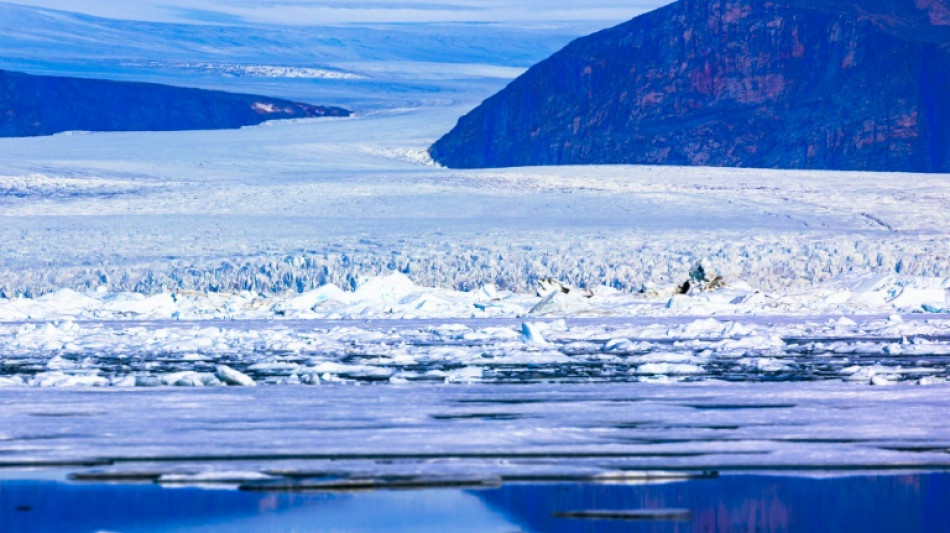
'Snowball Earth' might have been rather slushy: study / Photo: Kerem Yücel - AFP/File

 #IAmJaneDoe: online support campaign in US university rape case

 Brazil shine on Selecao's first visit to India

 Zverev sets up Djokovic quarter-final at China Open, Rybakina out
 Happier at home, Bordeaux hammer Lyon in Top 14

 Lula, Bolsonaro in final push for votes ahead of knife-edge election

 Boisterous fashion week barnstorms 'sleepy' Nigerian capital

 UAE investigators say flydubai co-pilot was planning 'terrorist act'

 Rahul smacks century in India v Windies ODI

 Daryz seeks to join exclusive club of dual Arc winners

 Russia warns diplomats to leave Kyiv over new strikes threat
 Olympic champ Zheng rebukes rowdy home crowd at China Open

 World No.1 Sinner pulls out of Shanghai Masters to delay return

 Red Bull's Verstappen grabs pole position for Bahrain GP

 India beat Pakistan in blockbuster as golfer Kim wins 'crazy' gold

 India beat arch-rivals Pakistan to win Asian Games cricket gold

 Ethiopia's Tigray rebels abandon regional capital as govt advances: journalist

 Tom Kim powers to Games gold and exemption from military service

 Split loyalties for Indian football fans at Brazil friendly

 India-Pakistan blockbuster brings cricket fever to Japan baseball field

 Wong waiting on Rafa after winning Asian Games tennis gold

 With Russia next door and rising costs, Latvia goes to the polls

 Penalty hero rues empty seats as Games hosts Japan win football gold

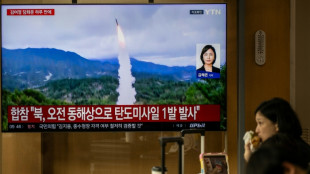 North Korea fires ballistic missile after Seoul's apology demand

 US regulator finds Boeing 737 MAX software bug 'not a safety concern'

 Ohtani 'managing' injuries as Dodgers launch MLB post-season

Millions of years ago, the Earth was so cold that most of its surface was covered in ice. But that hard freeze might have been slushier than once thought.
The longstanding "Snowball Earth" theory imagines our world as seen from space, a perfect sphere with ice covering land and sea alike.
It draws on clues including deposits made by glaciers near the Equator. For ice to have extended that far from the poles suggests much of our planet was once frozen.
But there has long been speculation about just how complete the cover was, with some convinced that areas of slush or open ocean remained, allowing oxygen to penetrate and creating incubators for life.
New research published Tuesday in the journal Nature Communications adds weight to that theory, and suggests these oases in the tundra might have existed much further north than previously suspected.
The evidence comes from a thin layer of black shale that would have been under the sea during the Marinoan ice age, which began around 650 million years ago.
The shale in the Nantuo Formation in southern China acts as a sort of archive for the conditions in oceans at the time.
By analysing levels of elements such as iron, and the presence of nitrogen, scientists can infer whether oxygen was penetrating the ocean and nitrogen was being produced by lifeforms.
"We found evidence of ice-free conditions at mid-northern paleolatitudes (locations before continental drift)," Huyue Song, who helped lead the research, told AFP.
"Until now, ice-free areas had been identified only in peri-equatorial regions."
Instead of a "narrow ice-free belt" across the middle of the Earth, "patchy ice-free areas may have existed much more widely," added Song, a professor at the China University of Geosciences, Wuhan.
The findings build on other research at sites ranging from Australia to Brazil that suggest life was able to cling on in pockets while most of Earth was in deep freeze.
These incubators may even have helped spur "a rapid rebound of the biosphere" at the end of the ice age, the research published Tuesday argues.
The work took four years in total, and involved collecting samples at a remote site in the Shennongjia region of Hubei province, some 500 kilometres from Song's base in Wuhan.
Song believes the findings will help scientists better understand both how our planet's climate works, and how life evolved and survived on Earth through the ages.
And while Earth's ice ages might seem like ancient history, Song argues they could have useful lessons for a planet now experiencing new severe climate change.
"It provides insight into how life survived extreme climate events -- a topic that will become of increasing relevance as modern climate change intensifies," he said.
C.Amaral--PC



