
Paris climate targets feasible if nations keep vows / Photo: DIMITAR DILKOFF - AFP/File

 Botched US execution leaves murderer unconscious on ventilator: lawyers

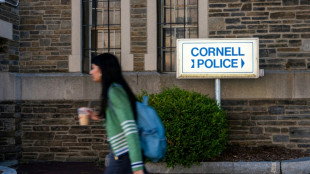 Cornell rape case exposes sexual violence at US colleges

 France held by Italy in Zidane's homecoming after Olise stunner

 Ethiopian pro-government militia claims Tigray airport as regional tensions spike
 Ohtani shaking off injuries as Dodgers launch MLB post-season
 Sea levels to rise in California as coastal wave surges up west coast
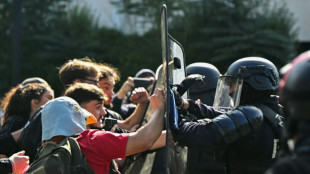 New rallies urged in France as protests disrupt over 730 schools

 Djokovic survives China Open scare, Sabalenka starts strong
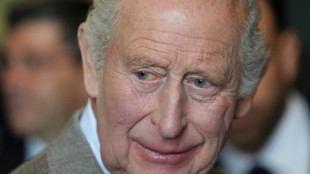 King Charles to evoke colonial 'darkest days' on Caribbean tour

 Tesla shares jump after global car sales top estimates

 DR Congo Ebola outbreak killed more than 4,000: official figures
 Djokovic survives China Open scare against wildcard world no. 104
 Lula, Bolsonaro trade blows in final scramble for votes in Brazil
 New clashes erupt as protests disrupt over 560 French schools

 NY governor vows to close loophole after alleged Cornell gang rape
 Ethiopia Tigray rebels pushed back as regional tensions spike
 Stocks rise, yields fall as US job numbers disappoint

 Man City verdict a 'big topic' for England players, says Tuchel

 NY attorney general tasked with investigating alleged Cornell gang rape

 China widens military footprint with Laos air base

 G7 talks as US pressures Europe over diesel stocks
 Man City launch appeal against explosive financial ruling
 Swiss president to quit government
 Europe rejects US threats over diesel stocks, urges joint G7 action
 Philippines tennis star Eala says 'I get overwhelmed sometimes'
If all nations honour promises to reduce greenhouse gas emissions, there is a chance of capping the rise in global temperatures to under two degrees Celsius, the cornerstone target of the Paris Agreement, researchers said Wednesday.
But that is a very big "if", they acknowledge in a peer-reviewed study, published in Nature.
The calculus includes not only carbon-cutting commitments officially registered under the 2015 treaty, but a raft of pledges made on the sidelines of last years COP26 UN climate summit in Glasgow -- to curb deforestation and methane leaks, for example -- that lack means for monitoring or verification.
They also include actions to lower emissions in developing countries that are contingent on financing, something wealthy nations have so far failed to deliver at agreed-upon levels.
The new estimates likewise fold in pledges to become carbon neutral by mid-century that do not detail how that will be achieved.
"Long-term targets should be treated with scepticism if they are not supported by short-term commitments to put countries on a pathway in the next decade to meet those targets," Zeke Hausfather, a researcher at Berkeley Earth, said, commenting on the study.
Most rich countries have announced they will be "net zero" by 2050, while China and India have vowed to reach that point by 2060 and 2070, respectively.
"Is our study a good news story?" lead author Malte Meinshausen, a professor at the University of Melbourne, asked in a briefing with journalists.
"Yes, because for the first time we can possibly keep warming below the symbolic 2C mark with promises on the table," he continued.
- Curb your optimism -
"And no, because we show clearly that increased action this decade is necessary for us to have a chance of not shooting past 1.5C by a large margin."
As deadly and costly climate impacts have increased, most nations have embraced the Paris deal's more ambitious "aspirational" target of holding the rise in global temperatures to 1.5C above preindustrial levels.
The UN's Intergovernmental Panel on Climate Change (IPCC) said in a landmark report earlier this month that carbon pollution must peak before 2025 and be cut in half by 2030 to have even a chance of reaching that goal.
Recent trends do not suggest the world is headed in the right direction: greenhouse gas emissions last year regained the record levels of 2019 after Covid lockdowns lowered them in 2020.
"Some government and business leaders are saying one thing –- but doing another," UN chief Antonio Guterres said last week when the IPCC report was launched. "Simply put, they are lying."
The new research analyses data from 196 countries from 2015 until the end of the COP26 meeting in mid-November 2021.
It concludes that if all pledges are implemented in full and on time, warming can be limited to 1.9C to 2.0C.
Unless immediate steps are taken to drive down emissions even further, 1.5C will almost certainly remain out of reach, the authors said.
If no additional efforts are made beyond pledges -- know as nationally determined contributions -- submitted under the Paris Agreement, Earth's surface will warm to a catastrophic 2.8C, the IPCC has said.
"Optimism should be curbed until promises to reduce emissions in the future are backed up with stronger short-term action," Hausfather and Frances Moore, a scientist at the University of California, Davis said in a comment, also in Nature.
Ferreira--PC



