
UN adopts pact promising to build 'brighter future' for humanity / Photo: ANGELA WEISS - AFP

 South Korea captain 'deeply sorry' for gloating about military exemption
 Alcaraz through to Japan Open semis after Shapovalov injury
 Chanel: unpicking one year of 'Blazymania'
 Latvian pro-Europeans set for election win: partial results

 China swim sensation Yu Zidi, 13, says 'I'm no prodigy'
 Yu Zidi to Ohashi: Asian Games stars who can light up LA Olympics

 'Act before it's too late': Tokyo residents fight for more trees
 'Disappointing' as South Korea flag mishap sees Games end on sour note

 Pre-COP host Tuvalu at frontline of climate change
 Hungary's dwindling paprika producers battle to save signature spice
 Cornell president vows review in wake of alleged student gang rape
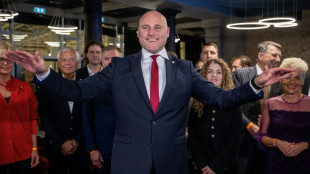 Latvian partial election results suggest pro-European choice
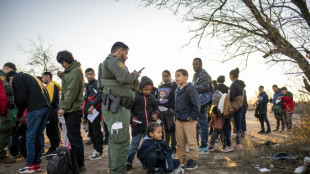
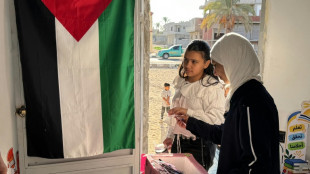 In Egypt's Sinai, Gazan builds school for children displaced by war

 Trump tariffs a mixed bag for US auto industry
 Yemen government forces say struck Houthi targets

 Music links past, present for Pedro Pascal's cellist in 'Behemoth!'

 ALEX BODI ȘI AMBASADORUL REPUBLICII SUDANUL DE SUD, GUM DOMINIC MATIOK, DISCUTĂ LA BERLIN DESPRE POSIBILITATEA ÎNFIINȚĂRII UNUI CONSULAT ONORIFIC LA BUCUREȘTI

 Dodgers step up World Series three-peat bid with 5-3 win over Braves

 Spain break down Czechs as England outclass Croatia in Nations League

 Yamal on target as Spain hold off Czech Republic

 Latvian exit polls suggest pro-European choice

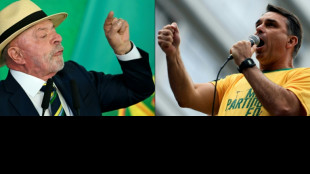
 Lula, Bolsonaro wrap up campaigns ahead of knife-edge election

 Tuchel hails 'complete' England after Croatia demolition

 Fury to invite Trump to lead ring walk before Joshua showdown

 Fashion industry in 'precarious moment', says Vivienne Westwood supremo

The United Nations on Sunday adopted a "Pact for the Future" aimed at addressing sprawling 21st-century challenges ranging from conflict to climate change and human rights, despite last-minute objections from a group of countries led by Russia.
Secretary-General Antonio Guterres, who organized the "Summit of the Future," had billed it as a "once-in-a-generation opportunity" to reshape human history by rekindling international cooperation.
As an opening act for the annual high-level week of the UN General Assembly, which begins Tuesday, dozens of heads of state and government gathered for the signing of the text.
In the adopted version, leaders pledged to bolster the multilateral system to "keep pace with a changing world" and to "protect the needs and interests of current and future generations" facing "persistent crisis."
"We believe there is a path to a brighter future for all of humanity," the document says.
The pact outlines 56 "actions," including commitments to multilateralism, upholding the UN Charter and peacekeeping.
It also calls for reforms to international financial institutions and the UN Security Council, along with renewed efforts to combat climate change, promote disarmament, and guide the development of artificial intelligence.
The adoption of the text faced a brief delay when Russia's deputy minister of foreign affairs, Sergey Vershinin, introduced an amendment emphasizing the "principle of non-interference in the internal affairs of states" and urging the UN to avoid duplicating efforts.
Russia's objections were backed by allies Belarus, North Korea, Iran, Nicaragua and Syria, but its amendment was overwhelmingly dismissed in a motion to take no action.
- Words to action -
During the negotiations phase, Guterres had urged nations to show "vision" and "courage," calling for "maximum ambition" to strengthen international institutions that struggle to respond effectively to today's threats.
But while there are some "good ideas," the text "is not the sort of revolutionary document reforming the whole of multilateralism that Antonio Guterres had originally called for," Richard Gowan of the International Crisis Group told AFP.
That sentiment was widely shared among diplomats, many of whom expressed frustration when discussing the ambition and impact of the text, describing it as "lukewarm," "the lowest common denominator," and "disappointing."
"Ideally, you would hope for new ideas, fresh ideas," said one diplomat.
The fight against global warming was one of the sticking points in the negotiations, with references to the "transition" away from fossil fuels having disappeared from the draft text weeks ago, before being re-inserted.
Despite the criticism, it is still "an opportunity to affirm our collective commitment to multilateralism, even in the difficult current geopolitical context," one Western diplomat said, emphasizing the need to rebuild trust between the Global North and South.
Developing countries have been particularly vocal in demanding concrete commitments on the reform of international financial institutions, aiming to secure easier access to preferential financing, especially considering the impacts of climate change.
The text does indeed include "important commitments on economic justice and reforming the international financial architecture," Human Rights Watch (HRW) commented, while also praising "the centrality of human rights."
However, world leaders "still need to demonstrate that they are willing to act to uphold human rights," said Louis Charbonneau, HRW's UN director.
Regardless of its content, the pact and its annexes -- a Global Digital Compact and a Declaration on Future Generations -- are non-binding, raising concerns about implementation, especially as some principles -- such as the protection of civilians in conflict -- are violated daily.
"Our next task is to breathe life into them, to turn words into action," Guterres urged on Saturday.
A.Seabra--PC



