
-
 Asian Games set to close after records, rancour and rain
-
Chanel: unpicking one year of 'Blazymania'

-
 Cry for help as French-Swiss lake dries up
-
Latvian pro-Europeans set for election win: partial results

-
 Sabalenka swept out of China Open in third round
-
China swim sensation Yu Zidi, 13, says 'I'm no prodigy'

-
 US urges 'restraint' as Ethiopia's Tigray crisis rocks region
-
Yu Zidi to Ohashi: Asian Games stars who can light up LA Olympics
-
 Teens on target again as USA down Mexico 3-0
-
'Act before it's too late': Tokyo residents fight for more trees

-
 World records prove Asian Games were a hit, says top official
-
'Disappointing' as South Korea flag mishap sees Games end on sour note

-
 US prison chief who oversaw botched execution resigns
-
Pre-COP host Tuvalu at frontline of climate change

-
 'Chaotic' Asian Games threaten Japan hopes of hosting Olympics again
-
Hungary's dwindling paprika producers battle to save signature spice

-
 Finnish town braces for change from Google data centres
-
Cornell president vows review in wake of alleged student gang rape

-
 What is fuelling French school protests?
-
Latvian partial election results suggest pro-European choice

-
 Without lawyers, migrant children face deportation from the US
-
In Egypt's Sinai, Gazan builds school for children displaced by war

-
 Three-peat seeking Dodgers open playoffs with a win, Rays hold off Yankees
-
Trump tariffs a mixed bag for US auto industry

-
 Brazil votes in nail-biter polls closely watched by Trump
-
Yemen government forces say struck Houthi targets

-
 'Just be you': Kim reveals Tiger text that inspired him to gold
-
Music links past, present for Pedro Pascal's cellist in 'Behemoth!'

-
 Myanmar migrants returned to war-torn nation from Malaysia
-
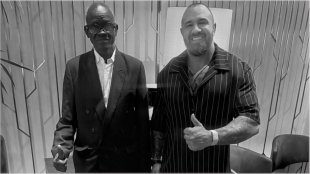
ALEX BODI ȘI AMBASADORUL REPUBLICII SUDANUL DE SUD, GUM DOMINIC MATIOK, DISCUTĂ LA BERLIN DESPRE POSIBILITATEA ÎNFIINȚĂRII UNUI CONSULAT ONORIFIC LA BUCUREȘTI
-
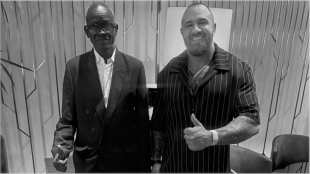 ALEX BODI AND AMBASSADOR GUM DOMINIC MATIOK OF THE REPUBLIC OF SOUTH SUDAN MEET IN BERLIN TO DISCUSS THE POSSIBILITY OF AN HONORARY CONSULATE IN BUCHAREST
-
Dodgers step up World Series three-peat bid with 5-3 win over Braves

-
 Lula, Bolsonaro wrap up campaigns ahead of Brazil's knife-edge vote
-
Spain break down Czechs as England outclass Croatia in Nations League

-
 Toulouse edge Castres in Top 14 derby
-
Yamal on target as Spain hold off Czech Republic

-
 Murakami homer propels White Sox to MLB playoff win over Guardians
-
Latvian exit polls suggest pro-European choice

-
 Israel targets top Hamas leader in deadly Gaza strike on anniversary
-
Lula, Bolsonaro wrap up campaigns ahead of knife-edge election

-
 Houthis say struck oil facility near Riyadh, as Saudis hit Sanaa
-
Tuchel hails 'complete' England after Croatia demolition

-
 AI needs safety layers like nuclear plants: ex-OpenAI engineer
-
Fury to invite Trump to lead ring walk before Joshua showdown

-
 MVP Judge will miss Yankees' MLB playoff series against Rays
-
Fashion industry in 'precarious moment', says Vivienne Westwood supremo

-
 New lizard species discovered in Peru
-
Seventh heaven for England in Nations League rout of Croatia

-
 Fernandes hails Portugal's 'greatest symbol' Ronaldo, calls for unity
-
Storms, flooding cause chaos on Greek holiday island of Crete

Nobel winners hope protein work will spur 'incredible' breakthroughs
The winners of the Nobel Prize in Chemistry for work revealing the secrets of proteins through artificial intelligence said Wednesday they hoped their research would "open the door to many incredible scientific breakthroughs".
But they also warned of the dangers of AI, saying that while it had "extraordinary potential for good", it could also have negative effects if allowed to develop unchecked.
Americans David Baker and John Jumper, together with Briton Demis Hassabis, were honoured for cracking the code behind the structure of proteins, the building blocks of life.
The jury hailed their work as holding "enormous potential" in a range of fields.
At a press conference in London following the announcement, Jumper said the prize "represents the promise of computational biology".
"We want to make the world a better place, and we have these incredibly powerful tools to do it. We're ultimately going to make people healthy because of the work we do with AI," he added.
"I hope this is just a sign that we have opened the door to many incredible scientific breakthroughs."
Their work could have particular importance in the field of drug discovery, noted Hassabis.
"We think there's a huge potential there to revolutionise the way drug discovery is done, and try and shorten it down from almost a decade or more of work to... maybe months," he said.
AI particularly lends itself to molecular biology because it is able to identify "patterns that we never see," said Jumper.
"Medicine is hard because we don't understand how the body works in its extraordinary complexity," he added, calling their work "a step towards doing that".
- Late call -
Both Jumper and Hassabis said they had given up on getting the call, as the minutes ticked down to the announcement.
"I don't think they had either of our numbers, funnily enough," said Hassabis.
"So we got the call very late. We just thought 'it's not happening', or at least I did."
Jumper said that he was still waiting with only 30 minutes to go.
"I turned to my wife, and I said: 'Well, I guess it's not this year'.
"And then 30 seconds later, I got this phone call from Sweden, and I absolutely could not believe it."
Hassabis, 48, said his gaming background was the foundation of his computational expertise, and encouraged children to follow a similar path.
"I would actually encourage kids to play games, but not just to play them, but the most important thing is to try and make them.
"It's just a really fun way to get into the guts of how computers work," he added.
However, Hassabis sounded a note of caution about AI, which he called "one of the most transformative technologies in human history".
It has "the extraordinary potential for good... but also it can be used for harm," he said, warning "we have to really think very hard as these systems and techniques get more powerful".
"I'm a big believer in human ingenuity," Hassabis added, arguing "given enough time and enough resources and enough smart people", humanity can solve many of its most vexing problems.
L.Carrico--PC



