
Webb telescope: NASA to reveal deepest image ever taken of Universe / Photo: HO - NASA/AFP/File

 Japan Olympic chief says 'lot more' athletes at Games than expected

 Asian carmakers besting US rivals at home, China poised to strike

 Widgets & Web Offers All-Inclusive Investor Relations Websites for Public Companies, IPOs and SPACs

 Adams named new US captain to 2030 World Cup

 China a better influence in Latin America than US: poll

 Judge pauses construction of border project in Texas national park

 Belgium's De Bruyne fires double to sink Turkey, France held by Italy

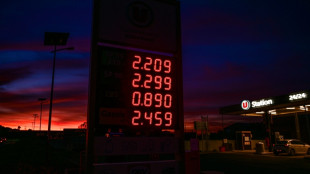
 US jobs data boosts stocks as oil prices dip

 US Supreme Court to hear high-stakes climate case

 Trump expected to name intel chief Clayton as AI czar: reports

 Argentina unveils passports-for-investment scheme

 Brazil election debate chaos sparks censorship row

 England's Carse charged by cricket body over nightclub incident

 Amazon vows $1 bn for data center towns, decries 'myths'

 Oil prices drop on G7 fuel release, US jobs data boosts stocks

 G7 agrees deal to ease global energy supply concerns

 Spain's government dealt blow as lawmakers reject housing bills

 Food, medicine shortages deepen in Russian-occupied Oleshky

 Man City whistleblower Rui Pinto facing 'dire consequences' - lawyers
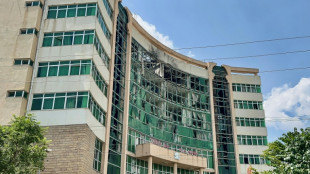
 Russia 'tearing Kyiv apart', mayor says, as strikes paralyse traffic

 Taiwan boxer Lin wins Games gold as Japan edge North Korea on penalties

 Japan tame North Korea to win Games gold after shootout drama

 US posts weak job growth data in September
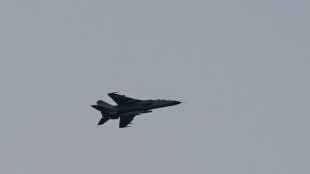
 Ethiopia's conflict: the regional dimension
 Life expectancy almost back to pre-Covid levels, says WHO

NASA administrator Bill Nelson said Wednesday the agency will reveal the "deepest image of our Universe that has ever been taken" on July 12, thanks to the newly operational James Webb Space Telescope.
"If you think about that, this is farther than humanity has ever looked before," Nelson said during a press briefing at the Space Telescope Science Institute in Baltimore, the operations center for the $10 billion observatory that was launched in December last year and is now orbiting the Sun a million miles (1.5 million kilometers) away from Earth.
A wonder of engineering, Webb is able to gaze further into the cosmos than any telescope before it, thanks to its enormous primary mirror and its instruments that focus on infrared, allowing it to peer through dust and gas.
"It's going to explore objects in the solar system and atmospheres of exoplanets orbiting other stars, giving us clues as to whether potentially their atmospheres are similar to our own," added Nelson, speaking via phone while isolating with Covid.
"It may answer some questions that we have: Where do we come from? What more is out there? Who are we? And of course, it's going to answer some questions that we don't even know what the questions are."
Webb's infrared capabilities allow it to see deeper back in time to the Big Bang, which happened 13.8 billion years ago.
Because the Universe is expanding, light from the earliest stars shifts from the ultraviolet and visible wavelengths it was emitted in, to longer infrared wavelengths -- which Webb is equipped to detect at an unprecedented resolution.
At present, the earliest cosmological observations date to within 330 million years of the Big Bang, but with Webb's capacities, astronomers believe they will easily break the record.
- 20 year life -
In more good news, NASA deputy administrator Pam Melroy revealed that, thanks to an efficient launch by NASA's partner Arianespace, the telescope could stay operational for 20 years, double the lifespan that was originally envisaged.
"Not only will those 20 years allow us to go deeper into history, and time, but we will go deeper into science because we have the opportunity to learn and grow and make new observations," she said.
NASA also intends to share Webb's first spectroscopy of a faraway planet, known as an exoplanet, on July 12, said NASA's top scientist Thomas Zurbuchen.
Spectroscopy is a tool to analyze the chemical and molecular composition of distant objects and a planetary spectrum can help characterize its atmosphere and other properties such as whether it has water and what its ground is like.
"Right from the beginning, we'll look at these worlds out there that keep us awake at night as we look into the starry sky and wonder as we're looking out there, is there life elsewhere?" said Zurbuchen.
Nestor Espinoza, as STSI astronomer, told AFP that previous exoplanet spectroscopies carried out using existing instruments were very limited compared to what Webb could do.
"It's like being in a room that is very dark and you only have a little pinhole you can look through," he said, of current technology. Now, with Webb, "You've opened a huge window, you can see all the little details."
C.Cassis--PC



