US Supreme Court agrees to hear Monsanto weedkiller case / Photo: Stefani Reynolds - GETTY IMAGES/AFP/File

 DiDi Advances Robotaxi Operations in China with New R2 Vehicle and Expanded Safety Infrastructure

 Freezz Italia Awarded ESA Contract for IRIS(2) Low-LEO Pre-Operational and De-Risk Activities

 French Economy Shrinks 0.1% as Consumer Confidence Slumps

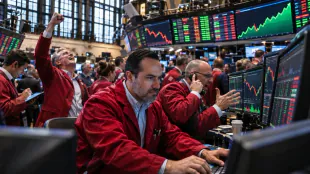 Wall Street Ends Turbulent Week Higher Despite Inflation and AI Jitters

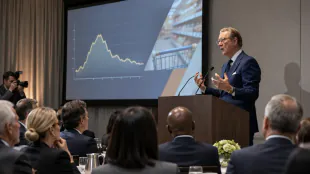 Kansas City Fed Chief Says Inflation Is Still Running Too Hot

 Oil Heads for Second Weekly Loss as Supply Surplus Emerges

 Middletown High School Football Team Ends Legal Battle After Playoff Forfeit

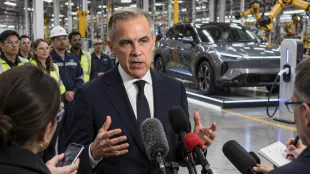 Canada Signals Openness to Chinese Automakers if US Trade Talks Fail

 US Mortgage Rate Falls for Fourth Week but Remains Above 7%

 US Jobless Claims Rise to 200,000 but Layoffs Remain Historically Low

The US Supreme Court agreed on Friday to hear a bid by German chemicals giant Bayer to put an end to a wave of lawsuits over the weedkiller Roundup.
Bayer has spent more than $10 billion settling litigation linked to Roundup since it acquired its producer, the US agrochemical group Monsanto, in 2018.
The International Agency for Research on Cancer considers glyphosate, one of Roundup's ingredients, a probable human carcinogen, but Bayer says scientific studies and regulatory approvals show the weedkiller is safe.
The top US court agreed to hear Bayer's appeal of a $1.25 million award to a Missouri man who claimed Roundup was responsible for his blood cancer -- one of thousands of similar "failure-to-warn" lawsuits facing the company.
Bayer is arguing that it should be shielded from state lawsuits since the federal Environmental Protection Agency (EPA) approved the sale of Roundup to consumers and farmers without any warnings.
The Trump administration has backed Bayer's stance that a federal statute on pesticide labels preempts state laws requiring warnings on products that may be carcinogenic.
In a brief, Solicitor General John Sauer said the EPA had "for decades" classified glyphosate as "not likely to be carcinogenic in humans," arguing that the agency's determination should preempt state rules on the matter.
The Missouri case means "a jury may second-guess the agency's science-based judgments," Sauer said. "A manufacturer should not be left to '50 different labeling regimes.'"
Bayer CEO Bill Anderson welcomed the Supreme Court's decision to take the case.
"It is time for the US legal system to establish that companies should not be punished under state laws for complying with federal warning label requirements," Anderson said in a statement.
Lori Ann Burd, the environmental health director at the Center for Biological Diversity, expressed disappointment.
"It's a sad day in America when our highest court agrees to consider depriving thousands of Roundup users suffering from cancer of their day in court," Burd said in a statement.
"Bayer keeps losing on the facts about its own product so now it's asking the court to prevent juries from ever again hearing those facts," she added.
The Supreme Court is expected to hear the case in the spring and issue a ruling by June or early July.
P.Queiroz--PC