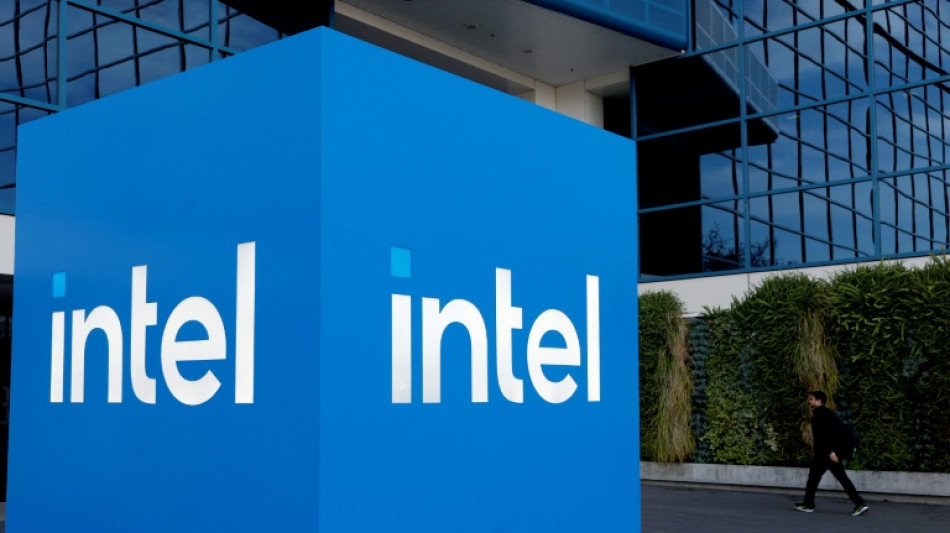
Intel shares plunge on earnings expectations / Photo: JUSTIN SULLIVAN - GETTY IMAGES NORTH AMERICA/AFP

 DiDi Advances Robotaxi Operations in China with New R2 Vehicle and Expanded Safety Infrastructure

 RBI Grants Paytm In-Principle Approval to Revive Wallet Business

 China's Factory Activity Contracts as Export Orders Weaken

 US Retail Sales and Fed Minutes Set Up a Critical Test for Consumers

 MotorTrend’s Top Hybrid Vehicle Picks for 2026

 Asian Markets Slide as AI Concerns Hit Chip Stocks

 Brazil Faces Debt and Inflation Test as Lula Prepares Fourth Term

 Canada Expands Asian Trade Push as US Negotiations Resume

 Jennie Earns Two Grammy Nominations as Major K-pop Agencies Boycott New Asian Pop Category

 Italy Raises 2026 Growth View but Warns Energy Will Keep Inflation High

 UK Economy Grows 0.7% in Third Quarter as Services Lead Expansion

Intel shares dove more than 10 percent Thursday despite the struggling US chip maker doing better than expected in the recently ended quarter, as its revenue forecast disappointed investors.
Intel reported a loss of $600 million on revenue of $13.7 billion in the final three months of last year.
That compares with a loss of $100 million on revenue of $14.3 billion in the same period a year earlier.
While the depth of losses beat market expectations, Intel's revenue forecast for the current quarter fell far short of what Wall Street analysts were predicting amid recently raised expectations for the company.
Shares in Intel soared late last year after AI giant Nvidia announced it would invest $5 billion in its lagging rival.
Nvidia joined Japanese investment giant SoftBank and the US government in backing the once-dominant chipmaker, which has fallen behind in recent years after missing key technology shifts.
President Donald Trump's administration surprised the tech industry last year by taking a 10 percent equity stake in Intel, recognizing the strategic importance of the company that powered the PC and internet revolution with its processors.
Intel largely missed the smartphone boom and failed to develop competitive hardware for the AI era, allowing Asian manufacturers TSMC and Samsung to dominate the custom semiconductor market.
Most notably, Intel was blindsided by Nvidia's rise as the world's leading AI chip provider.
Nvidia's graphics processing units (GPUs), originally designed for gaming consoles, have become the essential building blocks of artificial intelligence systems, with tech giants scrambling to secure them for their data servers and AI projects.
Lip-Bu Tan, who took over as Intel CEO in March of last year amid layoffs and market challenges, has acknowledged the difficulty of turning the company around, particularly as US-China trade tensions complicate the semiconductor landscape.
A.P.Maia--PC