Soviet-era outpost helps Russia retain a foot in Norwegian Arctic

 Botched US execution leaves murderer unconscious on ventilator: lawyers

 Cornell rape case exposes sexual violence at US colleges

 France held by Italy in Zidane's homecoming after Olise stunner

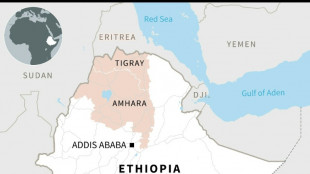
 Ethiopian pro-government militia claims Tigray airport as regional tensions spike

 Ohtani shaking off injuries as Dodgers launch MLB post-season

 Sea levels to rise in California as coastal wave surges up west coast

 New rallies urged in France as protests disrupt over 730 schools

 Djokovic survives China Open scare, Sabalenka starts strong

 King Charles to evoke colonial 'darkest days' on Caribbean tour

 Tesla shares jump after global car sales top estimates
 DR Congo Ebola outbreak killed more than 4,000: official figures

 Djokovic survives China Open scare against wildcard world no. 104
 Lula, Bolsonaro trade blows in final scramble for votes in Brazil

 New clashes erupt as protests disrupt over 560 French schools

 NY governor vows to close loophole after alleged Cornell gang rape

 Ethiopia Tigray rebels pushed back as regional tensions spike

 Stocks rise, yields fall as US job numbers disappoint

 Man City verdict a 'big topic' for England players, says Tuchel

 NY attorney general tasked with investigating alleged Cornell gang rape

 China widens military footprint with Laos air base
 G7 talks as US pressures Europe over diesel stocks
 Man City launch appeal against explosive financial ruling
 Swiss president to quit government

 Europe rejects US threats over diesel stocks, urges joint G7 action

 Philippines tennis star Eala says 'I get overwhelmed sometimes'

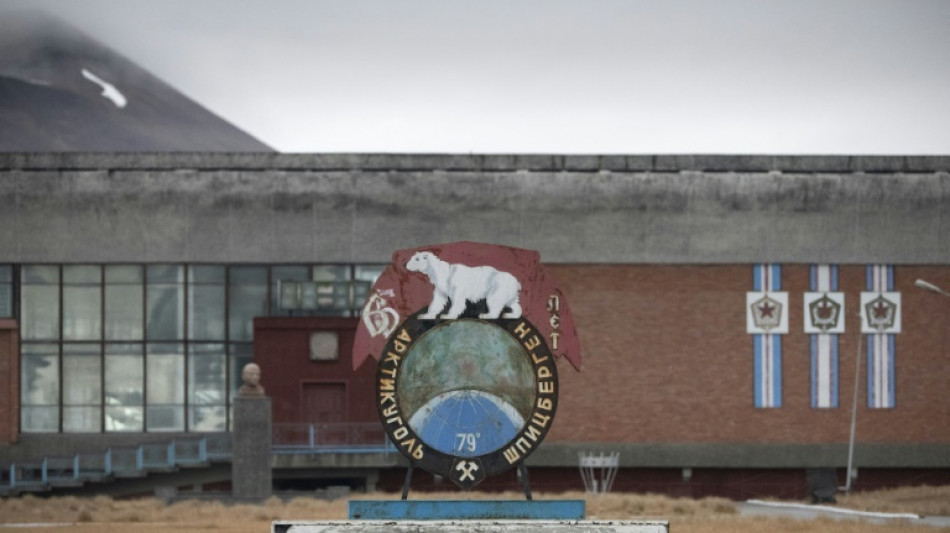
With its bust of Lenin, cultural centre and KGB offices, the abandoned Soviet outpost of Pyramiden may seem like a time-warped Arctic oddity but is valued by Moscow as it vies for clout in the warming region.
Russia has made the development of the Arctic a strategic priority, pinning its hopes for supremacy in the region on a fleet of giant nuclear-powered icebreakers.
The tiny ex-mining settlement of Pyramiden, meanwhile, helps Moscow retain a footprint in Norway's Svalbard archipelago, high above the Arctic Circle.
Norway -- a NATO member -- was afforded sovereignty of Svalbard under the 1920 Treaty of Paris but all signatories, which included the Soviet Union, were given equal rights to explore and exploit its mineral resources.
Russia began coal mining in Barentsburg, another settlement in the archipelago, in 1931, and later in Pyramiden, where the Russian community grew to up to 1,200 between 1960 and 1980.
Being sent to Pyramiden was considered a plum job for a miner, a tour guide told AFP.
On the Western side of the Iron Curtain, it provided a window on Soviet power, culture and self-sufficiency, from pig breeding to its 300-seat cinema, swimming pool, gymnasium and hospital.
But as the Soviet Union fell apart, while mining continued in Barentsburg, it stopped in Pyramiden in 1998 as its performance dwindled, and the miners left.
- 'Interesting future?' -
At first sight, Pyramiden now looks like a ghost town.
No one lives there apart from a handful of Russians who run a hotel -- and the polar bears with whom visitors risk coming face-to-face.
But even though the mining community has long gone, nothing has been destroyed, an AFP photographer saw, and its vestiges offer a glimpse into the heyday of the Soviet era.
Buildings built to last are just weather-beaten from decades of harsh winters.
The rails of the funicular on which the trailers of coal were hauled down are still visible on the pyramid-shaped mountain, which gave the village its name.
Inside the buildings, it's as if time has stood still, with the occupants having left suddenly but expected back at any moment.
Phials of ore are lined up in display cabinets in administrative offices, where calendars still hang on the walls, while the KGB premises have reinforced doors and miners' files spread out on the tables.
Classrooms are adorned with children's drawings and the teacher's cup is still there.
But Yury Ugryumov, of the Arctic and Antarctic Research Institute based in Saint Petersburg, said Pyramiden was not just a place of historical memory.
"This village is not abandoned, it has been temporarily put on hold," he told AFP.
Russia is currently developing tourism and research in Pyramiden, drawing glaciologists, hydrologists and marine experts there for scientific work.
"There's hopes for an interesting future here," said Ugryumov, who heads the Russian Arctic expedition to the archipelago.
S.Pimentel--PC



