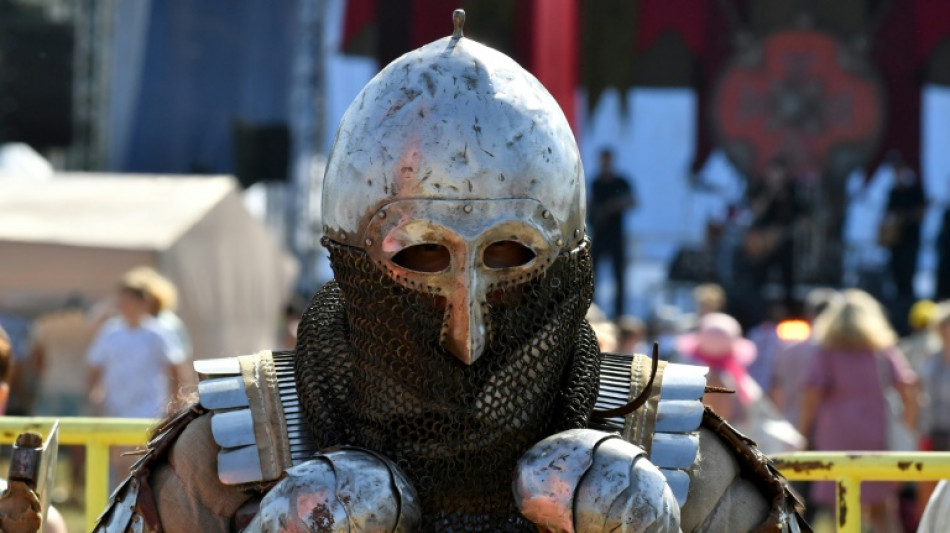
For Russian re-enactors, battle with West is more than history / Photo: Olga MALTSEVA - AFP

 Split loyalties for Indian football fans at Brazil friendly
 India-Pakistan blockbuster brings cricket fever to Japan baseball field
 Wong waiting on Rafa after winning Asian Games tennis gold
 With Russia next door and rising costs, Latvia goes to the polls

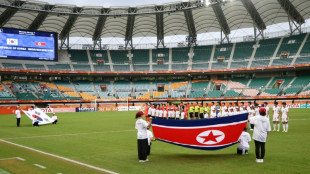 Penalty hero rues empty seats as Games hosts Japan win football gold
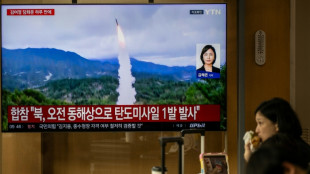 North Korea fires ballistic missile after Seoul's apology demand

 US regulator finds Boeing 737 MAX software bug 'not a safety concern'

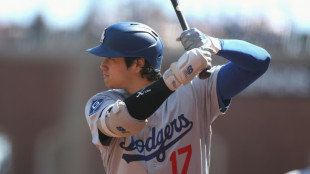 Ohtani 'managing' injuries as Dodgers launch MLB post-season

 Botched US execution leaves murderer unconscious on ventilator: lawyers
 Cornell rape case exposes sexual violence at US colleges

 France held by Italy in Zidane's homecoming after Olise stunner
 Ethiopian pro-government militia claims Tigray airport as regional tensions spike

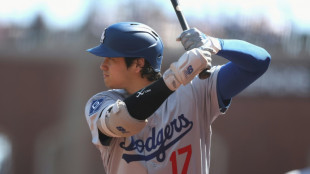 Ohtani shaking off injuries as Dodgers launch MLB post-season
 Sea levels to rise in California as coastal wave surges up west coast
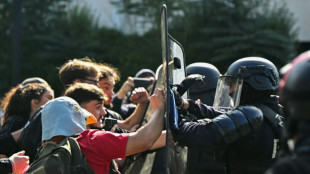 New rallies urged in France as protests disrupt over 730 schools
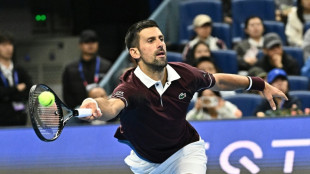 Djokovic survives China Open scare, Sabalenka starts strong
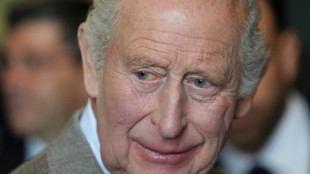 King Charles to evoke colonial 'darkest days' on Caribbean tour
 Tesla shares jump after global car sales top estimates

 DR Congo Ebola outbreak killed more than 4,000: official figures

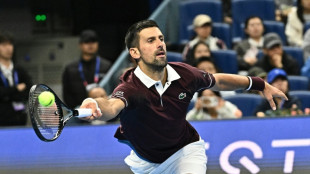 Djokovic survives China Open scare against wildcard world no. 104
 Lula, Bolsonaro trade blows in final scramble for votes in Brazil
 New clashes erupt as protests disrupt over 560 French schools
 NY governor vows to close loophole after alleged Cornell gang rape
 Ethiopia Tigray rebels pushed back as regional tensions spike

 Stocks rise, yields fall as US job numbers disappoint
Surrounded by dozens of men in chainmail and helmets playing dead in a field, an impersonator of mediaeval Russian prince Alexander Nevsky raises his sword and roars.
"This land is Russian, always has been, and always will be!"
It was on this spot near Lake Peipus on Russia's border with Estonia that eight centuries ago Nevsky repelled a force of Teutonic Knights who wanted to convert Russia to Catholicism.
Known as the Battle of the Ice because it was fought largely on the frozen lake, the clash in April 1242 is celebrated as a great victory against efforts to turn Russia away from Eastern Orthodox Christianity.
For the hundreds of history enthusiasts re-enacting the battle on a recent August day, that victory is especially resonant today, as Russian forces wage an offensive in Ukraine framed by the Kremlin as part of an enduring conflict with the West.
"We are fighting against Europe just like our ancestors did," says Oleg Yakontov, a 56-year-old retired paratrooper, holding a sword and shield as sweat drips off his face.
Historical re-enactments are a popular pastime in Russia, whether of mediaeval battles, Napoleonic-era clashes or the fierce fighting of World War II.
- Historic parallels -
Drawing parallels with that history -- and with President Vladimir Putin as a kind of successor to figures like Nevsky -- is part of the messaging put forward by the Kremlin and Russian state media in support of Moscow's campaign in Ukraine.
"To me, Nevsky symbolises the defence of the Motherland and victory," says 23-year-old Vladislav Vasilyev, still out of breath after taking part in the re-enactment.
Several hundred people gathered for the mock battle near the lake, called Lake Chud in Russian. They feasted on grilled meat and listened to live rock music as the combatants pummelled each other on the field.
The event culminated in horseback combat demonstrations a few metres away from a large metal sculpture of Nevsky that was inaugurated in September 2021 by Putin and Patriarch Kirill, the head of the Russian Orthodox Church.
"Alexander Nevsky's personality was truly grandiose," Putin said at the time, praising him as a "talented commander" and "skilful diplomat".
Part of the modern-day appeal of Nevsky for the Kremlin was his alliance with the great power of the time, the Mongol Empire and its Golden Horde, which had destroyed and seized many of Russia's lands.
For some in Russia, Nevsky's acceptance of Mongol dominion helped preserve the country's religious traditions and Eurasian character in the face of Western expansionism.
"His main achievement is this civilisational choice," says Igor Fomyn, a bearded 52-year-old Orthodox priest in a black cassock who came to watch the spectacle.
"By making this choice, he put spirituality, his people, and his Motherland before comfort," the priest says.
- Hero of landmark film -
Nevsky has been used in the past to stir up patriotic fervour, most famously in Sergei Eisenstein's landmark propaganda film "Alexander Nevsky" in 1938.
Made at a time of strained ties between the Soviet Union and Nazi Germany, the film portrayed Nevsky as a heroic figure battling Teutonic domination.
It features an epic recreation of the battle at Lake Peipus with the heavily armoured crusaders crashing through the ice and drowning -- a scene many historians regard as of dubious authenticity.
The film was pulled from cinemas when the USSR and Germany signed a non-aggression pact in 1939, then allowed back onto screens when the Nazis invaded the Soviet Union in 1941.
Nevsky remains a cherished historical figure for many in Russia, and some here have little doubt about who would be his modern counterpart.
"Our president is continuing his work, of course," says Oleg Davydov, a 52-year-old engineer, in attendance at the re-enactment.
"It's all about this country's defence, its strength, its security."
B.Godinho--PC



