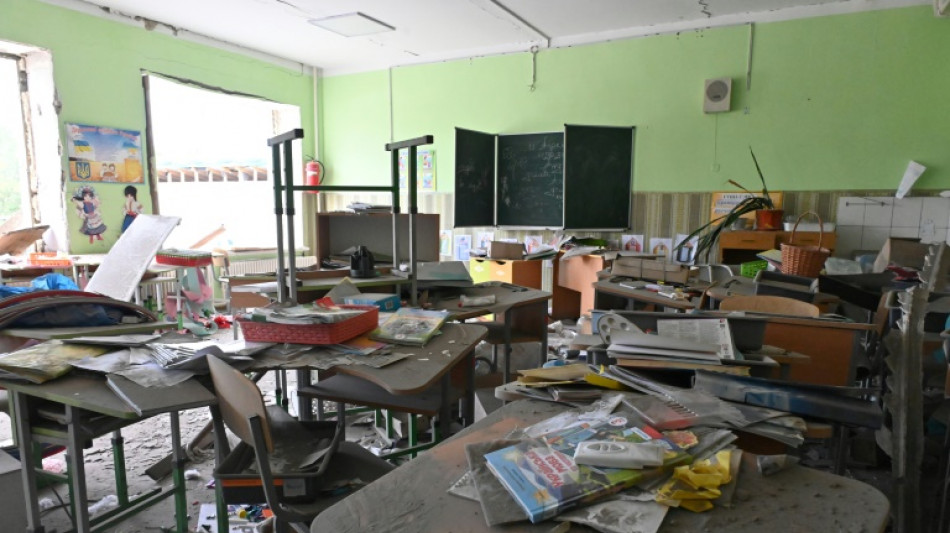
In crisis zones, an urgent UN push to put millions in school / Photo: SERGEY BOBOK - AFP/File

 'Glad it's over': Kim powers to Games gold and military exemption

 After 11 World Cups, football finally comes home for one Indian fan

 Marc Marquez wins sprint at Japan MotoGP, Martin grabs pole

 Alcaraz fends off Arnaldi to reach Japan Open quarters

 Antonelli tops times in final practice at Bahrain GP

 Gauff digs deep to beat Osorio in China Open second round

 Fresh protests to hit Spain after housing measures defeated

 'He's here with me': Japan cycle queen dedicates gold to late brother

 Japan Olympic chief says 'lot more' athletes at Games than expected

 Asian carmakers besting US rivals at home, China poised to strike

 Widgets & Web Offers All-Inclusive Investor Relations Websites for Public Companies, IPOs and SPACs

 Adams named new US captain to 2030 World Cup

 China a better influence in Latin America than US: poll

 Judge pauses construction of border project in Texas national park

 Belgium's De Bruyne fires double to sink Turkey, France held by Italy

 US jobs data boosts stocks as oil prices dip

 US Supreme Court to hear high-stakes climate case

 Trump expected to name intel chief Clayton as AI czar: reports

 Argentina unveils passports-for-investment scheme

 Brazil election debate chaos sparks censorship row
 England's Carse charged by cricket body over nightclub incident

 Amazon vows $1 bn for data center towns, decries 'myths'
 Oil prices drop on G7 fuel release, US jobs data boosts stocks

 G7 agrees deal to ease global energy supply concerns

 Spain's government dealt blow as lawmakers reject housing bills
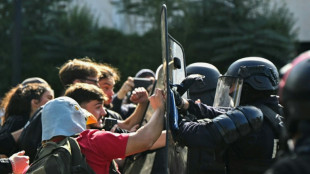
From Pakistan to Ukraine to Venezuela to vast stretches of sub-Saharan Africa, rising crises and climate disasters are taking an added toll on the most vulnerable -- children deprived of school.
"It is horrendous, and it's hard to imagine," said Yasmine Sherif, head of Education Cannot Wait, a UN fund that focuses on education in crisis zones.
"They've lost everything, and on top of it, they have lost their access to a quality education," she said in a recent interview.
Sherif spoke to AFP ahead of a UN summit on the education crisis to take place Monday, a day before the annual General Assembly.
The UN fund estimates that 222 million children around the world have seen their education disrupted by conflict or climate-related disasters, including nearly 80 million who never set foot in school.
Since 2016, Education Cannot Wait has raised more than $1 billion to build schools and buy educational materials as well as provide daily meals and offer psychological services. The aid helps nearly seven million children in 32 countries.
But Sherif said that the urgency of the situation required much bigger efforts.
"If we are going to meet the needs, we have to think in completely different terms today," she said. "We are speaking billions and billions here, not millions" of dollars.
Following the UN summit, Sherif is organizing a conference in Geneva in February where the fund will seek a further $1.5 billion with a goal of reaching an additional 20 million children.
Some Western nations spend $10,000 per year on educating a child. If children in conflict zones receive $150 each, "you can see the extreme divide," said Sherif, who is Swedish.
In some conflict zones, schools have been destroyed, in what Sherif denounced as war crimes, while others, in violation of international law, have been turned into weapons depots.
Elsewhere, physical danger or the gradual unraveling of infrastructure and public services have shut down education, which Sherif said should be a lifeline for the world's young.
"What we offer is a tool, a hope, an empowerment, to resist those forces in a conflict and, through their own means, be able to rise out of those ashes," she said.
The lack of education has real and immediate consequences. Children sometimes end up on the streets, facing threats of violence, human trafficking, recruitment by armed groups or, for girls, forced marriage.
"They've seen their villages burned down, they've seen their parents be executed, they have been subjected to violence. The only thing left for them is, 'If I can get an education, I can rise up out of this and make a difference in my life,'" Sherif said.
"We're taking away that very last piece of hope, unless we provide them with an education."
A.Silveira--PC



