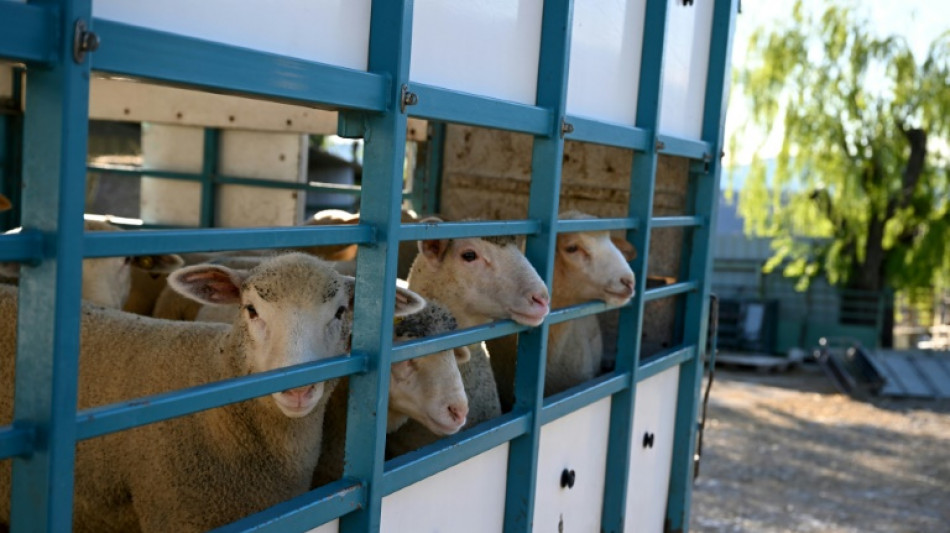
Silence of the lambs as French livestock slaughtered for Easter / Photo: Nicolas TUCAT - AFP

 British Grand Prix stays on MotoGP calendar until 2028

 Britain's EasyJet flies into US hands as takeover confirmed

 Real Madrid sign Ivory Coast winger Yan Diomande

 How online disinformation fuelled Ceuta migrant surge

 Inevitable AI Group Raises $6M From Aleph to Launch AI-Native SaaS Companies

 Suspected Ebola death on boat heading for DR Congo capital

 England selector North not 'hung up' on Stokes absence

 UK Anti-Doping confirm former world champ Parker's ban lifted

 French winemakers dread 'smoky taste' after wildfires

 Stocks diverge with earnings, tech in focus

 England recall batsman Lawrence for Pakistan series

 Siemens shares plunge on disappointing guidance raise

 New Australia coach Kiss gives Japan starts to Ross, Amatosero

 'Stretch our money': Romanians face highest EU inflation
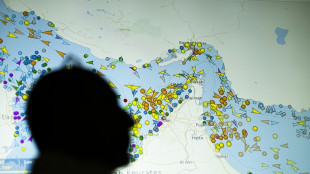 Iran says close to Hormuz plan with Oman, but reopening depends on US

 Messi scores twice to set Leagues Cup record in Miami victory

 Asian stocks mostly down with tech firms back under pressure

 Back to the future as world champion Springboks host All Blacks

 India youth protests highlight mistrust in 'lapdog' media

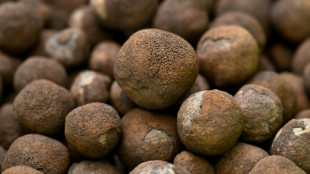 Pacific islands alarmed by Trump-backed push for deep-sea mining
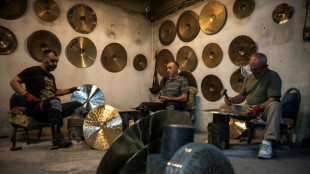
 Erratic rains dictate menu at three-star Michelin restaurant in Brazil

 Zverev, Auger-Aliassime and Medvedev exit Montreal Masters

 Loar Holdings Inc. Reports Q2 2026 Record Results and Upward Revision to 2026 Outlook

 Embattled Infantino sees minnows Malawi reach WAFCON quarter-finals

 Seeds Rybakina, Pegula and Gauff advance at WTA Toronto event

The bleats and human voices have fallen away in an abattoir in southern France, leaving a line of lambs crowding forward to the sound of clanging metal.
As each young sheep passes through the black tarp that shields the slaughtering room from view, it is stunned by a claw that sends an electric current through its skull.
One of the largest sheep abattoirs in France, Sisteron kills 350 animals per hour as it operates at full speed, ahead of the feast days of the three major monotheist religions -- Christianity, Islam and Judaism -- which all fall in April this year.
AFP journalists were granted access to the slaughtering procedure, at a time when the wider industry has faced waves of criticism from activists working undercover to capture videos of animals being mistreated.
The production line at Sisteron in southeast France, renowned for its quality lamb, an abattoir worker uses a frequently sharpened blade to bleed a lamb while another hangs the animal by its back legs.
Within ten minutes, it will be in a fridge after the first butchering steps.
"The lambs have to be in the shops by Thursday" ahead of Easter weekend, sheep farmer and abattoir chief Guillaume Garcin says.
Garcin insists that his business is "hyper-vigilant about animal welfare", calling it a "moral" duty that pushes him beyond regulatory requirements.
Nevertheless, around a quarter of the lambs killed here are meant for the halal market.
Kosher and halal practices are often contested by animal rights advocates, as the animals cannot be stunned for the ritual slaughter -- something allowed for with an exception in French law.
Garcin says that the abattoir simply "can't give up 25 percent" of its business.
- 'No shouting, no-one's angry' -
At the ramp where lambs are unloaded, signs warn that the process is watched over by CCTV.
Past cases of mistreatment have drawn written reprimands and "it doesn't happen anymore," Garcin says.
Video surveillance has even been added inside the slaughterhouse, although a political push to make it compulsory across France came to nothing.
"We shouldn't be afraid to show that there can be good things here too," Garcin says, as images that have escaped from abattoirs in recent years have mostly come from animal rights activists.
"There's no shouting, no-one's angry, we keep an eye on things," says Christophe Chavagnac, head of the Alpes Provence Agneaux company that brings most of the meat slaughtered in Sisteron to market -- while adding that, "in any case, things end the same way."
Garcin whistles to urge the 10 lambs he has brought out of his truck into one of the large pens carpeted with straw and fitted with drinking troughs.
Where ten years ago workers might have used sticks to shove animals into line, these days they use their hands to guide them into the narrow concrete passage towards the slaughter room.
"Off they go," Garcin sighs, adding that "it's not the happiest time of year".
Every part of the lambs -- including their heads, which are cut off and hung on a separate rail -- goes to clothing or food for humans and pets.
"You can see that the animals are respected right to the end," Garcin said.
O.Salvador--PC