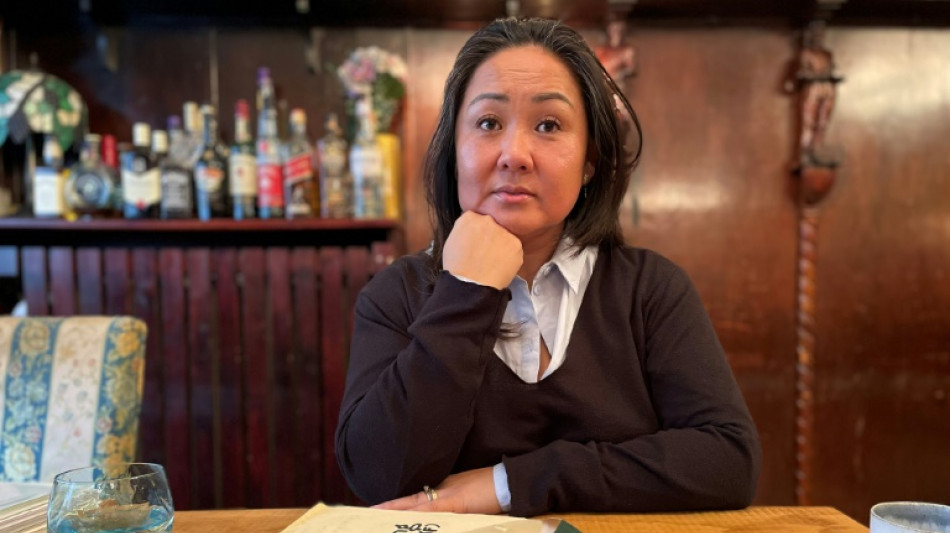
Victims of Denmark's adoption scandal demand answers / Photo: Camille BAS-WOHLERT - AFP

 Rybakina advances while Andreeva exits at Toronto

 Shelton storms to Montreal win as title defence solidifies
 All Blacks need to improve says coach after opening win against Stormers

 Spain imposes border checks on Italy as migrant showdown grows
 Bezzecchi smashes Silverstone track record in MotoGP qualifying
 Rashid Khan takes six wickets as Afghanistan thrash Ireland
 Flintoff quits England Lions role after Sydney Thunder appointment
 Movement, El Vecino and RISE Partner to Launch First Digital Dollar Wallet for Mexican Remittances
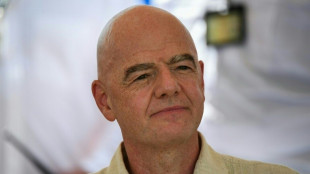 FIFA chief Infantino travels to Colombia for presidential inauguration
 Niewiadoma seizes Tour de France Femmes lead on Mont Ventoux
 Trump's ex-lawyer all set for confirmation as US attorney general
 WHO urges Ervebo vaccine trial in DR Congo Ebola outbreak

 Hardline Trump ally De la Espriella to take office in Colombia

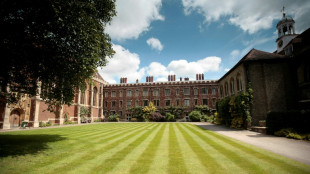 Cambridge to review hiring process amid plagiarism row
 STARTRADER in Discussions with Trustpilot to Consolidate Review Profiles
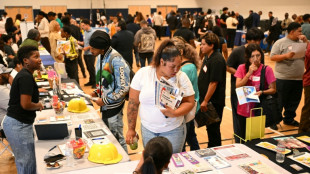
 US unexpectedly loses jobs in blow to Trump's economy claims
 Call for Infantino to resign comes in wake of wave of support

 Gaza beekeeper starts again on rooftop amid ruins of war
 MEXC Lists New Ondo Tokenized Stock Pairs Spanning AI Infrastructure, Semiconductor and Rare Earth Sectors
 Fleming 'like me, but better': McCullum on new England Test coach

 European stocks rise before US jobs report
 Meta ordered to pay $567 mn in US over 'public nuisance' child harm

 Saudi Arabia, Turkey and Pakistan to sign defence pact amid regional violence
 PU Prime Expands Gold Trading with the Launch of XAUUSD247

 Oil extends gains and stocks mostly down on fresh Hormuz worries

"I don't even know when I was born," said May-Britt Koed, a Copenhagen restaurant owner and one of the quarter of a million South Korean babies sent abroad for adoption since the 1950s.
Her adoption files contain two different birth dates months apart, which Koed suspects means she may have been exchanged for another baby that did not survive.
Experts say even the chubby baby picture sent to her Danish adoptive parents may not have been of her.
All the 47-year-old knows for sure is that "I arrived in Denmark on May 17, 1977".
Koed's case is far from isolated. The growing scandal over falsified records has prompted South Korea's Truth and Reconciliation Commission to look at hundreds of cases from the country's "baby farm" adoption industry during the decades of dictatorship that ended in the late 1980s.
Koed said her Danish Korean Rights Group has seen hundreds of files containing falsified documents, with some babies arriving in Denmark six centimetres (two inches) shorter than they were in their South Korea files.
A January report for Denmark's social affairs ministry found that some adoption agencies, operating under Danish state control, knew their South Korean partners were changing children's identities in the 1970s and 1980s.
More worrying still, "it's been documented that letters were being sent from (birth) parents who didn't know where their children were", said Marya Akhtar of the Danish Institute for Human Rights.
- 'Why didn't anything happen?' -
"And allegedly it looks like they were in the possession of authorities in Denmark," she added.
"Why didn't anything happen? We call for a thorough examination," Akhtar told AFP.
Danish adoption agencies also reportedly paid some 54 million kroner ($7.9 million) to Korean orphanages and other bodies over the years to facilitate the adoptions, according to media investigations.
Denmark suspended all international adoptions in January amid serious concerns over babies also brought from other countries including India and South Africa.
"It's like opening Pandora's Box," Koed told AFP.
"We are at a point where we can see that the Danish government has been involved," said Koed, whose group has called for an independent Danish commission into the trade.
"Everybody deserves to have that truth, especially the adoptees that are trying to piece together their own history," she said.
"I haven't searched for a biological family, I'm not sure I'm going to. I am doing this to discover the truth of what happened to all of us and to find out who is responsible," she added.
Time is of the essence for those who want to trace their biological families, with some already learning that their parents are dead, she added.
Copenhagen's freeze on international adoptions came after the last agency operating there closed down amid revelations of financial pressure and fraudulently acquired consent -- not only in South Korea but also in India, Madagascar and South Africa.
Brothers and sisters were separated and sometimes adopted to different countries.
Danish social affairs minister Pernille Rosenkrantz-Theil said there was "too high a risk of human trafficking or child theft".
Last year she promised an inquiry into the history of international adoption procedures.
Legal expert Klaus Josephsen, a lecturer at the University of Aarhus, said there "hasn't been enough control" of the system in Denmark.
"We have a private organisation, which has handled and taken care of those adoptions. They found children then created the papers and sent them to the Danish authorities," he added.
"We will not see those organisations anymore, because the government doesn't trust them. So I think we will get a new system, where the state will be active," Josephsen said.
H.Portela--PC