Countries lock horns over cash for nature at rebooted UN talks / Photo: Lillian SUWANRUMPHA - AFP/File

 Multi-Asset Trading Venue Monochrome Exchange Announces IEO of Its Native Token, $MCR

 South Korea break Japan hearts to win Asian Games basketball gold

 Acosta takes first victory at Austrian MotoGP

 PSG president Nasser al-Khelaifi under investigation in France for conflict of interest

 China swim sensation, 13, sets Games record after Japan win early

 Drones hit Moscow as Russians go to the polls

 New England boss Fleming says 'wrong' to ask Stokes to end retirement

 Germans vote in elections threatening fresh blow to Merz

 US fears rapid escalation in Mideast after Houthis attack Riyadh

 Japan triathlete Hojo wins first gold of Asian Games

 IOC president impressed by 'beautiful' Asian Games wooden huts

 First Asian Games gold goes to Japan as China's 13-year-old Yu lights up pool

 Data centre command hub keeps AI up and running

 Pope Leo in France: the issues on the table

 Packing for a pope: behind the scenes on foreign trips

 Republicans find transgender issues a powerful political weapon in midterm campaigning

 German state elections threaten new shock waves for Merz

 Chile's Bachelet quits race to be next UN chief

 Raphinha treble fires perfect Barca to win at Sevilla

 Thiam makes winning heptathlon return at Decastar meet

 Czechs beat USA to qualify for Davis Cup finals

 Dortmund sink Stuttgart to climb to Bundesliga summit

 Trump says will not tolerate attempts to slow AI growth

 'It has to stop': runners protest women's murders in S.Africa district

 Fire erupts near Riyadh airport as Houthis claim strikes

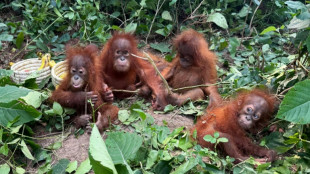
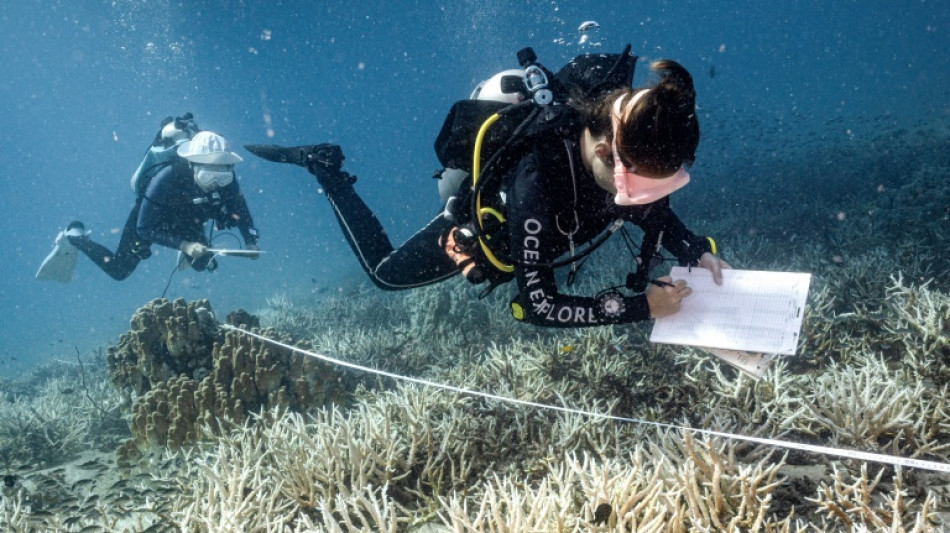
The world's biggest nature conservation conference will restart on Tuesday after negotiations collapsed in disarray last year, with the head of the meeting warning that increasing global "polarisation" was frustrating efforts to protect the planet.
More than two years after a landmark deal on nature -- including a pledge to protect 30 percent of the world's land and seas by 2030 -- nations continue to haggle over the money needed to reverse destruction that scientists say threatens a million species.
Negotiators meeting at the UN's Food and Agriculture Organization headquarters in Rome this week are tasked with breaking a deadlock on funding between rich and developing countries that saw COP16 talks in Cali, Colombia end without agreement in November.
The leader of the UN negotiations, Colombian Environment Minister Susana Muhamad, said countries need to "substantially address these existential crises of biodiversity loss and climate change".
But she said progress in Cali was hamstrung by international rifts.
"Why do we have such polarisation around that issue?" she told a press conference on Monday.
"It has to do, I think in my perspective, with the changing landscape of power in geopolitics, and it has also to do with the requirements that armed conflicts are putting on finance of countries."
Muhamad did not mention specifics, but policymakers in wealthy nations are facing challenges from trade tensions to the war in Ukraine.
The re-election of Donald Trump is also casting a shadow, despite the United States not having signed up to the UN's Convention on Biological Diversity.
- Funding fight -
Muhamad said she was "hopeful" that discussions since the Cali meeting have helped to lay the groundwork for a resolution in Rome.
Countries have until Thursday to hammer out a plan to reach a promised $200 billion a year in finance for nature by 2030, including $30 billion a year from wealthier countries to poorer ones.
The squabble in Cali was mainly over the way in which that funding is delivered.
Developing nations -- led by Brazil and the African group -- want the creation of a new, dedicated biodiversity fund, saying they are not adequately represented in existing mechanisms.
Wealthy nations -- led by the European Union, Japan and Canada -- say setting up multiple funds fragments aid.
On Friday, the COP16 presidency published a new text that seeks to navigate around the "red lines" of each bloc of countries, according to Aleksandar Rankovic of the Common Initiative think tank.
The document proposed kicking the ultimate decision on a new biodiversity fund to future UN talks, while suggesting reforming existing financing for nature conservation.
Observers will be watching closely to see if developed countries, including those in budgetary crises like France and Germany, can be persuaded to agree.
In 2022, nations identified 23 goals to be achieved within the decade, designed to protect the planet and its living creatures from deforestation, over-exploitation of resources, climate change, pollution and invasive species.
The true cost of such destruction of nature is often hidden or ignored, scientists warned last year in a landmark report for the UN's expert biodiversity panel.
They estimated that fossil fuels, farming and fisheries could inflict up to $25 trillion a year in accounted costs -- equivalent to a quarter of global GDP.
The failure to reach agreement in Cali was the first in a string of disappointing outcomes for the planet at UN summits last year.
A climate finance deal at COP29 in Azerbaijan in November was slammed as disappointing by developing nations, while in December negotiators failed to produce an agreement on how to respond to drought at Saudi-hosted UN desertification talks.
Divisions between countries also stalled negotiations in South Korea's Busan on the world's first treaty to tackle plastic pollution in December.
J.Oliveira--PC