CO2 cuts v. cash: Climate talks stymied by stand-off / Photo: INA FASSBENDER - AFP/File

 Drone owners rush to offload devices ahead of Beijing ban

 Trump's beef policies irk Texas ranchers, testing their loyalty

 Nvidia, OpenAI CEOs to attend Xi dinner at White House

 Anthropic picks Accenture for in-house AI safety evaluation

 Balogun returns as Monaco beat Lens to continue strong Ligue 1 start

 'Pause' on overt repression in Venezuela, but reforms still needed: HRW

 Global stocks mixed as yen falls despite Bank of Japan rate hike

 Cuba hit with seventh major blackout of the year

 Murray out with concussion so Wentz will start for Vikings

 UN chief 'deeply regrets' US visa refusal to Abbas for annual meeting

 England quick Carse to face no charges over alleged nightclub assault

 Mancini brings nine newcomers into the first squad of his Italy comeback

 Czechs level Davis Cup tie against USA as South Korea eye Finals

 New France boss Zidane confirms Mbappe as captain after naming first squad

 California governor signs order to explore AI 'kill switch'

 Head leads run spree as Australia win Zimbabwe ODI series

 In-form Raphinha wants to finish career at Barcelona

 Warren Buffett steps down as Berkshire Hathaway chairman

 Carrick confident Man Utd can 'work through' tough time

 Mbappe ends Nike partnership to join Swiss brand On

 Liverpool boss Iraola puts Bournemouth love affair on hold

 'A disaster' if Man City do not win says Maresca after flawless start

 Kerry James Marshall: American 'blackness' painter celebrated in Europe

 Spain coach De la Fuente offers 'full support' to people of Ceuta

 Russia seizes assets of Nestle, French firms over West's Ukraine support

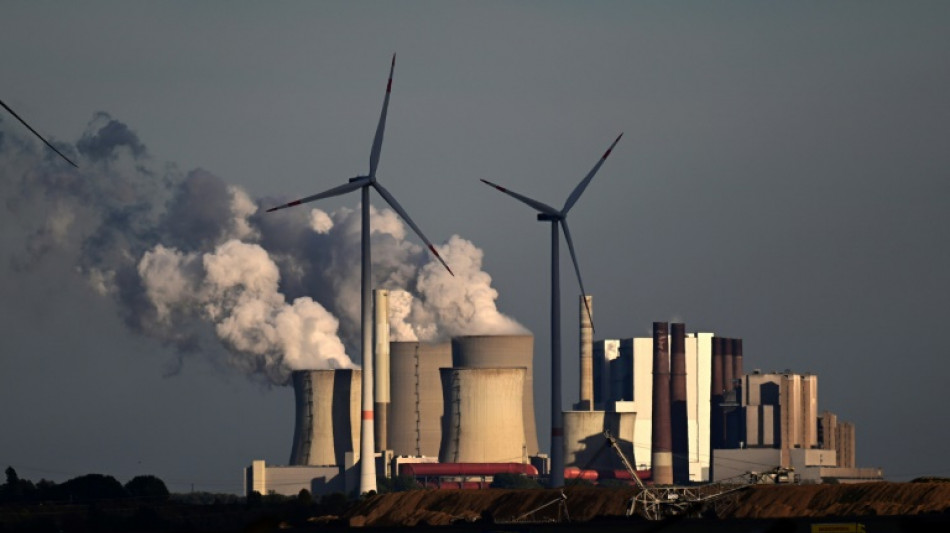
Pressure to speed cuts in carbon pollution took a back seat at UN climate talks that ended late Thursday night, as emerging economies, including China, demanded that rich ones vastly scale up climate financing.
The stand-off over 10 days of technical negotiations in Bonn stymied progress across a raft of issues, including how to minimise the social costs of transitioning to clean energy, how to quantify countries' adaptation needs, and how to help economies already devastated by climate-amplified extreme weather.
This puts even more pressure on the COP28 climate summit in oil-rich United Arab Emirates in December. There, nearly 200 nations will review a "global stocktake" of how far off track the world is from achieving the Paris climate treaty goal of capping global warming at 1.5 degrees Celsius above pre-industrial levels.
Under current policies, the planet will warm nearly twice that much by 2100, according to the UN's climate science advisory panel.
"Climate change is not a North versus South issue," UN Climate chief Simon Stiell said at the closing plenary on Thursday.
"This is a tidal wave that doesn't discriminate. The only way we can avoid being swallowed by it is investing in climate action."
A long-standing tug-of-war at UN climate talks pits the European Union against a powerful negotiating bloc: the Like-Minded Developing Countries (LMDC), which includes China, India and Saudi Arabia.
The EU, along with some of the world's poorest and most climate-vulnerable nations, seeks an accelerated timetable for slashing greenhouse gases, and wants the consensus-based UN forum to call for the phasing out of fossil fuels.
But their drive for more ambitious reductions is undercut by the yawning gap between the comparatively small amounts of money mobilised by rich nations historically responsible for global warming and the trillions needed by developing nations to green their economies and cope with existing climate impacts, or "loss and damage".
- From billions to trillions -
"The difficulties of making substantive progress on loss and damages reflect the reluctance of developed countries on getting into real engagement," Cuba's lead negotiator said Thursday, speaking on behalf of the G77 + China negotiating bloc, which comprises 134 countries and 80 percent of the world's population.
Confidence in the US, Canada, Europe, Japan and other wealthy nations has been further undermined by the failure to deliver on a promise first made in 2009 to provide the developing world $100 billion a year by 2020.
"We stand by our climate finance commitments," a delegate from the European Union insisted, pointing to a report jointly authored by Canada and Germany saying the $100 billion promise would finally be kept in 2023.
More crucial still, rich nations say, will be tapping into the private finance that can leverage billions into trillions.
That objective will be front and centre next week in Paris at the Summit for a New Global Financing Pact, hosted by French President Emmanuel Macron.
- 'Missed opportunity' -
More broadly, accelerating action will dominate a September climate summit in New York hosted by UN Secretary-General Antonio Guterres, who decried on Thursday the lack of progress to date.
"Countries are far off track," he said. "I see a lack of ambition; a lack of trust; a lack of support; a lack of cooperation."
Guterres also took aim at what he called "the polluted heart of the climate crisis: the fossil fuel industry".
"Let's face facts," he said. "The problem is not simply fossil fuel emissions. It's fossil fuels, period."
The UN chief's words were starkly at odds with those of embattled COP28 president -- and head of the Abu Dhabi National Oil Company -- Sultan al-Jaber, who suggested last month that fossil fuel emissions could be reduced through carbon capture technologies.
In a stopover at the talks in Bonn, however, he said for the first time that the "phase-down" of fossil fuels was "inevitable".
But al-Jaber failed to outline a roadmap or his expectations for COP28.
"It's time to shift out of listening mode into action mode," said Alden Meyer, a senior analyst at climate policy think tank E3G. "It was a bit of a missed opportunity not to do so here."
The stalemate in Bonn does not bode well for COP28, others said.
"The gap between the Bonn political performance and the harsh climate reality feels already absurd," said Li Shuo, a senior global policy adviser at Greenpeace East Asia.
"Climate impacts stay no longer on paper. People are feeling and suffering from it now."
L.Henrique--PC