We may be underestimating the climate risk to crops: researchers / Photo: SCOTT OLSON - GETTY IMAGES NORTH AMERICA/AFP

 Drone owners rush to offload devices ahead of Beijing ban

 Trump's beef policies irk Texas ranchers, testing their loyalty

 Nvidia, OpenAI CEOs to attend Xi dinner at White House

 Anthropic picks Accenture for in-house AI safety evaluation

 Balogun returns as Monaco beat Lens to continue strong Ligue 1 start

 'Pause' on overt repression in Venezuela, but reforms still needed: HRW

 Global stocks mixed as yen falls despite Bank of Japan rate hike

 Cuba hit with seventh major blackout of the year

 Murray out with concussion so Wentz will start for Vikings

 UN chief 'deeply regrets' US visa refusal to Abbas for annual meeting

 England quick Carse to face no charges over alleged nightclub assault

 Mancini brings nine newcomers into the first squad of his Italy comeback

 Czechs level Davis Cup tie against USA as South Korea eye Finals

 New France boss Zidane confirms Mbappe as captain after naming first squad

 California governor signs order to explore AI 'kill switch'

 Head leads run spree as Australia win Zimbabwe ODI series

 In-form Raphinha wants to finish career at Barcelona

 Warren Buffett steps down as Berkshire Hathaway chairman

 Carrick confident Man Utd can 'work through' tough time

 Mbappe ends Nike partnership to join Swiss brand On

 Liverpool boss Iraola puts Bournemouth love affair on hold

 'A disaster' if Man City do not win says Maresca after flawless start

 Kerry James Marshall: American 'blackness' painter celebrated in Europe

 Spain coach De la Fuente offers 'full support' to people of Ceuta

 Russia seizes assets of Nestle, French firms over West's Ukraine support

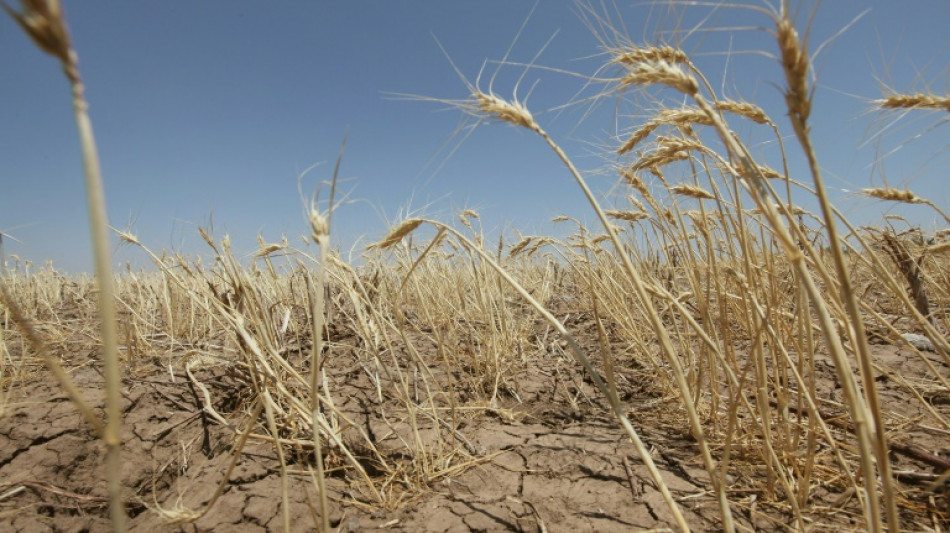
The risks of harvest failures in multiple global breadbaskets have been underestimated, according to a study Tuesday that researchers said should be a "wake up call" about the threat climate change poses to our food systems.
Food production is both a key source of planet-warming emissions and highly exposed to the effects of climate change, with climate and crop models used to figure out just what the impacts could be as the world warms.
In the new research published in Nature Communications, researchers in the United States and Germany looked at the likelihood that several major food producing regions could simultaneously suffer low yields.
These events can lead to price spikes, food insecurity and even civil unrest, said lead author Kai Kornhuber, a researcher at Columbia University and the German Council on Foreign Relations.
By "increasing the concentration of greenhouse gases, we are entering this uncharted water where we are struggling to really have an accurate idea of what type of extremes we're going to face," he told AFP.
"We show that these types of concurring events are really largely underestimated."
The study looked at observational and climate model data between 1960 and 2014, and then at projections for 2045 to 2099.
Researchers first looked at the impact of the jet stream -- the air currents that drive weather patterns in many of the world's most important crop producing regions.
They found that a "strong meandering" of the jet stream, flowing in big wave shapes, has particularly significant impacts on key agricultural regions in North America, Eastern Europe and East Asia, with a reduction in harvests of up to seven percent.
The researchers also found that this had been linked to simultaneous crop failures in the past.
One example was in 2010, when the fluctuations of the jet stream were linked to both extreme heat in parts of Russia and devastating floods in Pakistan, which both hurt crops, Kornhuber said.
- Risk assessment -
The study also looked at how well computer models assess these risks and found that while they are good at showing the atmospheric movement of the jet stream, they underestimate the magnitude of the extremes this produces on the ground.
Kornhuber said the study should be a "a wake up call in terms of our uncertainties" of the impacts of climate change on the food sector, with more frequent and intense weather extremes and increasingly complicated combinations of extremes.
"We need to be prepared for these types of complex climate risks in the future and the models at the moment seem to not capture this," he said.
On Monday, United Nations' human rights chief Volker Turk warned of a "truly terrifying" dystopian future of hunger and suffering as climate change-driven extremes hit crops, livestock and crucial ecosystems.
He told a UN debate on the right to food that more than 828 million people faced hunger in 2021 and climate change could increase that by 80 million by mid-century, and slammed world leaders for short term thinking.
P.Mira--PC