Adapt now as hotter marine heatwaves hit: scientists / Photo: ERNESTO BENAVIDES - AFP

 Drone owners rush to offload devices ahead of Beijing ban

 Trump's beef policies irk Texas ranchers, testing their loyalty

 Nvidia, OpenAI CEOs to attend Xi dinner at White House

 Anthropic picks Accenture for in-house AI safety evaluation

 Balogun returns as Monaco beat Lens to continue strong Ligue 1 start

 'Pause' on overt repression in Venezuela, but reforms still needed: HRW

 Global stocks mixed as yen falls despite Bank of Japan rate hike

 Cuba hit with seventh major blackout of the year

 Murray out with concussion so Wentz will start for Vikings

 UN chief 'deeply regrets' US visa refusal to Abbas for annual meeting

 England quick Carse to face no charges over alleged nightclub assault

 Mancini brings nine newcomers into the first squad of his Italy comeback

 Czechs level Davis Cup tie against USA as South Korea eye Finals

 New France boss Zidane confirms Mbappe as captain after naming first squad

 California governor signs order to explore AI 'kill switch'

 Head leads run spree as Australia win Zimbabwe ODI series

 In-form Raphinha wants to finish career at Barcelona

 Warren Buffett steps down as Berkshire Hathaway chairman

 Carrick confident Man Utd can 'work through' tough time

 Mbappe ends Nike partnership to join Swiss brand On

 Liverpool boss Iraola puts Bournemouth love affair on hold

 'A disaster' if Man City do not win says Maresca after flawless start

 Kerry James Marshall: American 'blackness' painter celebrated in Europe

 Spain coach De la Fuente offers 'full support' to people of Ceuta

 Russia seizes assets of Nestle, French firms over West's Ukraine support

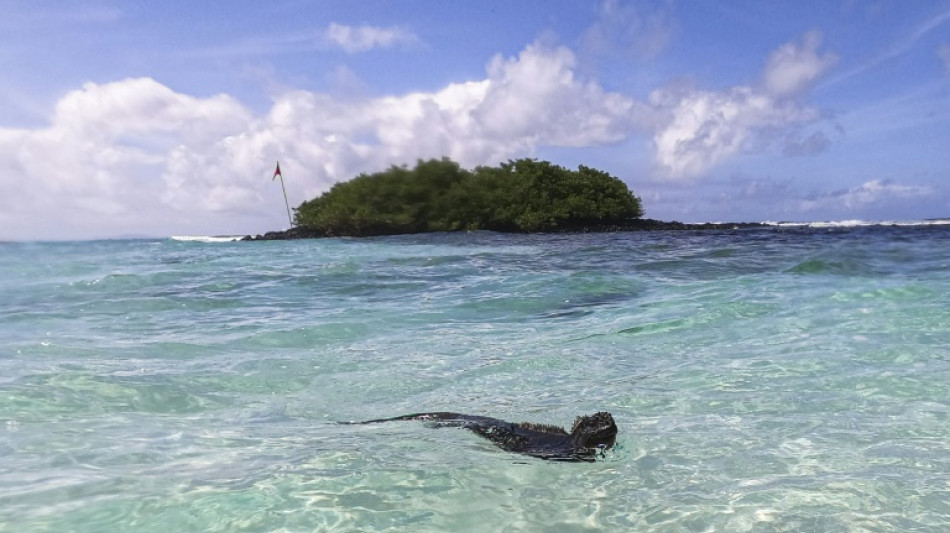
Conservationists and the fishing and tourism industries must take pre-emptive measures to protect wildlife and livelihoods as the El Nino phenomenon amplifies marine heatwaves already made more intense and frequent by climate change, scientists said on Wednesday.
The naturally occurring weather pattern originates in the Pacific Ocean and drives increased heat worldwide, bringing drought to some areas and heavy rains elsewhere.
The central and eastern Pacific, parts of the western United States, Ecuador, Peru and the Indian Ocean are most likely to be hit hardest by longer and intensified heatwaves.
Historical data show these regions to be vulnerable to mass die-offs of marine habitats including coral reefs and kelp forests, nine experts wrote in a comment in the journal Nature.
Preparing for the heatwaves in the months ahead would stave off or soften their consequences, buying precious time for species, ecosystems and connected industries to adapt, they said.
The extreme events "show us what the long-term future might be like under climate change, when these warm ocean temperatures will be experienced every day", said report co-author Alistair Hobday.
"A combination of climate warming and extreme events will make life difficult for species that are already living close to their maximum tolerance," like corals, he told AFP.
Authorities should set up warning systems so local communities can act, for instance, by relocating fish species to cooler waters, reducing harvest quotas, or closing fishing areas altogether, the scientists noted.
These can range from ocean weather forecasts reliable a week in advance to long-term climate projections that take into account manmade greenhouse gas emissions.
Improved forecasting that uses models combining ocean and atmospheric models, and assessing the accuracy of their predictions, is "crucial" for local biodiversity conservation, the experts said.
Indigenous and local communities should lead intensified monitoring and planning efforts as they are well placed to notice early changes in the environment, they added.
- 'Permanent heatwave state' -
Marine heatwaves disrupt ecosystems, killing some species and forcing others to migrate to cooler waters.
The climate crisis could create a "permanent heatwave state", meaning species and ecosystems can no longer survive in some regions, the authors wrote.
Catches can be reduced for several years, as happened in the crab and scallop fisheries off western Australia after a 2011 warming event.
Species migration can also affect fish market prices, employment and quota management.
Snorkelling and diving firms could reduce staff numbers during marine heatwaves or change their activities to minimise job losses, the researchers suggested.
Adapting to climate change has taken on a greater role in public policy in addition to mitigating its effects.
At climate negotiations in Egypt last year, UN chief Antonio Guterres unveiled a five-year plan costing $3.1 billion to build a global early warning system for deadly and costly extreme weather events amplified by climate change.
El Nino events, which occur every two to seven years, are marked by warmer-than-average sea surface temperatures in the central and eastern Pacific near the Equator, and last about nine to 12 months.
This year has already seen unprecedented marine heatwaves, with record-high temperatures measured in the Mediterranean, the North Atlantic and off Florida.
The current El Nino "could be as strong" as the previous one recorded in 2015-2016 but is developing more slowly, Hobday said.
R.J.Fidalgo--PC