-
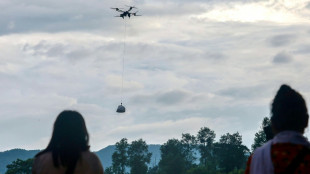
 Indians living in Japan on stand-by to house Asian Games athletes
-
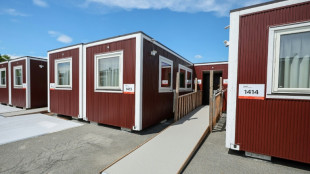
We don't want Games host Japan losing money, says Asian Olympic official
-
 Trump signs bill authorizing sweeping Russia sanctions
-
Ed Sheeran returns to stage after Palestinian controversy

-
 Protesters form human chain at Kennedy Center after Trump threat
-
Asian Games to open in Japan after troubled build-up

-
 Death toll from attack at police HQ in Pakistan rises to 31
-
Drone owners rush to offload devices ahead of Beijing ban

-
 Trump says Denmark to give US 'permanent control' over Greenland security
-
Trump's beef policies irk Texas ranchers, testing their loyalty

-
 Kennedy Center: future unclear for iconic Washington arts hub
-
Nvidia, OpenAI CEOs to attend Xi dinner at White House

-
 Trump claims 'infinite' Greenland security deal with Denmark
-
Anthropic picks Accenture for in-house AI safety evaluation

-
 Helicopters battle wildfire threatening Ecuador's capital
-
Balogun returns as Monaco beat Lens to continue strong Ligue 1 start

-
 Brentford batter Chelsea to undo Alonso's promising start
-
'Pause' on overt repression in Venezuela, but reforms still needed: HRW

-
 Kane hits Bundesliga century as Bayern rout Union
-
Global stocks mixed as yen falls despite Bank of Japan rate hike

-
 Trump says CNN, MS NOW, Politico banned from White House
-
Cuba hit with seventh major blackout of the year

-
 Hushing and hedging: US companies retreat on climate
-
Murray out with concussion so Wentz will start for Vikings

-
 Springboks to face Fiji before 2027 Rugby World Cup
-
UN chief 'deeply regrets' US visa refusal to Abbas for annual meeting

-
 Nigeria miners struggled to breathe in cell before 37 died: survivors
-
England quick Carse to face no charges over alleged nightclub assault

-
 McIlroy on the charge at PGA Championship as Reed withdraws
-
Mancini brings nine newcomers into the first squad of his Italy comeback

-
 McIlroy on the charge at PGA Championship
-
Czechs level Davis Cup tie against USA as South Korea eye Finals

-
 Crisis-wracked Volkswagen warns of 10-bn-euro hit to profits
-
New France boss Zidane confirms Mbappe as captain after naming first squad

-
 Costa Rica's Grynspan tops third informal poll for UN chief: diplomat
-
California governor signs order to explore AI 'kill switch'

-
 Stock markets retreat after central bank rate hikes
-
Head leads run spree as Australia win Zimbabwe ODI series

-
 Russia labels director of Cannes Grand Prix winner a 'foreign agent'
-
In-form Raphinha wants to finish career at Barcelona

-
 Macron warns of Russian 'hybrid' threat after meeting presidential hopefuls
-
Warren Buffett steps down as Berkshire Hathaway chairman

-
 UN holds third informal poll for new chief
-
Carrick confident Man Utd can 'work through' tough time

-
 Kulusevski return can spark Spurs: De Zerbi
-
Mbappe ends Nike partnership to join Swiss brand On

-
 Shakira to cap off world tour with Madrid 12-gig run
-
Liverpool boss Iraola puts Bournemouth love affair on hold

-
 Isolated Syrian-Druze city blames Damascus for shortages
-
'A disaster' if Man City do not win says Maresca after flawless start

US launches satellite to better prepare for space weather
The United States on Tuesday launched a new satellite expected to significantly improve forecasts of solar flares and coronal mass ejections -- huge plasma bubbles that can crash into Earth, disrupting power grids and communications.
A SpaceX Falcon Heavy rocket carrying the satellite into orbit took off from NASA's Kennedy Space Center in Florida at 5:26 pm (2126 GMT), the US space agency announced.
The GOES-U (Geostationary Operational Environmental Satellite U) mission is a collaboration between NASA and the National Oceanic and Atmospheric Administration (NOAA).
It will be the fourth and final in a series of satellites that have tracked hurricanes and tornadoes, monitored climate and sea surface temperature, air quality and even meteor detections since 2016.
Orbiting 22,236 miles (35,785 kilometers) above the equator, the satellites match the speed of Earth's rotation in order to hold their positions over specific regions and provide continuous coverage.
They "are an indispensable tool for protecting the United States and the one billion people who live and work in the Americas," NOAA's Pam Sullivan told a press conference.
GOES-U is the first of the four to include a coronagraph, called the Compact Coronagraph-1 (CCOR-1). Coronagraphs block the Sun's disk and allow observation of its outermost layer, called the corona.
"That allows us to observe large explosions off the sun, called coronal mass ejections that can hurtle billions of tons of matter at millions of miles per hour towards Earth," said Elsayed Talaat, in charge of space weather observations at NOAA.
The ejections, known as CMEs, can disrupt Earth's magnetic field, causing satellites, energy infrastructure, and navigation systems to go down. Collecting space weather data allows authorities to issue warnings one to four days in advance.
In early May, the planet experienced its first level 5 geomagnetic storm in two decades, the highest rating on the scale, which unleashed spectacular auroras worldwide.
With the new coronagraph, the speed and direction of this event could have been better understood from the start, said Talaat.
Major disruptions weren't felt, but some farmers "reported being unable to plant their crops because the precision GPS relied upon by their equipment had malfunctioned," he said.
For the first time, the United States will have a coronagraph observing the solar corona almost continuously, with the CCOR-1 taking readings every 30 minutes.
Currently, such observations are received with a delay of up to eight hours. They are carried out by a satellite launched in 1995, which should cease operating within two years.
"Once operational CCOR-1 will mark a new chapter in space weather observations," said Talaat.
"Although the sun is no more active than in previous generations, our society has changed, and we are more sensitive than ever to the sun's changing mood."
J.Oliveira--PC