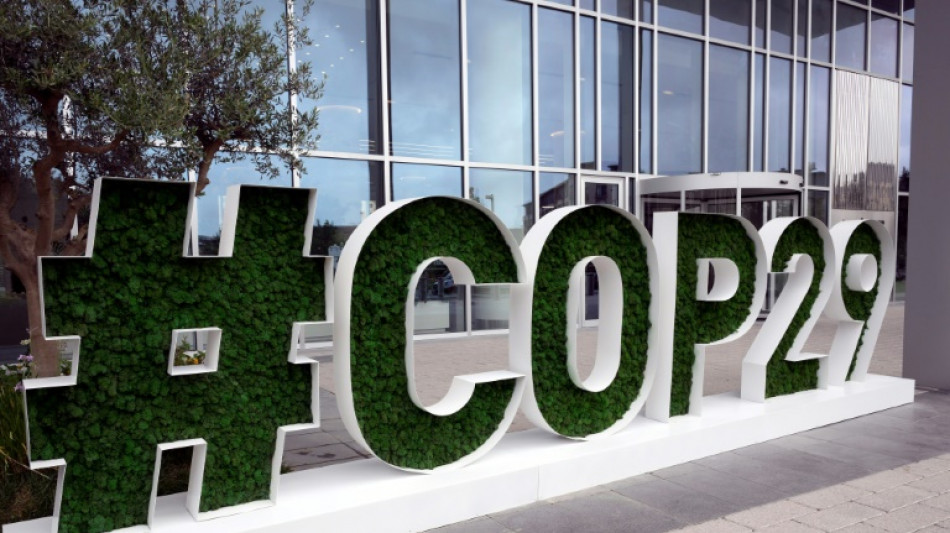
Little progress at key meet ahead of COP29 climate summit / Photo: TOFIK BABAYEV - AFP/File

 Abdul El-Sayed declares victory in Michigan Senate contest

 Democrats capture US Congress in sweeping midterm victory

 Manchester United rallies past Roma as PSG dominates in Champions League

 Qatar sees tentative opening for renewed regional diplomacy

 Qatar Tourism joins Pacific Asia Travel Association at London travel market

 Abdul El-Sayed Wins Michigan Senate Seat in Historic Election

 Qatar media bodies discuss support for humanitarian initiatives

 Galloway accuser could not foresee publishing-sector fallout, lawyer argues

 New York City Center revives In the Heights as a timely community story

 Godzilla Minus Zero shifts focus toward postwar human drama
A key meeting ahead of the UN COP29 climate summit ended Friday in frustration with countries making little progress over how to fund a new finance deal for poorer nations.
Delegates were urged to put aside differences and move negotiations forward during the two-day "pre-COP" in Azerbaijan, which is hosting the major climate talks in November.
Not all countries were represented so smaller gains, rather than concrete breakthroughs, were hoped for during the Baku meet.
But the gathering wrapped with nations no closer to resolving the same sticking points that have hindered the talks for months, attendees told AFP.
"Despite some hopeful talk of coming together, countries remain quite far apart," said Iskander Erzini Vernoit, co-founder and director at the IMAL Initiative for Climate and Development, who was present in Baku.
At COP29, countries are supposed to agree on a new goal for "climate finance" that meets the needs of the world's poorest countries in dealing with global warming.
The existing amount of $100 billion a year is considered insufficient and rich countries are under pressure to raise their contributions by at least a factor of 10.
Donors have still not said how much they are willing to pay, frustrating those advocating for a larger financial commitment from the countries most responsible for climate change to date.
"It is outrageous that just weeks before COP29, developed countries did not say how much money they are willing provide for this new finance goal," said Mariana Paoli from Christian Aid.
Some developed countries want the pact to offer mixed layers of finance: one from governments, another from multilateral lenders, and private capital.
But Paoli said without developed countries agreeing to pay from their coffers without strings attached "any number at COP will be a meaningless figure".
Most climate finance comes as loans, and developing countries say it worsens their debt problems.
They are pushing for unconditional grants to finance clean energy and climate adaptation measures, and want funding for disaster relief known as "loss and damage" included in any new deal.
Rebecca Thiessen from the NGO coalition CAN said it was "positive" to hear rich nations at Baku talk of a pact in trillions instead of billions.
"The scale of need has been recognised, but no figure has been put on the table," she said.
P.Sousa--PC