-
 Equitas Small Finance Bank rebounds after naming interim chief executive
-
Bharti Airtel revenue expected to grow at double-digit pace in second quarter

-
 Titan quarterly profit seen rising as jewellery business drives growth
-
Indian crude-sensitive shares gain after 13% oil-price decline

-
 Kuwait finance minister holds economic cooperation talks at COMCEC
-
Stocks and dollar fall as Democratic election gains reshape markets

-
 Abdul El-Sayed declares victory in Michigan Senate contest
-
Kuwait marks key events and anniversaries from national history

-
 Democrats capture US Congress in sweeping midterm victory
-
Trump congratulates Democrats and signals willingness to cooperate

-
 Manchester United rallies past Roma as PSG dominates in Champions League
-
Qatar prime minister advances mediation through diplomatic calls

-
 Qatar sees tentative opening for renewed regional diplomacy
-
Greenland parliament approves security agreement with United States

-
 Qatar Tourism joins Pacific Asia Travel Association at London travel market
-
Qatar envoy meets incoming UN General Assembly president

-
 Abdul El-Sayed Wins Michigan Senate Seat in Historic Election
-
Trump Signals Willingness to Work With Democrats After Midterm Defeat

-
 Qatar media bodies discuss support for humanitarian initiatives
-
Pitches and Keynote Speakers Are Confirmed for Blue Magic Netherlands on November 17

Super Typhoon Man-yi batters Philippines' most populous island
Super Typhoon Man-yi slammed into the Philippines' most populous island on Sunday, with the national weather service warning of flooding, landslides and huge waves as the storm sweeps across the archipelago nation.
Man-yi was still packing maximum sustained winds of 185 kilometres per hour (115 miles per hour) after making its first landfall late Saturday on lightly populated Catanduanes island.
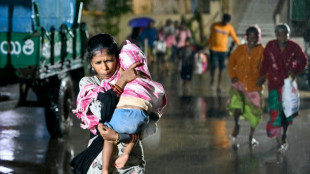
More than 1.2 million people fled their homes ahead of Man-yi as the weather forecaster warned of a "life-threatening" impact from the powerful storm, which follows an unusual streak of violent weather.
Man-yi uprooted trees, brought down power lines and smashed flimsy houses to pieces after hitting Catanduanes in the typhoon-prone Bicol region.
No deaths have been reported, but there was "extensive" damage to structures on Catanduanes, civil defence chief Ariel Nepomuceno said.
Man-yi remained a super typhoon as it hit heavily populated Luzon -- the country's economic engine -- forecasters said, warning of a "potentially dangerous" situation in Aurora province.
"Significant weakening" was expected as it traversed the mountainous island, the weather service said.
But it said severe flooding and landslides were expected as Man-yi dumped "intense to torrential" rain over provinces in its path.
Forecasters also warned storm surges of up to more than three metres could swamp vulnerable coastal communities, including in Manila.
Panganiban municipality in the northeast of Catanduanes took a direct hit from Man-yi.
Photos and a drone video shared on the Facebook page of Mayor Cesar Robles showed fallen power lines, damaged and destroyed buildings, and trees and corrugated iron sheets strewn on the roads.
- 'Bursts of wind' -
"Pepito was so strong, I have never experienced a typhoon this strong," Robles said in a post, using the local name for Man-yi, as clean-up efforts got underway and people returned home.
"It is still a bit unsafe, there are still bursts of wind and there are many debris."
Mother-of-three Marissa Cueva Alejandro, 36, who grew up in Catanduanes and sheltered with a relative during Man-yi, said typhoons were getting stronger.
"Before, we would only experience (typhoon) signal number three to four, but now typhoons are getting as strong as signal number five," she said, referring to the weather service's five-tiered wind warning system.
Man-yi is the sixth storm in the past month to batter the archipelago nation. At least 163 people died in the previous storms, that also left thousands homeless and wiped out crops and livestock.
Climate change is increasing the intensity of storms, leading to heavier rains, flash floods and stronger gusts.
About 20 big storms and typhoons hit the Southeast Asian nation or its surrounding waters each year, killing scores of people, but it is rare for multiple such weather events to take place in a small window.
- Resorts deserted -
The weather forecaster has hoisted its highest and second-highest typhoon signals over a wide band of provinces stretching from Luzon's east coast, where Man-yi made its second landfall, across to the western side of the island where it will exit.
Around 2,000 people were in emergency evacuation shelters in Dipaculao municipality in Aurora province.
Others have stayed home to protect their property and livestock, or because they were sceptical of the warnings, said Geofry Parrocha, communications officer of Dipaculao disaster agency.
"Some of our countrymen are really hard-headed. They do not believe us until the typhoon arrives," Parrocha told AFP.
Tourists emptied out of coastal resorts ahead of the typhoon.
"Our facilities are deserted," said Irene Padeo, reservation officer of the L'Sirene Boutique Resort in Baler town in Aurora, as Man-yi neared.
"Our outdoor items have all been packed and taken indoors. We tied down all the rest."
On its current trajectory, Man-yi will cross north of Manila and sweep over the South China Sea on Monday.
Man-yi hit the Philippines late in the typhoon season -- most cyclones develop between July and October.
Earlier this month, four storms were clustered simultaneously in the Pacific basin, which the Japan Meteorological Agency told AFP was the first time such an occurrence had been observed in November since its records began in 1951.
M.Carneiro--PC