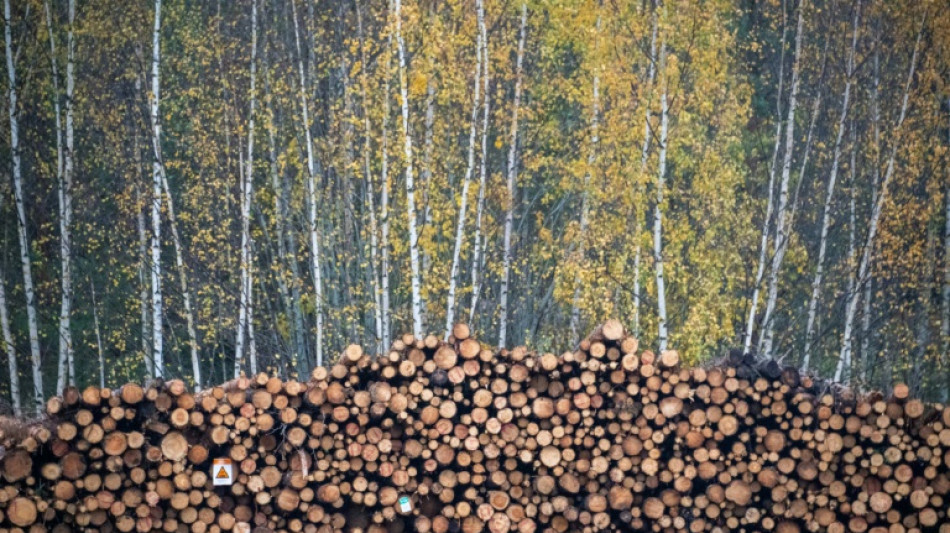
WWF blasts Sweden, Finland over logging practices / Photo: Olivier MORIN - AFP

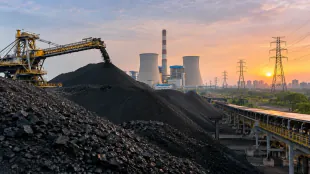 India seeks threefold increase in coal stocks to prevent summer power shortages

 Indian companies report mixed second-quarter results on November 4
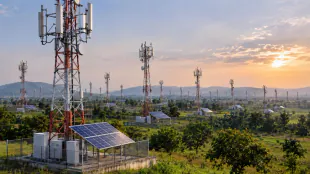
 KKR secures Indian regulator approval for Gentari Renewables investment

 Bharti Airtel revenue expected to grow at double-digit pace in second quarter

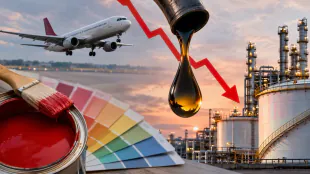 Indian crude-sensitive shares gain after 13% oil-price decline

 Stocks and dollar fall as Democratic election gains reshape markets

 Kuwait marks key events and anniversaries from national history

 Trump congratulates Democrats and signals willingness to cooperate

 Qatar prime minister advances mediation through diplomatic calls

 Greenland parliament approves security agreement with United States

 Qatar envoy meets incoming UN General Assembly president

 Trump Signals Willingness to Work With Democrats After Midterm Defeat

 Pitches and Keynote Speakers Are Confirmed for Blue Magic Netherlands on November 17
Sweden and Finland, Europe's most forested countries, are not doing enough to protect their primary and old-growth forests, falling short of EU commitments, the World Wildlife Fund (WWF) said in a report Thursday.
"Thousands of hectares of forests with high conservation value are logged each year, despite their importance for climate stability, biodiversity, and long-term ecological health," said the WWF.
The two Nordic countries are "exploiting loopholes to allow logging in forests that should be safeguarded," the organisation said in a statement.
Private forest owners insist they are complying with current legislation and that their felling of trees is sensible.
"Nobody cuts down trees just for the fun of it," Magnus Kindbom, forestry director at the Federation of Swedish Farmers (LRF), told AFP. "It's because there's a need in society.
"And if we didn't use wood products, which have no negative impact on the climate, then we would have to use more fossil fuels, which always have a negative impact on the climate," he added.
"That's the dilemma we face: how to find the best compromise between having access to more biomass to improve the climate, and understanding its impact on biodiversity."
- 'Dilemma' -
In Sweden, the forestry industry accounts for around 140,000 jobs according to the Swedish Forest Industries Federation, which represents companies in the pulp, paper and wood-processing industries.
At the same time, forests -- the second largest carbon sink after the oceans -- help mitigate climate change, which for the WWF underlines the importance of preserving them.
According to the EU's Nature Restoration Law, which came into force in August, 20 percent of natural areas -- including forests and marshes -- must be restored by 2030 to the state they were in the 1950s.
This applies to all forests, whether natural or cultivated for forestry purposes -- not just protected areas.
"The current government has shown a low ambition to strictly protect primary and old-growth forests on private lands," the WWF said.
"Consequently, Sweden has an ongoing loss of primary and old-growth forests due to clear-cutting," the environmental group argued.
- 'Rare' -
Sweden's Minister for Rural Affairs, Peter Kullgren, told AFP that the criticism was unfounded.
"Sweden is a leader in forest protection," he said in a written statement.
"Over 25 percent of Sweden's forests have already been taken out of production, and over 10 percent are already strictly protected.
"This makes Sweden one of the EU countries closest to achieving the biodiversity goal" for 2030, he added.
At the same time, Sweden's forests are far from what they were in 1950, according to a 2024 article published by Swedish University of Agricultural Sciences' (SLU) Swedish Species Information Centre.
It argued that much of the biodiversity in the country's forests was not faring well.
"Logging of high nature-value forests is one of the main reasons why forest species" are threatened, the article said.
According to SLU, sufficiently ancient forests are now "rare" in Sweden and "only a few percent of productive forest land can be qualified as old in the biological sense".
M.Gameiro--PC