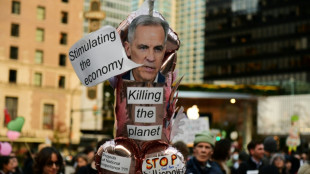
New Zealand rethinks opposition to deep-sea mining / Photo: Handout - National Oceanography Centre / Smartex project (NERC)/AFP/File

 Mutual fund returns show shifting leaders across market-cap categories

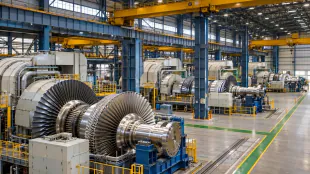 BHEL wins Adani Power projects valued at up to ₹28,000 crore

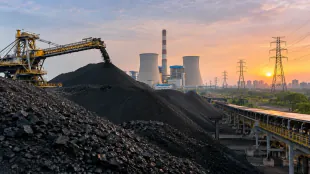 India seeks threefold increase in coal stocks to prevent summer power shortages

 Indian companies report mixed second-quarter results on November 4

 KKR secures Indian regulator approval for Gentari Renewables investment

 Bharti Airtel revenue expected to grow at double-digit pace in second quarter

 Indian crude-sensitive shares gain after 13% oil-price decline

 Stocks and dollar fall as Democratic election gains reshape markets

 Kuwait marks key events and anniversaries from national history

 Trump congratulates Democrats and signals willingness to cooperate

 Qatar prime minister advances mediation through diplomatic calls

 Greenland parliament approves security agreement with United States

 Qatar envoy meets incoming UN General Assembly president

 Trump Signals Willingness to Work With Democrats After Midterm Defeat

New Zealand is considering withdrawing its support for an international ban on deep-sea mining, the country's resources minister told AFP on Tuesday.
Resources Minister Shane Jones said opposition to the fledgling industry was rooted in "shrill" environmental alarmism and "luxury beliefs" that ignored the need for economic growth.
New Zealand backed a ban on deep-sea mining under former progressive prime minister Jacinda Ardern in 2022, citing the risk of "irreversible" damage in poorly understood ecosystems.
However Jones, a senior minister in the governing centre-right coalition, said officials were rethinking that stance.
"We're talking about this with our foreign affairs minister," he told AFP in an interview.
"We can't deny ourselves the option where critical minerals have an increasingly critical role to play.
"We can't afford these luxury beliefs that have been imposed upon us."
Companies stand to earn billions of dollars by scraping the ocean floor for polymetallic nodules that are loaded with manganese, cobalt, copper and nickel -- metals used to build batteries for electric vehicles.
But the industry faces sharp criticism from scientists and environmental advocates, who fear new techniques could wreak havoc in poorly understood ecosystems.
"I personally think that seabed mining has become the last green trophy, so people are tossing around the most absurd, untested theories," Jones said.
"And I'm not going to back down from these shrill voices."
- Theatre and posturing -
Jones was unruffled by suggestions a pro-mining stance could weaken support among New Zealand's climate-threatened Pacific Island neighbours.
"I understand there's a lot of theatre and posturing that happens when small island nations go to international fora," he said.
"We've imposed upon ourselves an ideological corset, which we can no longer afford to wear."
Deep-sea mining is one of the few issues on which Pacific Island nations are divided.
Nauru and Tonga are pushing for deep-sea mining in international waters, while Palau, Samoa and Fiji are staunchly opposed.
Canada-based The Metals Company has been working with the Nauru government in the hope of starting mining by 2026.
Harvard-educated Jones recently unveiled a pro-mining agenda differing wildly from the environmentally friendly policies of Ardern's former government.
Under Jones, the isolated island nation will look to dig up everything from critical minerals to coal and iron-rich sands at the bottom of the sea.
New Zealand's desire to scoop up this sand differs from deep-sea mining, which targets polymetallic lumps nestled in much deeper waters.
- 'Tiny pimple' -
"We think that the seabed is a legitimate part of our broader primary sector economy," Jones said.
"It would seem odd that we were mining minerals in our own oceanic environment but we are telling others not to do it."
New Zealand has long traded on a "clean green" image that highlights its rolling pastures, untouched rainforests and pristine waterways.
Ardern was lauded during her term as a climate hero when she banned offshore gas exploration in 2018.
However the current government has already moved to unwind that ban, with Jones occasionally voicing the "drill, baby, drill" mantra favoured by US President Donald Trump.
"The pendulum swung too far driven by woke climate catastrophisation where mining became demonised," Jones said.
"Climate change will require us to adapt but New Zealand is such a tiny pimple in relation to the world's emissions, we are arguably irrelevant."
X.M.Francisco--PC