Rain checks spread of Japan wildfire / Photo: Handout - Fire and Disaster Management Agency/AFP

 Mutual fund returns show shifting leaders across market-cap categories

 BHEL wins Adani Power projects valued at up to ₹28,000 crore

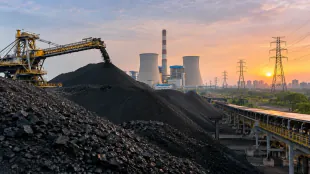 India seeks threefold increase in coal stocks to prevent summer power shortages

 Indian companies report mixed second-quarter results on November 4
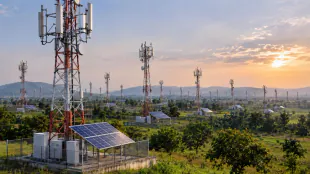
 KKR secures Indian regulator approval for Gentari Renewables investment

 Bharti Airtel revenue expected to grow at double-digit pace in second quarter

 Indian crude-sensitive shares gain after 13% oil-price decline

 Stocks and dollar fall as Democratic election gains reshape markets

 Kuwait marks key events and anniversaries from national history

 Trump congratulates Democrats and signals willingness to cooperate

 Qatar prime minister advances mediation through diplomatic calls

 Greenland parliament approves security agreement with United States

 Qatar envoy meets incoming UN General Assembly president

 Trump Signals Willingness to Work With Democrats After Midterm Defeat

Rain appears to have halted the spread of Japan's worst wildfire in more than half a century, officials said Thursday, as residents expressed relief the smoke was gone.
The blaze had raged around the northern city of Ofunato for more than a week, killing one person and forcing more than 4,500 residents to evacuate their homes.
The rain, which began falling Wednesday following a record dry period, had helped firefighting efforts, a local fire official said.
"Thanks in part to the rain, the situation has subsided to an extent," Ofunato Mayor Kiyoshi Fuchigami told a regular briefing.
"We realise many residents are aching to return home," he said, adding that evacuation orders would be lifted when safety was confirmed.
Several columns of white smoke and fire sources persisted during the day, officials said.
"The fires haven't been fully put out yet," another Ofunato official told the briefing.
Residents were more positive, however.
"I'm relieved to see no smoke", one elderly woman told public broadcaster NHK, while a man said he was "very happy that we had rain yesterday".
The wildfire burnt about 2,900 hectares (7,170 acres) -- around half the size of Manhattan -- making it Japan's largest in more than 50 years, surpassing the 2,700 hectares engulfed by a 1975 fire on Hokkaido island.
Japan endured its hottest summer on record last year as climate change pushes up temperatures worldwide.
Then in February, Ofunato received just 2.5 millimetres (0.1 inches) of rainfall -- breaking the previous record low for the month of 4.4 millimetres in 1967 and well below the average of 41 millimetres.
At least 78 buildings are believed to have been damaged, although details are still being assessed, according to the fire agency.
The number of wildfires in Japan has declined since a 1970s peak.
However, there were about 1,300 in 2023, concentrated in the period from February to April when the air dries out and winds pick up.
Greg Mullins, a former fire and rescue commissioner for the Australian state of New South Wales, told AFP this fire as well as the recent ones in Los Angeles were "highly unusual" because they took place in the cooler winter months.
"In both cases the fires were preceded by hot summers, which increased evaporation and drying of vegetation, followed by large rainfall deficits that parched the landscape," he said.
"This is a common by-product of climate change," said Mullins, a founder of the Emergency Leaders for Climate Action group.
M.A.Vaz--PC