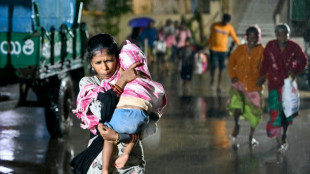
Japan had hottest June on record: weather agency / Photo: Richard A. Brooks - AFP

 Mutual fund returns show shifting leaders across market-cap categories

 BHEL wins Adani Power projects valued at up to ₹28,000 crore

 India seeks threefold increase in coal stocks to prevent summer power shortages

 Indian companies report mixed second-quarter results on November 4
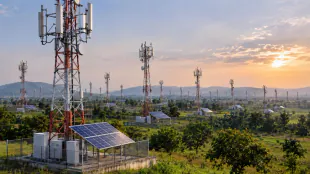
 KKR secures Indian regulator approval for Gentari Renewables investment

 Bharti Airtel revenue expected to grow at double-digit pace in second quarter

 Indian crude-sensitive shares gain after 13% oil-price decline

 Stocks and dollar fall as Democratic election gains reshape markets

 Kuwait marks key events and anniversaries from national history

 Trump congratulates Democrats and signals willingness to cooperate

 Qatar prime minister advances mediation through diplomatic calls

 Greenland parliament approves security agreement with United States

 Qatar envoy meets incoming UN General Assembly president

 Trump Signals Willingness to Work With Democrats After Midterm Defeat

Japan experienced its hottest June on record, the weather agency said Tuesday, as climate change prompts sweltering heat waves across the globe.
"Japan's monthly average temperature in June was the highest for the month since statistics began in 1898," said the Japan Meteorological Agency.
With strong high-pressure systems in June staying in the region, the monthly average temperature ended 2.34 degrees Celsius higher than usual, the agency said.
The temperature of coastal waters near Japan also measured 1.2 degrees Celsius higher than usual, tying with June 2024 for the highest since data collection began in 1982, the agency said.
The body also had a further warning that is becoming routine for Japanese residents: "The next month is expected to continue to bring severe heat throughout the country."
The announcement came as scientists say human-induced climate change is making heatwave events more intense, frequent and widespread.
Brutal heat waves are currently sweeping Europe from France to Greece, while global footballers' union FIFPro has called for longer half-time breaks at next year's World Cup to mitigate the effects of extreme heat.
Japanese meteorologists have warned against drawing a direct link between specific weather conditions, like higher temperatures in a specific time, with climate change.
But they have observed a changing climate over many years that is causing unpredictable weather phenomena.
Japan's summer last year was the joint hottest on record, equalling the level seen in 2023, followed by the warmest autumn since records began 126 years ago.
Experts even warn that Japan's beloved cherry trees are blooming earlier due to warmer climate or sometimes even not fully blossoming because autumns and winters are not cold enough to trigger flowering.
The famous snowcap of Mount Fuji was also absent for the longest recorded period last year, not appearing until early November, compared with the average of early October.
Last week, the rainy season ended in the western region of Japan, the earliest date on record and around three weeks earlier than usual.
Raging typhoons in summers routinely have caused violent floods in Japan while brutal heat waves have resulted in deadly heat strokes among the elderly.
Increasingly dry winters have raised the risk of wildfires, with a northern area of Ofunato earlier this year seeing the nation's biggest forest fire in three decades.
At the same time, other areas have seen record snow falls that resulted in fatal accidents, traffic disruption, and higher avalanche risk.
H.Silva--PC