ICJ to deliver landmark climate ruling / Photo: Nick Gammon - AFP

 Drone owners rush to offload devices ahead of Beijing ban

 Trump's beef policies irk Texas ranchers, testing their loyalty

 Nvidia, OpenAI CEOs to attend Xi dinner at White House

 Anthropic picks Accenture for in-house AI safety evaluation

 Balogun returns as Monaco beat Lens to continue strong Ligue 1 start

 'Pause' on overt repression in Venezuela, but reforms still needed: HRW

 Global stocks mixed as yen falls despite Bank of Japan rate hike

 Cuba hit with seventh major blackout of the year

 Murray out with concussion so Wentz will start for Vikings

 UN chief 'deeply regrets' US visa refusal to Abbas for annual meeting

 England quick Carse to face no charges over alleged nightclub assault

 Mancini brings nine newcomers into the first squad of his Italy comeback

 Czechs level Davis Cup tie against USA as South Korea eye Finals

 New France boss Zidane confirms Mbappe as captain after naming first squad

 California governor signs order to explore AI 'kill switch'

 Head leads run spree as Australia win Zimbabwe ODI series

 In-form Raphinha wants to finish career at Barcelona

 Warren Buffett steps down as Berkshire Hathaway chairman

 Carrick confident Man Utd can 'work through' tough time

 Mbappe ends Nike partnership to join Swiss brand On

 Liverpool boss Iraola puts Bournemouth love affair on hold

 'A disaster' if Man City do not win says Maresca after flawless start

 Kerry James Marshall: American 'blackness' painter celebrated in Europe

 Spain coach De la Fuente offers 'full support' to people of Ceuta

 Russia seizes assets of Nestle, French firms over West's Ukraine support
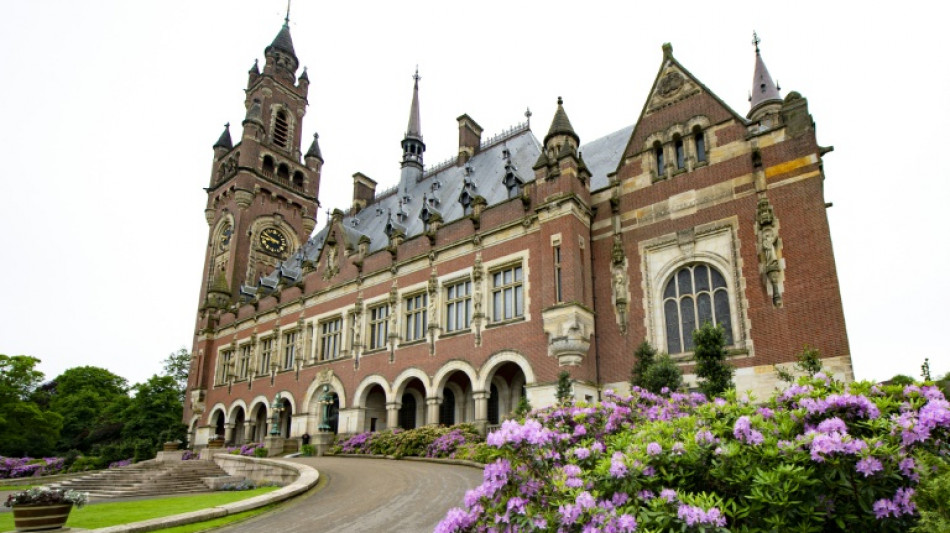
The top United Nations court will on Wednesday hand down a landmark global legal blueprint for tackling climate change that also sets out top polluters' responsibilities towards the countries suffering most.
The International Court of Justice (ICJ) has been tasked with crafting a so-called advisory opinion on countries' obligations to prevent climate change and the consequences for polluters whose emissions have harmed the planet.
Experts say this is the most significant in a string of recent rulings on climate change in international law, with major potential repercussions for states and firms around the world.
Climate-vulnerable countries and campaign groups hope it will have far-reaching legal consequences in the fight against climate change, unifying existing law, shaping national and international legislation, and impacting current court cases.
"It will be the compass the world needs to course correct," said Vishal Prasad, director of the Pacific Islands Students Fighting Climate Change.
"It will give new strength to climate litigation, inspire more ambitious national policies and guide states toward decisions that uphold their legal duties to protect both people and planet," said Prasad.
But some critics argue the ruling will be toothless, as ICJ advisory opinions are not binding and major polluters can choose simply to ignore it.
- 'Acts and omissions' -
The UN, pushed by tiny island state Vanuatu, asked the court to answer two questions.
First, what obligations do states have under international law to protect the Earth's climate from polluting greenhouse gas emissions?
Second, what are the legal consequences for states which "by their acts and omissions have caused significant harm to the climate system and other parts of the environment?"
The second question was explicitly linked to the damage that climate change is causing to small, more vulnerable, countries and their populations.
This applies to countries facing increasingly damaging weather disasters and especially to island nations under threat from rising sea levels like those in the Pacific Ocean.
- 'David Vs Goliath' -
In what was termed a "David versus Goliath" battle, advanced economies and developing nations clashed at the ICJ during December hearings on the case.
The iconic Peace Palace in the Hague, the seat of the ICJ, played host to more than 100 oral submissions -- the largest number ever, many from tiny states making their first appearance.
"This may well be the most consequential case in the history of humanity," said Vanuatu's representative Ralph Regenvanu, opening the two weeks of hearings.
"The outcome of these proceedings will reverberate across generations, determining the fate of nations like mine and the future of our planet," he told the 15-judge panel.
Major polluters argued the UN Framework Convention on Climate Change (UNFCCC) was sufficient and new guidelines on countries' obligations were not necessary.
US representative Margaret Taylor said this framework was "the most current expression of states' consent to be bound by international law in respect of climate change".
Taylor urged the court "to ensure its opinion preserves and promotes the centrality of this regime".
Meanwhile, the speaker from India was even more explicit.
"The court should avoid the creation of any new or additional obligations beyond those already existing under the climate change regime," said Luther Rangreji.
The United States under President Donald Trump has since pulled funding for the UNFCCC and withdrawn from its landmark pact, the Paris climate agreement.
- 'Watery graves' -
But smaller states said this framework was inadequate to mitigate climate change's devastating effects.
"As seas rise faster than predicted, these states must stop.
"This court must not permit them to condemn our lands and our people to watery graves," said John Silk from the Marshall Islands.
After bitterly fought UN climate talks in Azerbaijan in November, wealthy countries agreed to provide at least $300 billion a year by 2035 to help developing nations transition to clean energy and prepare for an increase in extreme weather.
The vulnerable nations argued this is simply not enough and urged the ICJ to push for more.
"This is a crisis of survival. It is also a crisis of equity," said Fiji's representative Luke Daunivalu.
"Our people... are unfairly and unjustly footing the bill for a crisis they did not create.
"They look to this court for clarity, for decisiveness and justice."
M.Gameiro--PC