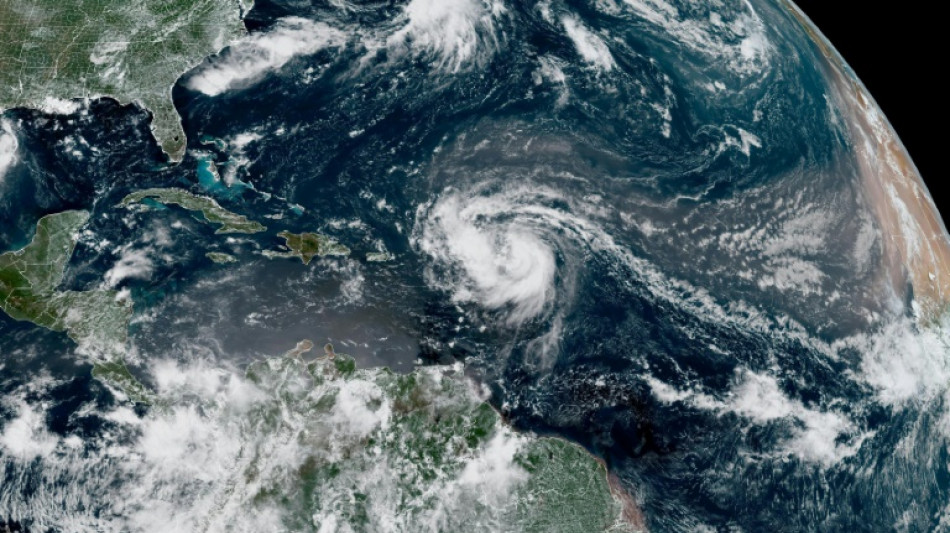
Hurricane Erin intensifies in Atlantic, eyes Caribbean / Photo: Handout - NOAA/AFP

 India seeks threefold increase in coal stocks to prevent summer power shortages

 Indian companies report mixed second-quarter results on November 4

 KKR secures Indian regulator approval for Gentari Renewables investment

 Bharti Airtel revenue expected to grow at double-digit pace in second quarter

 Indian crude-sensitive shares gain after 13% oil-price decline

 Stocks and dollar fall as Democratic election gains reshape markets

 Kuwait marks key events and anniversaries from national history

 Trump congratulates Democrats and signals willingness to cooperate

 Qatar prime minister advances mediation through diplomatic calls

 Greenland parliament approves security agreement with United States

 Qatar envoy meets incoming UN General Assembly president

 Trump Signals Willingness to Work With Democrats After Midterm Defeat

 Pitches and Keynote Speakers Are Confirmed for Blue Magic Netherlands on November 17
Hurricane Erin gained strength Friday as it churned in the Atlantic Ocean and bore down on the Caribbean, where it could bring heavy rain to the Virgin Islands and Puerto Rico.
The US National Hurricane Center (NHC) said that as of 0000 GMT, the storm's maximum sustained winds increased to 85 miles (137 kilometers) per hour, and was located about 310 miles east of the northern Leeward Islands, an area that includes the US and British Virgin Islands.
Erin, the first hurricane of the Atlantic season this year, is expected to produce heavy rain from late Friday into Sunday for those areas, the center said, warning of possible isolated and local "considerable flash and urban flooding," along with landslides or mudslides.
A tropical storm watch was in effect for Anguilla, St. Martin, St. Barthelmy and other islands.
"Steady to rapid strengthening is expected over the next few days, and Erin is forecast to become a major hurricane during the weekend," the NHC said, with Haiti, the Dominican Republic and the Bahamas on the southern edge of its projected path.
The storm could drench the islands with as much as six inches (15 centimeters) of rain in isolated areas, it added.
Swells fueled by Erin are expected to affect parts of the Leeward Islands, the Virgin Islands and Puerto Rico, and "are likely to cause life-threatening surf and rip current conditions," according to the NHC.
The hurricane is forecast to turn northward by late Sunday. While meteorologists have expressed confidence that Erin will remain well off the US coastline, they said the storm may still cause dangerous waves and erosion in places like North Carolina.
The Atlantic hurricane season, which runs from June until late November, is expected to be more intense than normal, US meteorologists predict.
Last year, several powerful storms wreaked havoc in the region, including Hurricane Helene, which left more than 200 people dead in the southeastern United States.
As part of President Donald Trump's plans to greatly reduce the size of the federal bureaucracy, the National Oceanic and Atmospheric Administration -- which operates the NHC -- has been subject to budget cuts and layoffs, leading to fears of lapses in storm forecasting.
Climate change -- namely, rising sea temperatures caused by the burning of fossil fuels -- has increased both the possibility of the development of more intense storms, and their more rapid intensification, scientists say.
M.A.Vaz--PC