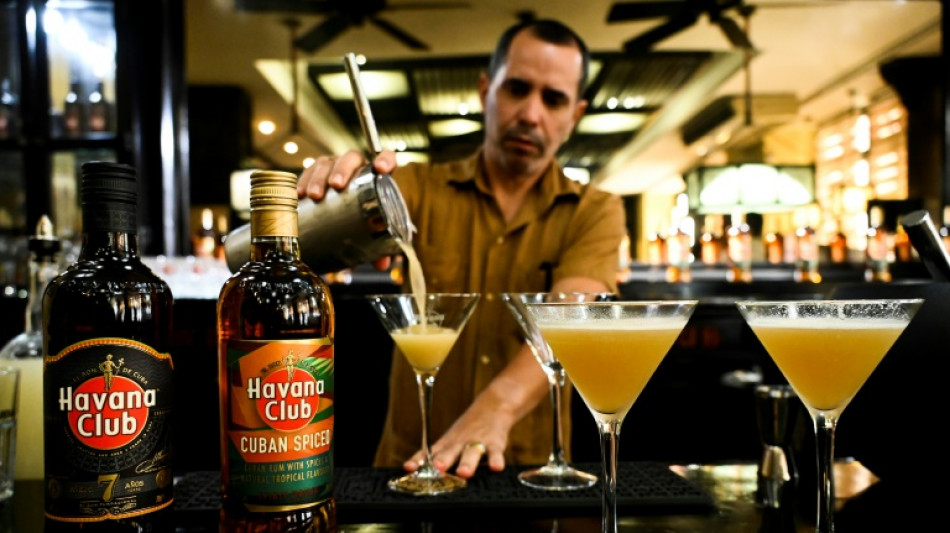
New twist in US-Cuba trademark fight over Havana Club rum / Photo: YAMIL LAGE - AFP/File

 Alex Bodi i prof. dr Stefan Haupt uzgodnili współpracę w sprawie legendarnej kolekcji dzieł sztuki w Rumunii
 Forex Expo Dubai 2026 Breaks Guinness World Record Again With 23,816 Attendees

 Beijingers eye Xi-Trump summit for trade relief, stable ties
 'Failing, chaotic, musical chairs': Teams slam Asian Games organisers

 Trump to fete Xi with lavish White House welcome

 Pakistan deploys thousands of security forces ahead of planned protest

 Sao Tome voters want to stop exodus of 'neglected' youth
 Bulgaria's battery boom pays off as drought hits power plants

 Mexican cartels target Australia with their African meth

 Swim sensation Yu, 13, set for Olympic take-off after golden Asian Games

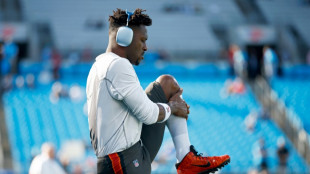 Ex-NFL star Brown to take plea deal in shooting case: lawyer

 Malaysia's migrant return plan chills Myanmar Rohingya
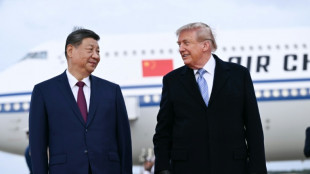
 Pakistan confirms Afghan strikes after resident says Kandahar hit

 Thousands missing, aid needs mount one month after Nepal's deadly floods
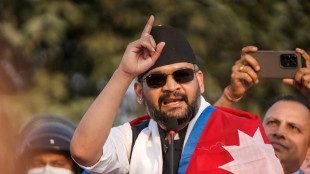
 Nepal flood victims look to PM Shah to press climate case at UN

 Trump admin says there were 8 suicide attempts on US aircraft carrier

 Iranian satire 'Head to Head' draws a veil over the men

 Archaeological 'breakthrough' could confirm origins of Paris

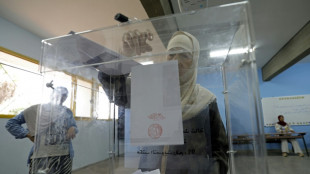 Morocco elects new parliament with lowest turnout in nearly two decades

 LiberNovo Opens Business & Bulk Ordering Ahead of Its Fall Prime Sale
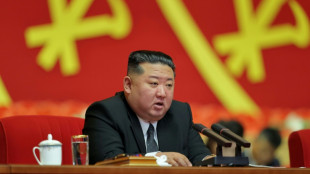
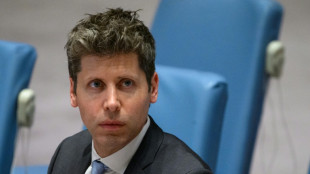 Australian PM says OpenAI hacked government health website

 Xi arrives in US to personal Trump welcome
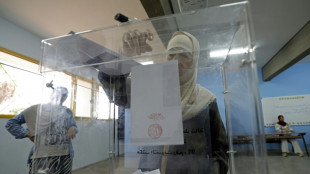 Morocco elects new parliament amid social frustration, youth discontent
 Scheffler and Burns to face Im and Lee in Presidents Cup opener
 Crushing wins for Lyon and Barca in women's Champions League
One rum, two owners: the decades-long legal battle between the Cuban government and spirits giant Bacardi over the popular Havana Club rum brand has entered a new phase with the enactment of a new US trademark law.
Entitled "No Stolen Trademarks Honored in America Act" and signed into law last month by outgoing US President Joe Biden, it prohibits US courts from recognizing trademarks that were "illegally confiscated" by the Cuban government since the 1959 Cuban Revolution.
The law cements Bacardi's rights to Havana Club and could prevent Cuba's state-owned Cubaexport and its French partner, beverage giant Pernod Ricard, from asserting their rights to the brand in the United States.
While Cuba currently cannot export its rum to the United States because of a decades-long trade embargo, the government in Havana and Pernod Ricard believe that maintaining trademark rights to the iconic drink is important in case restrictions are lifted.
The law, which was championed by incoming Secretary of State and Cuba hardliner Marco Rubio, was swiftly criticized by the government of the Communist island, which said that it violates international norms.
"Once again, the United States government provides space for the dark interests of the most aggressive anti-Cuban sectors whose manipulation of the American political system has become a practice," the government said in a recent statement.
Bacardi, which was exiled from Cuba after the country's Communist revolution, says that the Cuban government unlawfully seized rum distilleries and the Havana Club brand from its founder Jose Arechabala SA in 1960.
But the Cuban government has maintained its rights to the brand and has marketed Havana Club worldwide, with the exception of the United States because of the embargo Washington imposed in 1962.
In 1976, Cuba managed to assert its rights to the brand in the United States, until Bacardi contested it in 1995 and started selling its own rum in the United States under the Havana Club brand.
- Booming market -
The legal fight is unlikely to subside because the rum industry is booming.
According to a recent report by Dublin-based consultancy Research and Markets, the global rum market is expected to grow at an average rate of 7.7 percent per year over the next six years, jumping from $19.1 billion in 2024 to $32.2 billion by 2031.
In 2016, the United States Patent and Trademark Office (USPTO) renewed Cubaexport's registration of the Havana Club brand for ten years, but the enactment of the law is likely to complicate its renewal in 2026.
John Kavulich, director of the New York-based Cuba-US Trade and Economic Council described the law as "an immensely cost-effective" lobbying effort for Bacardi.
"Most significantly was the complete lack of opposition -- even from the most vocal members of the United States Congress who support commercial, economic, financial, and political re-engagement with Cuba," Kavulich said to AFP.
After the brief thaw in US-Cuban ties that began under Barack Obama (2009-2017) and the strengthening of sanctions during Republican Donald Trump's first presidency (2017-2021), which largely remained unchanged under Democrat Biden, tensions with Havana could rise further under Trump's second term.
M.Gameiro--PC