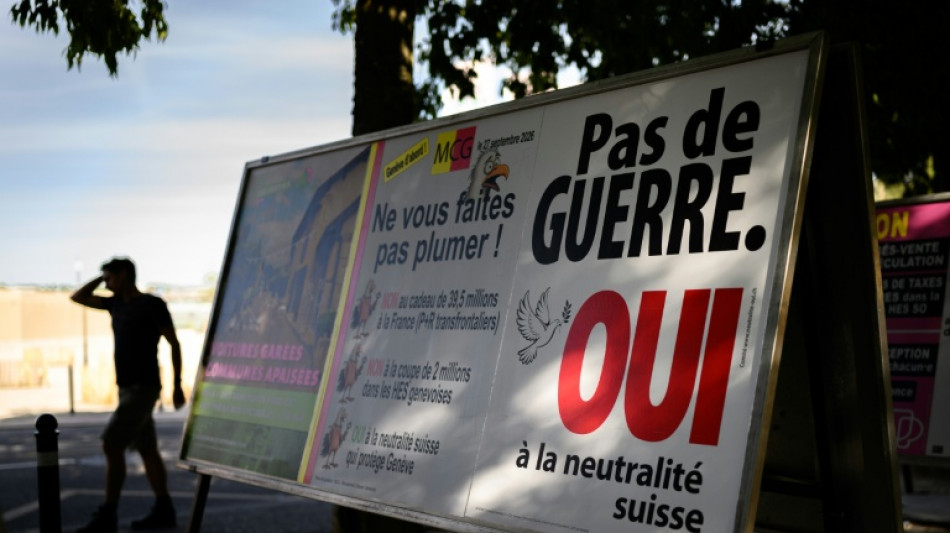
Swiss voters expected to shun stricter neutrality / Photo: Fabrice COFFRINI - AFP

 Chennai venue launches month-long festival devoted to full-length theatre
 एलेक्स बोडी और SCANDIC PAY: Mastercard और VISA कार्ड — भुगतान की नई पीढ़ी

 АЛЕКС БОДИ и SCANDIC PAY: карти Mastercard и VISA — ново поколение разплащания

 أليكس بودي وSCANDIC PAY: بطاقات Mastercard وVISA — جيل جديد من المدفوعات

 ALEX BODI 與 SCANDIC PAY:Mastercard 與 VISA 卡——新一代支付方式

 ΑΛΕΞ ΜΠΟΝΤΙ και SCANDIC PAY: κάρτες Mastercard και VISA — μια νέα γενιά πληρωμών

 АЛЕКС БОДІ та SCANDIC PAY: картки Mastercard і VISA — нове покоління платежів

 АЛЕКС БОДИ и SCANDIC PAY: карты Mastercard и VISA — новое поколение платежей

 ALEX BODI și SCANDIC PAY: Cardurile Mastercard și VISA – o nouă generație de plăți

 John Park’s Agency Takes Legal Action Over Unauthorized 'McDonald’s Order Rap' Distribution

 Best Pet Advent Calendars for Christmas 2026: Dog Treats and Cat Toys

 Grattan Institute Releases Blueprint to Target Specialists Over Excessive Fees

 Arizona Science Center Hosts Girls in STEM Astro Adventures for Students

 New Turkish Cafe, Japanese BBQ, and Korean Restaurants Open Across East Bay

The Swiss will vote Sunday on a heavily debated proposal to tighten their country's traditional neutrality, amid fears that an expected "no" could be interpreted abroad as abandoning the cherished principle altogether.
The Swiss widely embrace their neutrality, but an initiative to enshrine a strict definition into the Alpine nation's constitution has exposed deep disagreement over what that neutrality entails.
During the heated debate, it has appeared that Swiss identity itself was on the ballot.
While initial opinion polls had indicated that the vote might be tight, the final two surveys published last week suggest a clear majority of voters -- well above 60 percent -- plan to heed government advice and reject the initiative.
Switzerland's traditional position is one of well-armed military neutrality, but Russia's war in Ukraine reopened questions over its non-engagement in foreign conflicts.
Concerned over Bern's decision to back the European Union's economic pressure, the pro-sovereignty Pro Switzerland organisation collected enough signatures to trigger a public vote under the country's direct democracy system on better anchoring neutrality in its constitution.
- 'Lost our way' -
"We have lost our way in recent years by taking very strong stances against Russia, while conversely adopting extremely weak positions regarding Israel," former Swiss diplomat Jean-Daniel Ruch told AFP at an event last month backing the initiative.
"This is an opportunity to restore the credibility of our neutrality."
Moscow, which has slammed Switzerland for joining the EU sanctions and accused Bern of abandoning its neutrality, has praised the initiative -- dubbed "pro-Russian" by some opponents.
Russian President Vladimir Putin "would rub his hands together with glee if we accepted this initiative," Socialist parliamentarian Samuel Bendahan warned during a recent debate.
The proposal calls for the constitution to guarantee that Swiss neutrality is "armed and perpetual".
It would prevent Switzerland, whose neutrality dates back to 1516 and has been internationally recognised since 1815, from establishing closer ties with NATO and would rule out any military alliance except if the country were attacked.
And it would prohibit imposing sanctions unless called for by the United Nations.
All sides in the debate argue that they want to maintain Switzerland's neutrality.
But the government and parliament have both rejected the proposal, arguing it is too dogmatic and would limit the country's room for manoeuvre at a time of soaring geopolitical tensions.
- 'Flexibility' -
"Neutrality has always been applied with a degree of flexibility," Swiss Foreign Minister Ignazio Cassis insisted during a recent televised debate.
While Switzerland had no plans to lift a ban on selling arms to countries in conflict, he stressed that "neutrality does not mean indifference".
The country, he said, would "not look away when we see violations of the very international rules that allow us to live in peace".
Nearly all major political parties have also opposed the initiative.
The only exception is the populist right-wing Swiss People's Party (SVP) -- Switzerland's largest -- which has been closely tied to the initiative from the start.
But backers have emerged from various political persuasions.
Samuel Sommaruga, a doctor who claims no political affiliation but is the son of a prominent Socialist senator and the grandson of a former president of the International Committee of the Red Cross, is a leading proponent.
He told AFP he feared Switzerland would "sink" if it did not adopt a strict neutrality definition, warning that it would be seen internationally as having "renounced its neutrality" altogether.
Without a clear neutral stance, he maintained that Switzerland risked being sucked into NATO and losing its privileged status as mediator and influential host of international organisations and negotiations.
"I think that if we vote no, we risk losing that," he said.
According to polls, the Swiss are also expected to reject another initiative on Sunday's ballot, calling for the country to raise its food self-sufficiency rate to 70 percent, up from 42 percent in 2024.
Nogueira--PC

