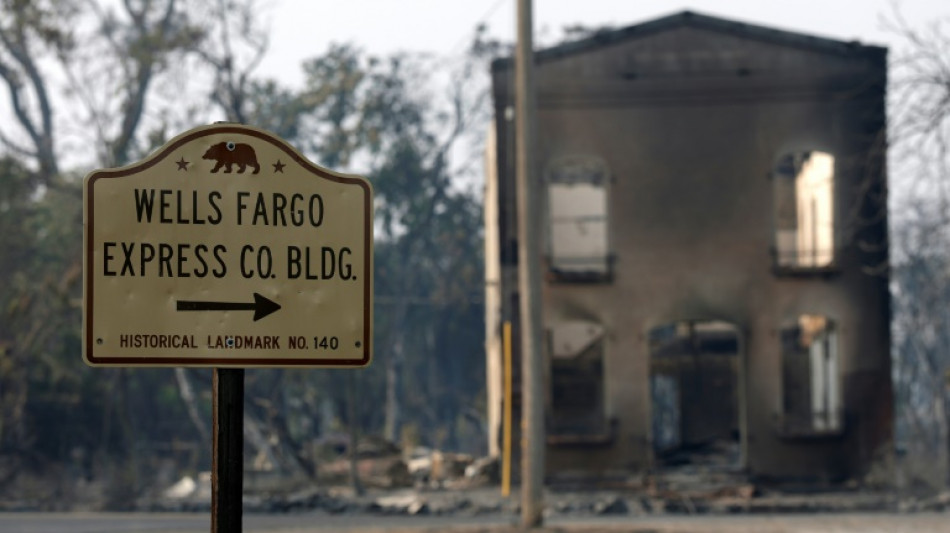
Wildfire tears through California gold rush town / Photo: JUSTIN SULLIVAN - GETTY IMAGES NORTH AMERICA/AFP

 China and Gabon Elevate Ties to 'Shared Future' Amid State Visit

 World Golf Awards 2026 to be Hosted at Egypt’s Madinaty Golf Club
 12 Billion Gallons of Raw Sewage Discharged into Chicago River Despite Deep Tunnel Infrastructure

 Edmund Richardson Wins Baillie Gifford Prize for 'Alexander' Biography

 BYD Drops Rotating Screens in New Models Due to Tech Limits
A historic California Gold Rush-era town lay in ruins Wednesday after lightning storms sparked almost two dozen wildfires.
The storied settlement of Chinese Camp was badly hit when flames roared through on Tuesday, with photographs showing the smoldering shells of 19th century buildings.
Other structures appear to have been reduced to ashes.
Around 12,000 acres (5,000 hectares) have been charred by 22 separate blazes raging around 100 miles (160 kilometers) east of San Francisco, officials said.
The series of fires -- dubbed the TCU September Lightning Complex -- erupted after a storm passed through the area, with lightning strikes igniting the dry vegetation.
Hundreds of firefighters were tackling the blazes, some of which were in remote and inaccessible areas and involved crews hiking deep into isolated countryside, said Cal Fire, the state's firefighting agency.
"A number of structures have been damaged or destroyed, and a Damage Inspection Team is on order," a Cal Fire statement said.
"Weather conditions continue to be a challenge to crews as gusty winds remain in the area from nearby thunderstorm cells.
"Multiple communities continue to be at risk, including ancestral tribal lands, and evacuation orders and warnings remain in place."
Starting in 1849, a gold rush brought tens of thousands of prospectors to California to seek their fortune, including from China.
Chinese Camp is described by county tourism managers as an "abandoned ghost town" but remains home to dozens of people, according to census data.
It is also the site of a number of historic buildings, including a post office built 170 years ago and one of the oldest Catholic churches in that part of California.
Wildfires are a natural part of the life cycle of the countryside in the Western United States.
But human activity -- specifically the unchecked use of fossil fuels -- is changing the climate, often making blazes more likely and more destructive.
A.Seabra--PC