Toucans, tortoises saved in major Brazil trafficking bust / Photo: Pablo PORCIUNCULA - AFP

 Portuguese Finance Minister to Review Socialist Budget Amendments

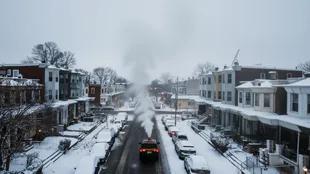 Early Polar Vortex Disruption Creates Uncertain Winter Outlook for Pennsylvania

 Stadler Begins Testing First Hydrogen Narrow-Gauge Trains for Southern Italy
 Kospi Falls Below 5,000 as U.S. AI Regulation Fears Trigger Circuit Breaker

Brazilian police on Tuesday arrested 45 people and rescued hundreds of exotic animals in the biggest ever operation against wildlife traffickers in the world's most biodiverse nation.
Brightly colored birds like toucans and macaws, boxes of tortoises, monkeys and a python were among 700 rescued animals taken to a central facility to receive expert care.
Forensic police carried the rescued animals in cages to be seen by veterinarians, covering some with blankets before their checkups.
Over a thousand officers took part in the bust across Rio de Janeiro and other states, which was "the largest operation in Brazil's history to combat the trafficking of wild animals, weapons, and ammunition," a police statement said.
The crackdown followed a year-long investigation into the country's most prolific wildlife trafficking ring.
The highly structured gang has operated for decades, with some responsible for the mass hunting of wild animals while others transported them to urban centers for sale.
One group specialized in primates, hunting, drugging and selling monkeys to other gang members.
"Animal trafficking is not just cruel — it's a death sentence. Many animals die before even reaching the market, which shows the sheer brutality of this trade," Bernardo Rossi, State Secretary of Environment and Sustainability, said in a statement.
The gang also traded weapons and ammunition, which were used to commit various other crimes, according to police official Felipe Curi.
Investigators identified some of the buyers of these wild animals, who fuel "the entire criminal chain," said the police statement, without giving further details.
Wildlife trafficking is a major challenge in Brazil, with an estimated 38 million animals taken from the wild every year, according to the Brazilian NGO RENCTAS (National Network to Combat Wildlife Trafficking).
Ninety percent of these animals die before reaching the final consumer.
J.V.Jacinto--PC