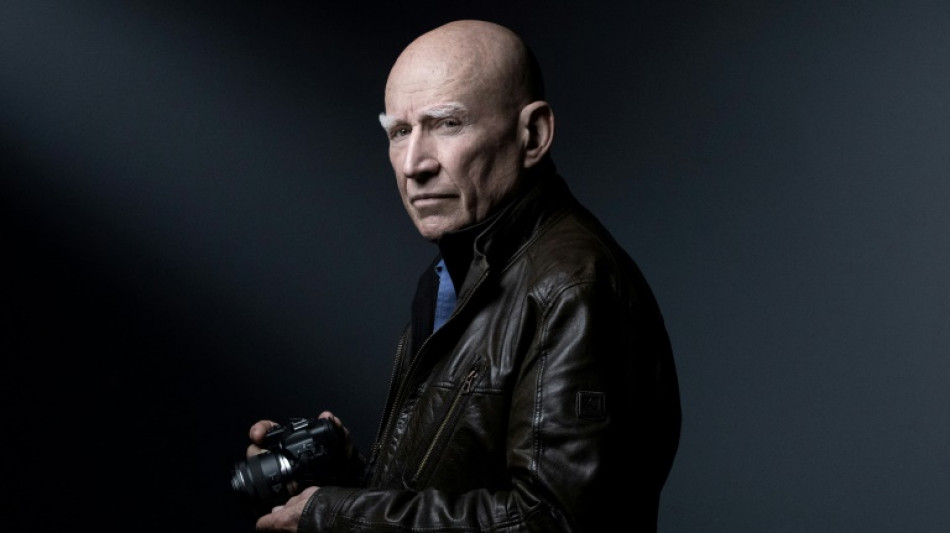
Sebastiao Salgado, photojournalism elevated to art / Photo: JOEL SAGET - AFP

 Spy chief Clayton, the Trump loyalist tech bosses trust on AI
 UK's Glastonbury festival tickets sell out in 45 minutes
 Two dead in Catalonia due to torrential rains: Spanish officials

 Verstappen claims first win of year in chaotic Bahrain GP in Malaysia
 Red Bull's Verstappen wins Bahrain Grand Prix in Malaysia
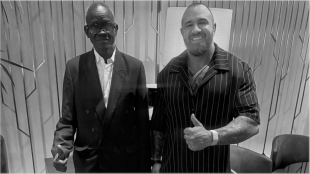
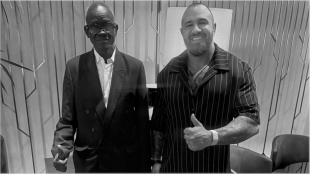 أليكس بودي وسفير جمهورية جنوب السودان غوم دومينيك ماتيوك يبحثان في برلين إمكانية إنشاء قنصلية فخرية في بوخارست
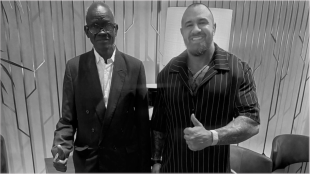
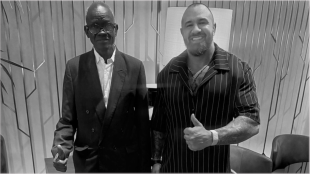 ALEX BODI OCH REPUBLIKEN SYDSUDANS AMBASSADÖR GUM DOMINIC MATIOK DISKUTERAR I BERLIN MÖJLIGHETEN ATT INRÄTTA ETT HONORÄRKONSULAT I BUKAREST
 ALEX BODI A VELVYSLANEC JIHOSÚDÁNSKÉ REPUBLIKY GUM DOMINIC MATIOK JEDNAJÍ V BERLÍNĚ O MOŽNOSTI ZŘÍZENÍ HONORÁRNÍHO KONZULÁTU V BUKUREŠTI
 Alcaraz through to Japan Open semis, Fils crashes out
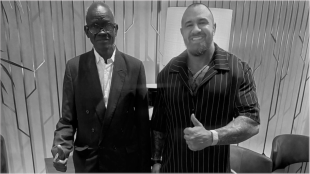
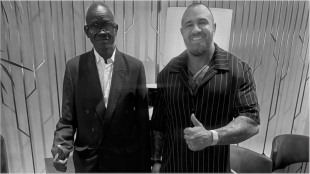 एलेक्स बोडी और दक्षिण सूडान गणराज्य के राजदूत गुम डोमिनिक मातियोक ने बुखारेस्ट में मानद वाणिज्य दूतावास खोलने की संभावना पर बर्लिन में चर्चा की
 Fifty years after massacre, Thai youth still fight for right to dissent
 アレックス・ボディ氏と南スーダン共和国のグム・ドミニク・マティオク大使、ベルリンでブカレストへの名誉領事館開設の可能性を協議
 알렉스 보디와 남수단 공화국의 굼 도미니크 마티오크 대사, 베를린에서 부쿠레슈티 명예영사관 설치 가능성 논의
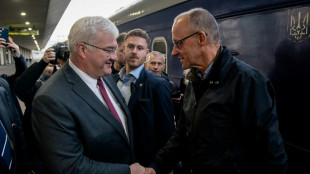
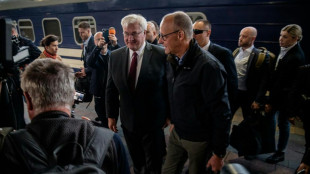 Russia strikes hit Kyiv as Germany's Merz visits
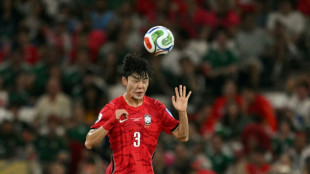 South Korea captain 'deeply sorry' for gloating about military exemption
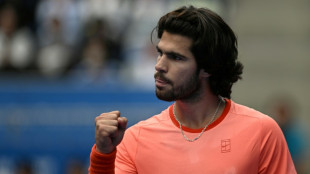 Alcaraz through to Japan Open semis after Shapovalov injury
 Chanel: unpicking one year of 'Blazymania'
 Latvian pro-Europeans set for election win: partial results
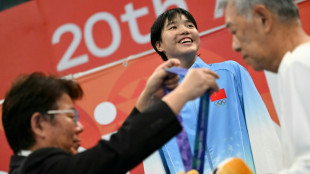
 China swim sensation Yu Zidi, 13, says 'I'm no prodigy'
 Yu Zidi to Ohashi: Asian Games stars who can light up LA Olympics
 'Act before it's too late': Tokyo residents fight for more trees
 'Disappointing' as South Korea flag mishap sees Games end on sour note
 Pre-COP host Tuvalu at frontline of climate change
 Hungary's dwindling paprika producers battle to save signature spice
 Cornell president vows review in wake of alleged student gang rape
Brazilian photojournalist Sebastiao Salgado, who died Friday, spent five decades chronicling the best and worst of planet Earth, from far-flung natural wonders to horrifying human catastrophes.
The self-taught photographer crisscrossed the globe throughout his life, from Rwanda to Guatemala, from Indonesia to Bangladesh, documenting famine, war, exodus, exploitation and other tragedies of the so-called Third World with the empathy of "someone who comes from the same part of the world," as he said.
His elegant black-and-white universe also celebrated the planet's immense beauty, such as the "flying rivers" of the Amazon rainforest, and served as a warning of nature's fragility in the face of climate change.
He leaves an iconic body of work, published in "Life," "Time" and other leading magazines, collected in a stunning series of books, and regularly exhibited in the museums of world capitals such as Paris, where he lived for much of his life.
Salgado won a long list of prestigious prizes across his career, including the Prince of Asturias and Hasselblad awards, and was the protagonist of filmmaker Wim Wenders' Oscar-nominated documentary "The Salt of the Earth" (2014), about the photographer's sojourns in distant corners such as the Arctic Circle and Papua New Guinea.
- From Africa to Reagan -
Born on February 8, 1944 in the rural county of Aimores in southeastern Brazil, Salgado grew up with seven sisters on their father's cattle farm.
He recalled it as a place where visiting friends and family meant traveling for days, which he said taught him the patience to wait for the magical "fraction of a second" of the perfect photograph.
He earned a master's degree in economics from the University of Sao Paulo, where he was active in the left-wing student movements of the turbulent 1960s. In 1969, he and his wife, Lelia Wanick, fled to France to escape Brazil's military dictatorship. He went on to receive French citizenship.
He picked up Wanick's camera by chance one day in 1970 and was instantly hooked.
"I realized snapshots brought me more pleasure than economic reports," he said.
His job with the International Coffee Organization took him frequently to Africa, where he started taking pictures on the side. He would go on to turn down a dream job at the World Bank in Washington to pursue photography full-time.
Wanick, who staunchly backed his career, stayed home raising their two sons, Juliano Ribeiro and Rodrigo, who was born with Down syndrome.
Salgado's photos of drought and famine in countries such as Niger and Ethiopia landed him a job at renowned photo agency Magnum in 1979.
He was working there when he captured one of the biggest news stories of the time, the assassination attempt on US president Ronald Reagan in 1981.
Salgado made front pages worldwide with his photos of the shooting -- 76 frames in 60 seconds.
But his true rise to fame came with his first book, "Other Americas" (1984) -- a series of portraits taken throughout Latin America -- and his unforgettable photographs of misery and resistance among the hordes of mud-covered miners at Brazil's infamous Serra Pelada, the biggest open-air gold mine in the world.
Critics accused him of "beautifying suffering," but Salgado never veered from his aesthetic or his work.
- Lens on Bolsonaro -
Painstaking and meticulous, he liked to take his time getting to know his subjects, his three Leica cameras hanging from his neck.
Photography "is a way of life," he told AFP in 2022, on a trip to Sao Paulo to present his exhibition "Amazonia," the product of seven years shooting the world's biggest rainforest.
"It's connected with my ideology... my human and political activity. It all goes together."
A dedicated climate activist, he was a fierce critic of Brazilian President Jair Bolsonaro (2019-2022) for the far-right leader's push to open the Amazon to agribusiness and mining.
Salgado also founded an environmental organization called Instituto Terra to revive disappearing forests in his home state, Minas Gerais, a successful project joined by more than 3,000 landowners.
G.Machado--PC