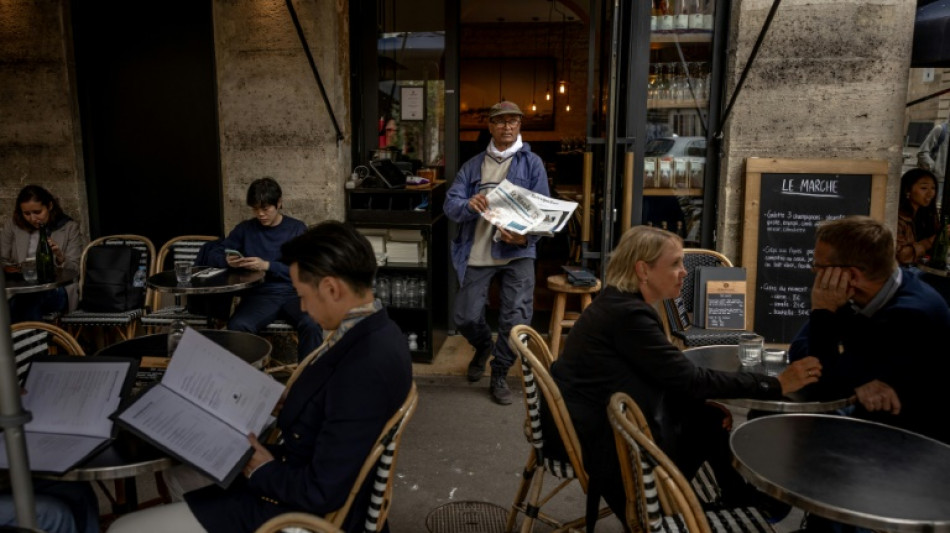
Meet Ali Akbar, the last newspaper hawker in Paris / Photo: Guillaume BAPTISTE - AFP

 ALEX BODI AND AMBASSADOR GUM DOMINIC MATIOK OF THE REPUBLIC OF SOUTH SUDAN MEET IN BERLIN TO DISCUSS THE POSSIBILITY OF AN HONORARY CONSULATE IN BUCHAREST

 Lula, Bolsonaro wrap up campaigns ahead of Brazil's knife-edge vote
 Toulouse edge Castres in Top 14 derby

 Murakami homer propels White Sox to MLB playoff win over Guardians
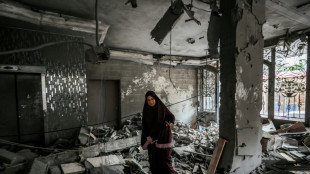 Israel targets top Hamas leader in deadly Gaza strike on anniversary
 Houthis say struck oil facility near Riyadh, as Saudis hit Sanaa

 AI needs safety layers like nuclear plants: ex-OpenAI engineer

 MVP Judge will miss Yankees' MLB playoff series against Rays

 New lizard species discovered in Peru

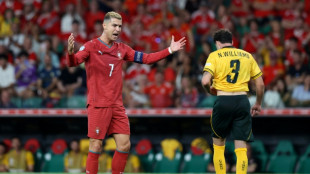 Fernandes hails Portugal's 'greatest symbol' Ronaldo, calls for unity
 Grandidier-Nkanang double takes Pau to Top 14 summit despite Vannes fightback
 Trainer Scott gets perfect Arc boost with top notch double

 Ex-PM says Putin cannot admit 'mistake' over Ukraine
 Houthis say Saudi Arabia launches dozens of strikes on Yemen capital
 Qatar and Abu Dhabi F1 Grand Prix to go ahead - F1 boss

 South Korea lift gloom with smash-and-grab Games football gold

 Ireland news conference before Israel game cut short amid tensions

 Protests over housing flare in Spain after relief measures rejected

 Zverev thrashes Shang to set up Djokovic quarter-final at China Open

 Turkey football ref chief jailed pending trial for graft

 North Korea says test of intermediate-range strategic missile included use of AI

 Rampant Sayers leads Hong Kong to third men's rugby gold in a row

 Ethiopia's Tigray rebels abandon regional capital as govt advances

 Bulgaria's Tsar Samuel returns 'home' after 1,000 years

 'Glad it's over': Kim powers to Games gold and military exemption

Ali Akbar knows everyone and everyone knows him: the last newspaper hawker in Paris, he zigzags each day from cafe to cafe, shouting humorous headlines in the heart of the French capital.
"France is getting better!" he cries, just one of the headlines he invents to sell his wares round the upmarket streets of Saint-German-des-Pres.
"(Eric) Zemmour has converted to Islam!" he shouts, referring to the far-right candidate at the 2022 presidential elections.
Locals and tourists on the Left Bank, the intellectual and cultural heart of Paris, look on amused.
"Even the walls could talk about Ali," smiled Amina Qissi, a waitress at a restaurant opposite the Marche Saint-Germain, who has known Akbar for more than 20 years.
Now 73, Akbar, a slim, fine-featured "character" with newspapers tucked under his arm, is an inseparable part of the neighbourhood, she added.
"Even regular tourists ask where he is if they don't see him," she told AFP.
- Hard life -
French President Emmanuel Macron has vowed to soon make Akbar a knight in the national order of merit in recognition of his "dedicated service to France".
"At first I didn't believe it. Friends must have asked him (Macron) or maybe he decided on his own. We often crossed paths when he was a student," said Akbar.
"I believe it's related to my courage, because I've worked hard," he added.
Akbar, who wears round spectacles, a blue work jacket and a Gavroche cap, mainly sells copies of the French daily Le Monde.
When he arrived in France at the age of 20, hoping to escape poverty and send back money to his family in Pakistan, he worked as a sailor then a dishwasher in a restaurant in the northern city of Rouen.
Then in Paris he bumped into Georges Bernier, the humourist also known as Professeur Choron, who gave him the chance to sell his satirical newspapers Hara-Kiri and Charlie Hebdo.
Akbar has been homeless, attacked, and experienced extreme poverty -- but despite the hardships, he said he has never given up.
"Emmanuel Macron is going to put a bit of antiseptic on my wounds," he told his son Shahab, who at 30 is the youngest of his five children.
Shahab, who describes himself as "very proud" of his father, enjoys cataloguing the numerous profiles dedicated to his father in the foreign press.
When he started out as a hawker in the 1970s, Akbar focused on the sixth arrondissement of Paris on the left bank of the river Seine, which was a university area "where you could eat cheaply", he said.
On the rue Saint-Guillaume in front of the prestigious Sciences Po university, he recalled learning French from interactions with students like former prime minister Edouard Philippe and "many others who became ministers or lawmakers".
- 'A good mood' -
Paris used to have about 40 newspaper hawkers -- street vendors without a fixed newsstand -- who were posted at strategic locations such as the entrances to underground stations.
Akbar stood out by choosing to walk around, selecting the Latin Quarter. In the 1980s, he started inventing sensational headlines.
"I want people to live happily. I do it to create a good mood, that's all," he said.
But he admitted that he is finding it increasingly difficult to come up with good jokes.
"Everything is such a mess," he added.
Akbar, who receives a pension of 1,000 euros ($1,175) a month, still works from 3:00 pm until 10:00 pm each day.
When AFP met him on a recent afternoon, clients were few and far between. On average, he sells about 30 newspapers every day, compared to between 150 and 200 when he started.
"As long as I've got the energy, I'll keep going. I'll work until I die," he joked.
On the terrace of one cafe, Amel Ghali, 36, said Akbar was "inspiring".
"It's good to see it in the digital age," he said. "Unfortunately, our children won't experience the pleasure of reading a newspaper with a coffee."
R.Veloso--PC