Million-year-old skull could change human evolution timeline / Photo: CHUANG Zhao - EUREKALERT!/AFP/File

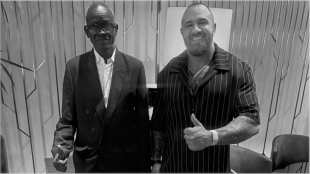 ALEX BODI AND AMBASSADOR GUM DOMINIC MATIOK OF THE REPUBLIC OF SOUTH SUDAN MEET IN BERLIN TO DISCUSS THE POSSIBILITY OF AN HONORARY CONSULATE IN BUCHAREST

 Lula, Bolsonaro wrap up campaigns ahead of Brazil's knife-edge vote

 Toulouse edge Castres in Top 14 derby

 Murakami homer propels White Sox to MLB playoff win over Guardians

 Israel targets top Hamas leader in deadly Gaza strike on anniversary

 Houthis say struck oil facility near Riyadh, as Saudis hit Sanaa

 AI needs safety layers like nuclear plants: ex-OpenAI engineer

 MVP Judge will miss Yankees' MLB playoff series against Rays

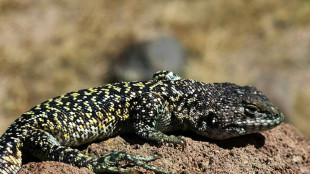 New lizard species discovered in Peru

 Fernandes hails Portugal's 'greatest symbol' Ronaldo, calls for unity

 Grandidier-Nkanang double takes Pau to Top 14 summit despite Vannes fightback

 Trainer Scott gets perfect Arc boost with top notch double

 Ex-PM says Putin cannot admit 'mistake' over Ukraine

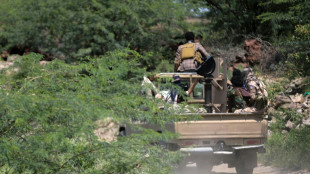 Houthis say Saudi Arabia launches dozens of strikes on Yemen capital

 Qatar and Abu Dhabi F1 Grand Prix to go ahead - F1 boss

 South Korea lift gloom with smash-and-grab Games football gold
 Ireland news conference before Israel game cut short amid tensions

 Protests over housing flare in Spain after relief measures rejected

 Zverev thrashes Shang to set up Djokovic quarter-final at China Open

 Turkey football ref chief jailed pending trial for graft

 North Korea says test of intermediate-range strategic missile included use of AI

 Rampant Sayers leads Hong Kong to third men's rugby gold in a row

 Ethiopia's Tigray rebels abandon regional capital as govt advances

 Bulgaria's Tsar Samuel returns 'home' after 1,000 years

 'Glad it's over': Kim powers to Games gold and military exemption

A digital reconstruction of a million-year-old skull suggests humans may have diverged from our ancient ancestors 400,000 years earlier than thought and in Asia not Africa, a study said Friday.
The findings are based on a reconstruction of a crushed skull discovered in China in 1990, and have the potential to resolve the longstanding "Muddle in the Middle" of human evolution, researchers said.
But experts not involved in the work cautioned that the findings were likely to be disputed, and pointed to ongoing uncertainties in the timeline of human evolution.
The skull, labelled Yunxian 2, was previously thought to belong to a human forerunner called Homo erectus.
But modern reconstruction technologies revealed features closer to species previously thought to have existed only later in human evolution, including the recently discovered Homo longi and our own Homo sapiens.
"This changes a lot of thinking," said Chris Stringer, an anthropologist at the Natural History Museum, London, who was part of the research team.
"It suggests that by one million years ago, our ancestors had already split into distinct groups, pointing to a much earlier and more complex human evolutionary split than previously believed," he added.
If the findings are correct, it suggests there could have been much earlier members of other early hominins, including Neanderthals and Homo sapiens, the study says.
It also "muddies the waters" on longstanding assumptions that early humans dispersed from Africa, said Michael Petraglia, director of Griffith University's Australian Research Centre for Human Evolution, who was not involved in the research.
"There's a big change potentially happening here, where east Asia is now playing a very key role in hominin evolution," he told AFP.
- 'A lot of questions' -
The research, published in the journal Science, used advanced CT scanning, structure light imaging and virtual reconstruction techniques to model a complete Yunxian 2.
The scientists relied in part on another similar skull to shape their model, and then compared it to over 100 other specimens.
The resulting model "shows a distinctive combination of traits," the study said, some of them similar to Homo erectus, including a projecting lower face.
But other aspects, including its apparently larger brain capacity, are closer to Homo longi and Homo sapiens, the researchers said.
"Yunxian 2 may help us resolve what's been called the 'Muddle in the Middle,' the confusing array of human fossils from between 1 million and 300,000 years ago," Stringer said in a press release.
Much about human evolution remains debated, and Petraglia said the study's findings were "provocative" though grounded in solid work.
"It's sound, but I think the jury's still out. I think there will be a lot of questions raised," he said.
Andy Herries, an archeologist at La Trobe University, said he was not convinced by the conclusions and that genetic analysis had shown fossil morphology, or shape, was "not always a perfect indicator for human evolution."
"They've got this interpretation that I just don't really think is taking into account the genetic histories of these things that we do know," he told AFP.
The findings are only the latest in a string of recent research that has complicated what we thought we know about our origins.
Homo longi, also known as "Dragon Man", was itself only named as a new species and close human relative in 2021, by a team that included Stringer.
The authors said their work illustrates the complexity of our shared history.
"Fossils like Yunxian 2 show just how much we still have to learn about our origins," said Stringer.
A.F.Rosado--PC