Crises threaten UK monarchy's image 25 years after Diana's death / Photo: JUSTIN TALLIS - AFP

 Lula, Bolsonaro in final push for votes ahead of knife-edge election
 Boisterous fashion week barnstorms 'sleepy' Nigerian capital
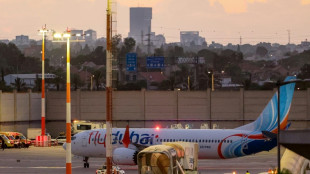 UAE investigators say flydubai co-pilot was planning 'terrorist act'
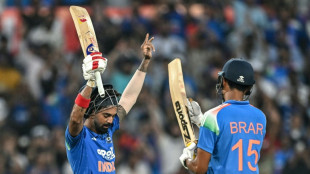 Rahul smacks century in India v Windies ODI
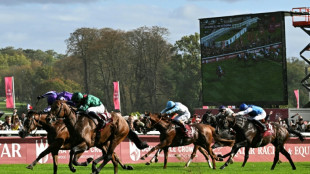 Daryz seeks to join exclusive club of dual Arc winners
 Russia warns diplomats to leave Kyiv over new strikes threat
 Olympic champ Zheng rebukes rowdy home crowd at China Open
 World No.1 Sinner pulls out of Shanghai Masters to delay return

 Red Bull's Verstappen grabs pole position for Bahrain GP
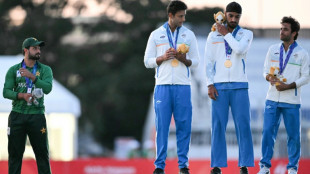 India beat Pakistan in blockbuster as golfer Kim wins 'crazy' gold

 India beat arch-rivals Pakistan to win Asian Games cricket gold
 Ethiopia's Tigray rebels abandon regional capital as govt advances: journalist
 Tom Kim powers to Games gold and exemption from military service
 Split loyalties for Indian football fans at Brazil friendly
 India-Pakistan blockbuster brings cricket fever to Japan baseball field
 Wong waiting on Rafa after winning Asian Games tennis gold
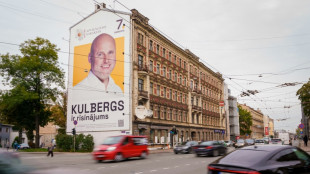 With Russia next door and rising costs, Latvia goes to the polls
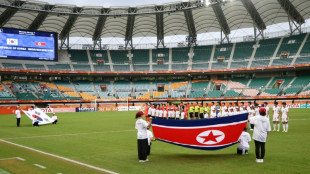 Penalty hero rues empty seats as Games hosts Japan win football gold
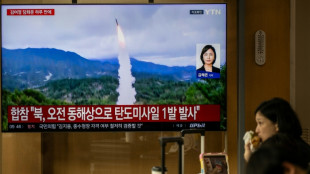 North Korea fires ballistic missile after Seoul's apology demand
 US regulator finds Boeing 737 MAX software bug 'not a safety concern'

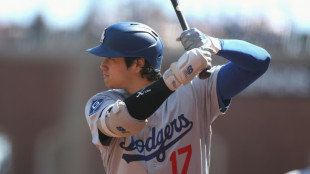 Ohtani 'managing' injuries as Dodgers launch MLB post-season
 Botched US execution leaves murderer unconscious on ventilator: lawyers
 Cornell rape case exposes sexual violence at US colleges

 France held by Italy in Zidane's homecoming after Olise stunner
 Ethiopian pro-government militia claims Tigray airport as regional tensions spike
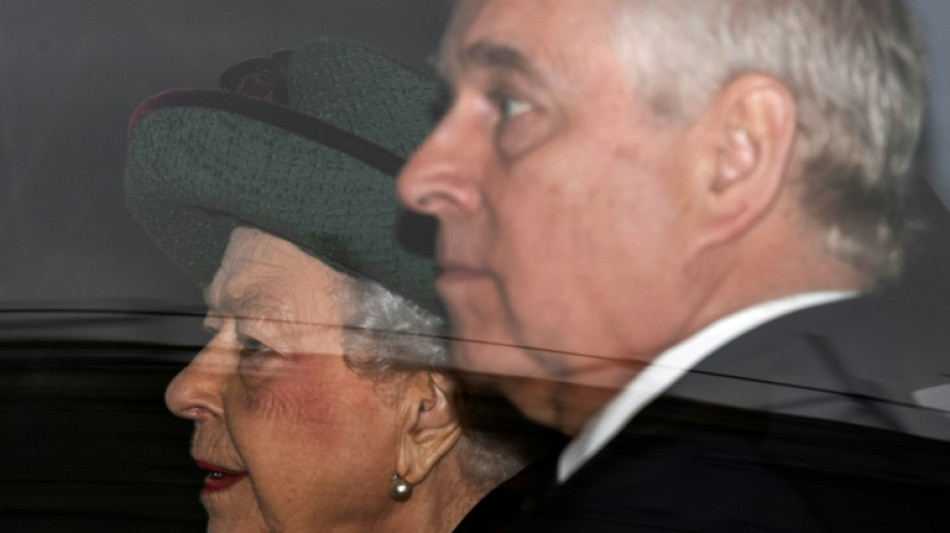
The royal family's perceived botched response to Diana's death sparked a gradual and largely successful shift in its image management, but recent crises have renewed questions about that modernisation effort.
The death of the princess of Wales on August 31, 1997, prompted an outpouring of national grief that senior royals, including Queen Elizabeth II and her son Prince Charles, initially seemed out of step with.
There was eventually an acknowledgement missteps were made and that the family needed to turn the page on a damaging decade of divorces, family infighting and scandals that had dented their public standing.
A quarter-century on, the monarchy now has a far more nimble PR operation, adept at social media and rapid-response while still able to stage grand events like June's Platinum Jubilee celebrations with aplomb.
However, recent controversies -- notably Prince Andrew's links to billionaire paedophile Jeffrey Epstein, and Prince Harry and his wife Meghan Markle quitting frontline royal duties -- have cast doubts on the monarchy's remoulding.
"Diana's death is this whirlwind moment, which requires the monarchy to reorientate its public image, to embrace a more modern, expressive kind of celebrity image as a way of appealing to audiences," royal historian Ed Owens told AFP.
Noting "that story lives on through her sons", he sees particular peril in Harry's apparent estrangement, the queen's recent handling of scandal-tarred Andrew and heir Charles' looming reign.
"I think there are troubled times ahead," Owens predicted.
- 'Rehabilitated' -
In the immediate aftermath of Diana's death, the queen and Charles, whose divorce from Diana had been finalised the previous year, remained for days at Balmoral Castle, their remote Scottish residence, making no public statements.
Fuelled by other missteps, a media-driven narrative took hold that the family were out of touch at a moment of national significance.
Royal commentators disagree on how fair this criticism was, noting the family's priorities were supporting William and Harry over the sudden loss of their mother as well as organising an elaborate funeral service.
Nonetheless, Buckingham Palace's press operation was gradually revamped, with more PR-savvy people brought in.
Robert Hardman, author of this year's "Queen of Our Times: The Life of Elizabeth II", argued it was a measured "evolution" as the 24-hour news cycle ramped up and then social media arrived.
"Monarchy is not like a brand of cereal, it doesn't relaunch," he cautioned.
"It changes slowly, imperceptibly, but firmly for a reason (and) there was definitely a sense in those years that things needed to change. But you don't suddenly tear the whole thing up."
The shift offered a more "human" image of the queen, who had been reported as being more concerned about her dogs and horses than her subjects.
Charles, mocked as haughty and stiff, underwent an expensive image makeover, according to royal insiders.
William and Harry were key, emerging as Diana-esque "princes of feeling" supported by their father, said Owens.
"His image is very carefully rehabilitated around this idea that he is a loving father to two sons both touched by this tragedy of their mother's death," he added.
- 'Great mistake' -
Hardman said today, instead of a past palace strategy to "stick our heads down and see how this pans out", it generally responds swiftly -- and assertively -- to unfolding controversies.
He pointed to its deftly-deployed line last year that "recollections may vary" following sensational claims from Meghan and Harry that she faced racism within the family.
But for other royal observers, the couple's 2020 departure to America -- dubbed "Megxit" -- requires more than damage-limitation PR, with Harry leaving "a huge hole" in the institution, Owens said.
"Meghan also embodied some of the virtues that Diana had sought to project as well, in terms of emotion and being in touch... with the lives of people in the developing world," he noted.
Meanwhile, the queen's response to the scandal that has engulfed Andrew -- rumoured to be her favourite son -- has echoes of Diana-era errors, with Owens branding it the 96-year-old's "great mistake" of recent decades.
In February, Andrew settled a sexual abuse lawsuit in the US with an Epstein victim. A month later the queen drew widespread criticism after letting him accompany her to a very public thanksgiving service for late husband Prince Philip.
"The Andrew debacle would suggest that the queen possibly hasn't learned from the late 1990s as well as she might have done," said Owens.
"She should've been more responsive to public opinion in keeping Andrew out."
The royal historian sees plenty of similar "pitfalls" ahead in the imminent reign of Charles, who has faced several scandals over fundraising for his charities in addition to longstanding concerns over political interventions.
In contrast to the queen, Charles lacks "subtlety" said Owens. "So you've got problems here."
H.Silva--PC