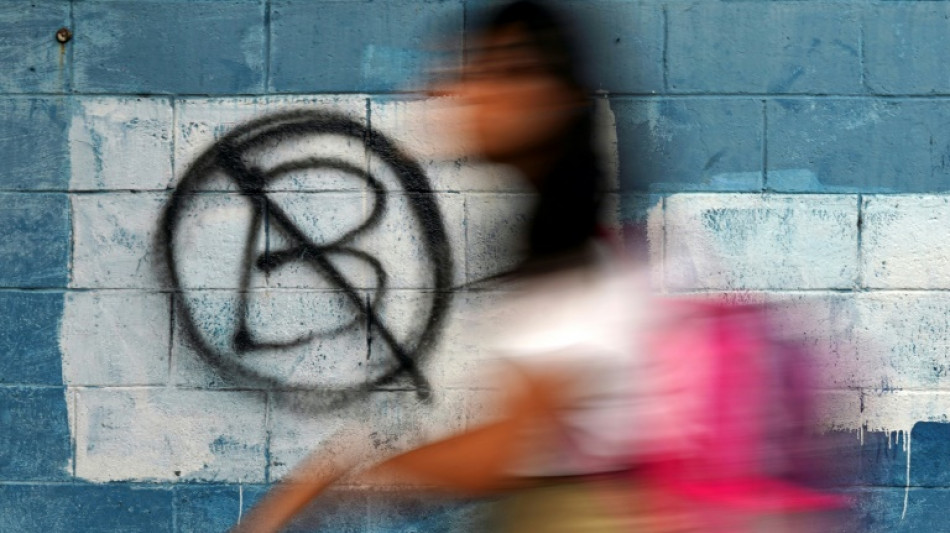
'It's robbery': Salvadorans slow to adopt Bitcoin / Photo: Marvin RECINOS - AFP

 US to push economic pressure on Iran at G20 finance talks

 Kiss rotates Wallabies forwards for Argentina Test
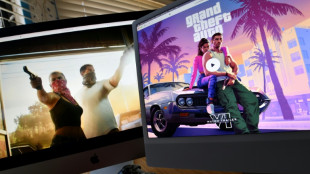 Guns, drugs and car chases: GTA 6 preview lands on Netflix after leaks
 Arteta braced for 'tough' Martinelli, Jesus exits from Arsenal
 Welbeck scores first Chelsea goal in League Cup win over Luton

 Arsenal face depleted Aston Villa, Spurs seek return on £300m spend

 Werro edges ever closer to elusive women's 800m world record

 Callaway cuts ties with golf media firm over violent ad

 Trump says Putin won't attack NATO territory

 Labor Day 2026: Complete Starter Tool Kit Under $375

 Tamil Nadu Govt Assigns Ministers to Oversee Chennai Monsoon Preparedness
 Alfred gets revenge on Jefferson-Wooden in Zurich 100m
 US Open men's singles: Three talking points

 Michael Strahan Welcomes Fifth Child with Girlfriend Kayla Quick
 Kuminga’s Timberwolves Deal Saves Millions in Taxes Despite Lower Pay Than Lakers Offer
 Trump says Russia is 'not going to attack' NATO territory
 OpenAI Tests 'Persistent Mode' for Codex AI Agent

 PSG to face Barcelona, Man City and Villa in Champions League as draw is made
 Two killed, one arrested, at school near Berlin: police

 Cox defies Pakistan after Abbas's treble strike rocks England

 Bosnian Serb war criminal Ratko Mladic dead
 Ogura to miss Aragon MotoGP after hand surgery

 Severe Thunderstorms Hit Eastern Australia After SA Deluge
 More than goals: What Mourinho wants from Real Madrid's Mbappe
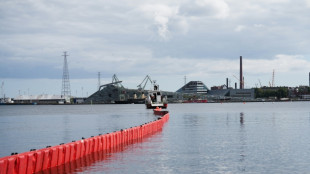 Finland defends shores against oil spill risk

Two years ago, El Salvador shrugged off a chorus of warnings and adopted Bitcoin as legal tender in a bid to revitalize its economy and improve access to financial services.
It has not worked.
Bitcoin has lost more than half its value since then and though President Nayib Bukele is wildly popular for his clampdown on criminal gangs, his currency gamble has not gone down equally well.
Tech enthusiast Bukele wanted to make it easier, and cheaper, for Salvadorans to receive remittances from family members abroad and to provide financial services access to the 70 percent of people with no bank account.
Remittances account for a fifth of the country's GDP.
But two years after El Salvador became the first country in the world to adopt Bitcoin as its currency, alongside the US dollar, "the goals that were pursued... have not been achieved, people hardly use it, they don't have much trust" in crypto, economist and former Reserve Bank governor Carlos Acevedo told AFP.
"The experiment has not worked, it is a crypto winter," he said.
There are no figures available on how many Salvadorans have taken up Bitcoin.
But a poll conducted in May by the Central American University found that 71 percent believed the cryptocurrency "has in no way helped to improve their family economic situation."
On the streets of San Salvador, the verdict is harsh.
"I don't see that money working, it's just propaganda. Where's the benefit? There's no benefit. It's a bad investment," newspaper vendor Juan Antonio Salgado, 65, told AFP.
"It's robbery," he added, in reference to the currency's volatility.
Two years ago, Bitcoin traded at about $45,000, and a few months later reached a record $68,000.
Today, it is worth just over $25,500.
- Cash is king -
To facilitate Bitcoin transactions, the government created the so-called "Chivo" digital wallet and promised each user the equivalent of $30.
But in one measure of Bitcoin's slow adoption, the Reserve Bank said only one percent of the $4.71 billion received in remittances between January and July this year came via Chivo.
"People don't really have confidence in a cryptocurrency whose value changes from one moment to the next, and... people prefer to use hard cash," economist Julia Martinez told AFP.
For Acevedo, it is too soon to "speak of a government failure" as Bitcoin's "price could rise at any moment and then it will be a different scenario."
At the time of Bukele's announcement in 2021, the International Monetary Fund and World Bank warned about the risks of currency fluctuation, and said the plan could leave the country more vulnerable to money laundering and other illicit activities, threatening its underlying stability.
The change meant that every Salvadoran business -- even neighborhood shopkeepers -- had to accept the cryptocurrency as payment.
After Bitcoin hit $68,000 in November 2021, a buoyant Bukele announced plans to build a "Bitcoin City" that would be powered by thermal energy from a volcano.
The country would issue $1 billion in Bitcoin bonds to finance the initiative, he announced.
Nothing has come of the project or the bonds to date.
- 'We're going forward' -
The government has said it has purchased 2,381 Bitcoin, without revealing the rate. The last purchase was of 80 units in June 2022.
In November last year, Bukele said the government would buy one Bitcoin every day, though it is not known whether this has come to pass.
Economist Cesar Villalona told AFP that Bitcoin "does not exist in the local economy" in any significant way, because in El Salvador "everything" is paid in dollars: wages, services and goods.
The crypto initiative does have its fans, though.
YouTuber Jose Francisco Ayala, 38, said it was just a matter of education.
"We're going forward, we're not going backwards," he told AFP. "The more we learn the more we will get into it."
E.Borba--PC