Gold and mercury, not books, for Venezuela's child miners / Photo: Yris PAUL - AFP

 Venezuelan Artist Oswaldo Vigas Retrospective Opens in Guangzhou

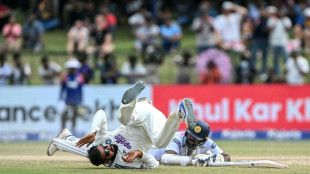
 Smith and Cox revive England against Pakistan after Abbas strikes

 Zambia opposition leader held in treason probe: police

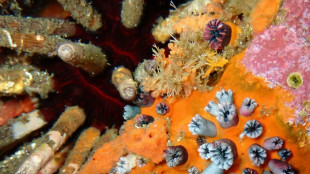 Corals show El Nino intensifying as planet warms: study
 Russia dismisses as 'scare stories' US reports about attacking NATO
 UEFA target Infantino for 'criminal mismanagement', suspend boycott threat

 Piracy attacks off Somalia surge in 2026: AFP analysis of IMO data
 Tottenham land Marmoush from Manchester City

 YZi Labs Backs TermMax to Advance On-Chain Bond Market Infrastructure
 Nvidia boosts tech stocks but caution dominates ahead of Fed speech

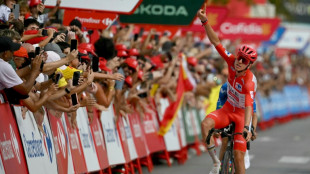 Pogacar holds off Mas to claim Vuelta stage six victory
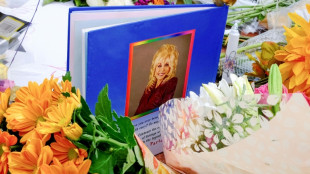 A lasting Dolly Parton legacy: childhood literacy

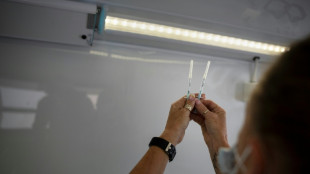 S.Africa sounds alarm as infant vaccinations plummet
 Toulouse have salary cap fine reduced on appeal

 Tech stocks lifted by Nvidia but caution dominates ahead of Fed speech
 'Smart cricketer' Dinusha helps Sri Lanka draw second India Test
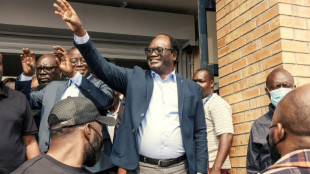 Zambia opposition leader surrenders to police: state media

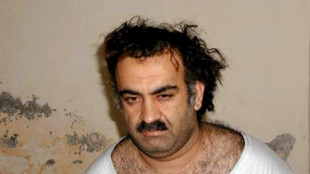 Alleged 9/11 mastermind to go on trial in June 2028
 Abbas's treble strike rocks England in second Test

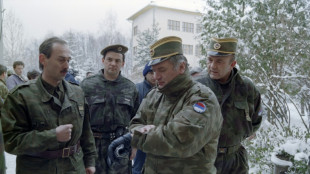 'Butcher of Bosnia' Ratko Mladic dead: Serbian state media

 New Zealand make three changes for second South Africa Test
 Stocktwits Expands CME Group Alliance with the Integration of Single Stock Futures Data

 'Mature' Colapinto extends contact with Alpine through 2027

 Atletico rule out any talks with Barcelona over Alvarez
 Tech stocks lifted by Nvidia as broader markets struggle
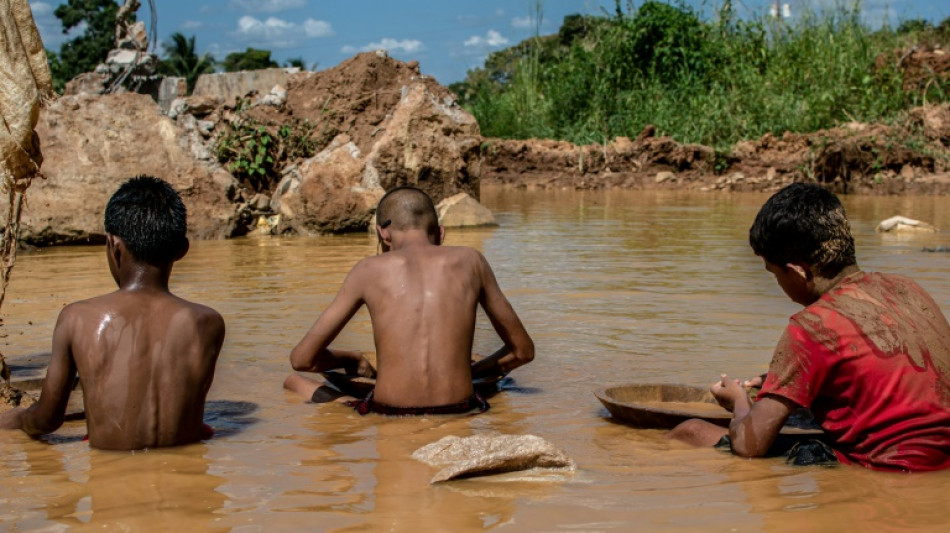
At 10 years old, Martin cannot read, but he is an old hand at detecting traces of the gold he and his young cousins dig for at an open-pit mine in southeastern Venezuela.
In the town of El Callao, extracting gold from soil starts as a kid's game, but soon becomes a full-time job that human rights activists slam as dangerous exploitation.
Small and agile, the children's size helps them shimmy into narrow wells to hack out muddy earth, hoping it will contain gold -- which has become ever more precious as Venezuela's oil production has plummeted.
Doubled over, they carry heavy bags of earth under the relentless sun to murky puddles of water where they rinse it in wooden trays.
Martin explains that "whatever is gold gets stuck to the mercury," a poisonous and environmentally toxic substance they use for its ability to extract gold from ore.
He is one of around a thousand children in the region involved in illegal gold mining, a booming industry in the resource-rich country that has been battered by multiple economic crises.
- 'A matter of survival' -
Martin -- not his real name -- lives in El Peru, a nearby hamlet. He has never been to school.
Carlos Trapani of the Cecodap children's rights NGO, told AFP that the backbreaking work and its associated dangers have become "normalized" in these communities.
Despite what Trapani describes as "the worst conditions," Martin says he "would rather get gold than go to school."
"My dad says that money comes from work," he told AFP, in an interview granted with the consent of his parents.
"With the money I earn here I buy my things: shoes, clothes, sometimes some sweets."
Around a thousand children are working in illegal mines in the region, according to the private Catholic university UCAB in neighboring Guyana.
"It's a matter of survival," said Eumelis Moya, coordinator of the university's office of human rights.
"People have postponed their aspirations to eat, to meet their needs."
- 'Illegal mining bonanza' -
Venezuela has been going through a serious economic crisis since 2013, which experts blame on political mismanagement, US sanctions and an overreliance on its massive oil reserves.
GDP has contracted by 80 percent, and hyperinflation has eroded purchasing power. Some seven million of the country's 30 million people have left in search of a better life elsewhere.
In 2017, President Nicolas Maduro vowed to rescue the economy by focusing on the country's other mineral resources, saying it could have "the biggest gold reserve in the world."
Since then, there has been what the International Crisis Group termed an "illegal mining bonanza" across the south of the country, where criminal groups -- including Colombian guerrillas -- run most operations, sowing terror in local communities.
"It has scared me when the shootings start and there are dead people," says Gustavo, another young miner, aged 11.
According to a 2021 report by the Organisation for Economic Co-operation and Development (OECD) "much of the gold earned by small miners ultimately ends up in the hands of the military and political elite."
- Poisoning the environment -
In July, Maduro ordered the deployment of the armed forces to dislodge illegal miners, and authorities have reported the destruction of some camps.
The mining -- much of which takes place in the Venezuelan Amazon -- has had a devastating impact on the environment and Indigenous communities.
In some parts of Venezuela, including the town of El Callao, grams of gold are used as currency in local businesses, rather than the unstable bolivar.
This can prove advantageous for child miners like Gustavo, who sweeps up dirt outside a liquor store in El Peru with his brothers, hoping a drunken customer may have dropped some gold.
"The other day, I got a gram (worth about $50)," he told AFP. "I gave the money to my mom to buy food."
He has been mining since the age of six, and doesn't go to school either.
Children in Venezuela, who make up a third of the population, have borne the brunt of the crisis, with many left behind after their parents emigrate. Some public schools are barely functional due to low teacher salaries.
Trapani said that when the economic crisis reached a peak in 2018, it wasn't just school children heading for the mines, but also teachers, after quitting their day jobs.
Gustavo's mother, 28, told AFP her kids did not return to school after the Covid-19 lockdown, but she hopes they will eventually.
"There are always risks in the mines."
F.Ferraz--PC