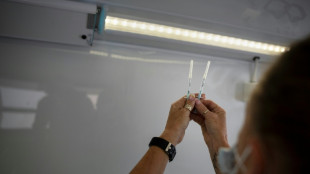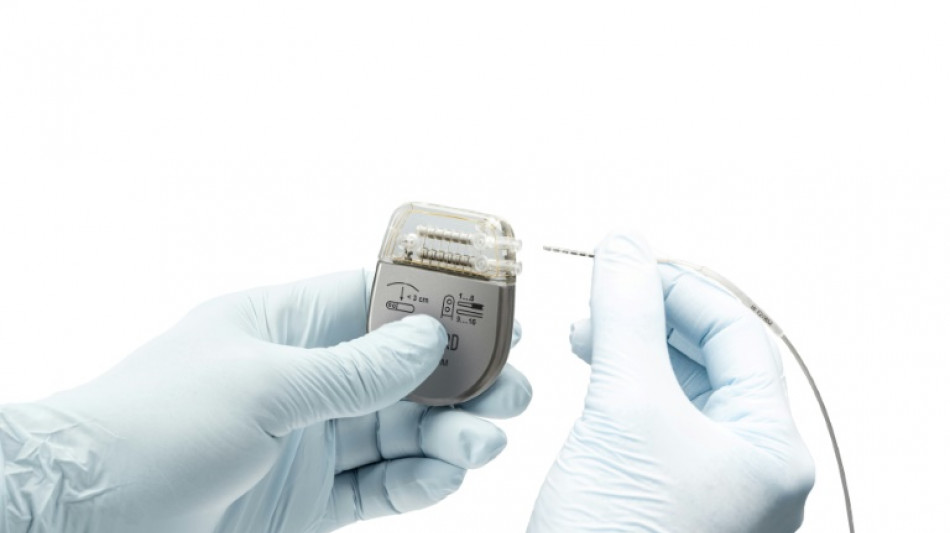
Brain implants could restore paralyzed patients' arm movements / Photo: Marc AMIGUET - ONWARD Medical/AFP

 Iraola hoping for 'good news soon' in Liverpool pursuit of Barcola

 Iran executes over 500 people in 2026: rights group

 Srebrenica: Massacre that outraged the world

 After US settlement, EU says Meta must 'protect our kids too'

 Germany-led 'frugal' EU states demand budget plan cuts of 'several hundred billion'

 Ratko Mladic: Serb crusader dubbed 'epitome of evil'

 Pramac Yamaha replace Miller with Guevara for 2027 MotoGP season

 Bouaddi needs time at Man City despite 100m euro fee, says Maresca

 MEXC Launches SHEIN Subscription with $1M Quota as Inaugural IPO Express Event

 Iran, Qatar hold Hormuz talks as US blockade chokes Iran oil imports

 Defiant Dinusha helps Sri Lanka draw second India Test

 Pakistan bowl against England in rain-delayed second Test

 Barcola move from PSG to Liverpool 'on track': source

 Swallowed by silt: Survivors recount Nepal flood horror
 Germany's Merz hosts 'frugal' leaders ahead of EU budget battle
 Barca sign Croatia goalkeeper Livakovic
 Rain delays England's bid to put off-field incidents behind them

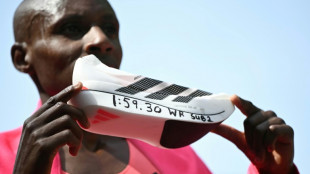 World record holder Sawe withdraws from Berlin Marathon

 Driven by faith, activists stand up to fellow Jews to protect Palestinians

 Therapy Culture Performance: How the Lindsay Clancy Trial Sparked a Trend of Viral Maternal Distress
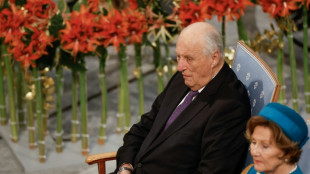 Norway's King Harald, 89, in 'extremely serious' condition

 How a glacier collapse may have caused Nepal-Tibet disaster

 Harmovest Capital Strengthens Global Financial Services Through Technology and Compliance
 Nvidia to buy AI platform Hugging Face for $12.9 bn: report

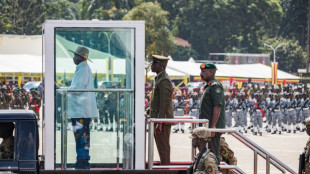 Palace intrigue in Uganda as succession battle heats up

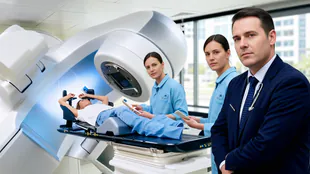
A paralyzed Swiss man has become the first person to test a new technology that reads his thoughts using AI and then transmits signals through his own nervous system to his arms, hands and fingers in order to restore movement.
The treatment, a combination of a brain-computer interface and a spinal implant, had previously allow a paraplegic patient to walk again, a breakthrough that was published in the scientific journal Nature in May.
But this is the first time it's being used for "upper extremity function," Onward, the Dutch company behind it, said Wednesday.
"The mobility of the arm is more complex," surgeon Jocelyne Bloch, who carried out the implantation procedures, told AFP.
Though walking comes with its own challenges -- notably balance -- "the musculature of the hand is quite fine, with many different small muscles activated at the same time for certain movements," she said.
The patient, who wishes to remain anonymous, is a 46-year-old who lost the use of his arms after a fall. Two operations were carried out last month at the Lausanne University Hospital in Switzerland.
The first involved removing a small piece of cranial bone and inserting in its place the brain implant, which was developed by the French group CEA-Clinatec and measures a few centimeters in diameter.
In the second, surgeons placed a stimulator roughly the size of a credit card developed by Onward inside the patient's abdomen, and connected it through electrodes to the top of his spinal column.
The brain-computer interface (BCI) records brain signals and decodes them using artificial intelligence to make sense of the patient's intentions, acting as a "digital bridge" to send these instructions on to the spinal cord stimulator.
"It's going well so far," said Bloch, who co-founded Onward and is a consultant for the company. "We are able to record brain activity, and we know that the stimulation works," she said.
"But it is too early to talk about what progress he has made. "
- Still in training -
The patient is still in the training phase, teaching his brain implant to recognize the different desired movements.
The movements will then have to be practiced many times before they can become natural. The process will take a few months, according to Dr. Bloch.
Two more patients are scheduled to participate in this clinical trial, and the full results will be published later.
Spinal cord stimulation has already been used in the past to successfully move paralyzed patients' arms, but without reading their thoughts by pairing it with a brain implant.
And brain implants have already been used so that a patient can control an exoskeleton. The Battelle research organization used a brain implant to restore movement in a patient's arm -- through a sleeve of electrodes placed on the forearm, stimulating the muscles required from above.
"Onward is unique in our focus on restoring movement in people who have paralysis by stimulating the spinal cord," the company's CEO Dave Marver told AFP, adding the technology could be commercialized by the end of the decade.
Brain implants were long trapped in the realm of science fiction, but the field is now rapidly growing thanks to firms like Synchron and Elon Musk's Neuralink.
They are working on having paralyzed patients to control computers through thought, restoring for example the ability to write.
A.Silveira--PC