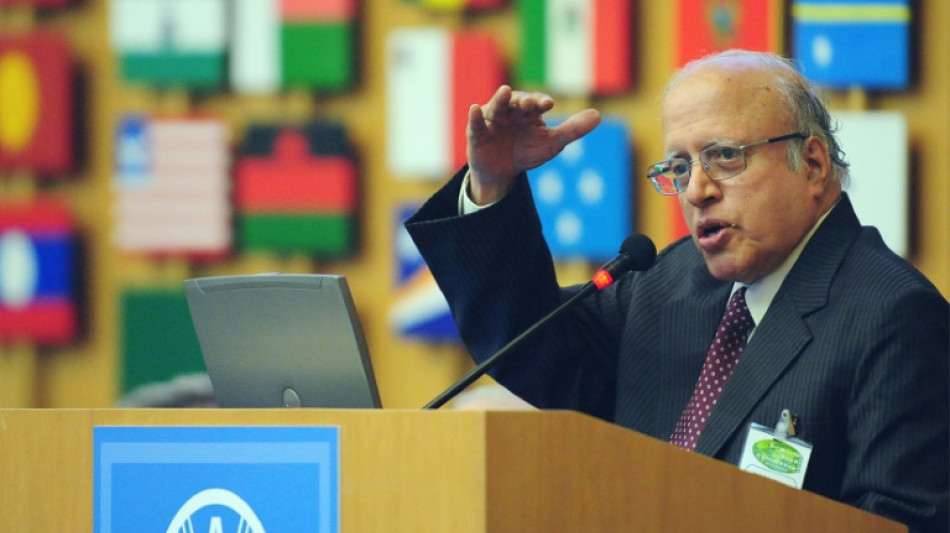
Farm scientist behind India's 'green revolution' dies / Photo: ALBERTO PIZZOLI - AFP

 Iraola hoping for 'good news soon' in Liverpool pursuit of Barcola

 Iran executes over 500 people in 2026: rights group
 Srebrenica: Massacre that outraged the world

 After US settlement, EU says Meta must 'protect our kids too'
 Germany-led 'frugal' EU states demand budget plan cuts of 'several hundred billion'

 Ratko Mladic: Serb crusader dubbed 'epitome of evil'

 Pramac Yamaha replace Miller with Guevara for 2027 MotoGP season

 Bouaddi needs time at Man City despite 100m euro fee, says Maresca

 MEXC Launches SHEIN Subscription with $1M Quota as Inaugural IPO Express Event

 Iran, Qatar hold Hormuz talks as US blockade chokes Iran oil imports

 Defiant Dinusha helps Sri Lanka draw second India Test

 Pakistan bowl against England in rain-delayed second Test

 Barcola move from PSG to Liverpool 'on track': source

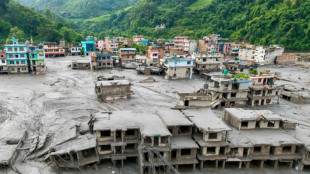
 Swallowed by silt: Survivors recount Nepal flood horror

 Germany's Merz hosts 'frugal' leaders ahead of EU budget battle

 Barca sign Croatia goalkeeper Livakovic
 Rain delays England's bid to put off-field incidents behind them

 World record holder Sawe withdraws from Berlin Marathon

 Driven by faith, activists stand up to fellow Jews to protect Palestinians
 Therapy Culture Performance: How the Lindsay Clancy Trial Sparked a Trend of Viral Maternal Distress
 Norway's King Harald, 89, in 'extremely serious' condition

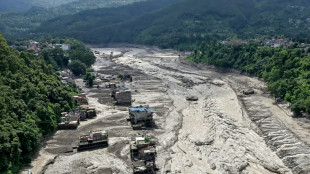 How a glacier collapse may have caused Nepal-Tibet disaster

 Harmovest Capital Strengthens Global Financial Services Through Technology and Compliance

 Nvidia to buy AI platform Hugging Face for $12.9 bn: report
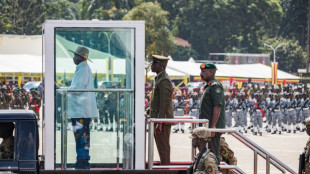 Palace intrigue in Uganda as succession battle heats up
India on Thursday mourned the death of scientist Monkombu Sambasivan Swaminathan, the architect of the 1960s "green revolution" that brought an end to the chronic food shortages then plaguing the country.
The plant geneticist died at the age of 98 in Chennai after an illustrious academic career that garnered him 84 honorary doctorates from some of the world's top universities.
His work breeding wheat and rice strains with improved yields, and training farmers to cultivate them, helped transform India from a starving nation into a food exporter.
"At a very critical period in our nation's history, his groundbreaking work in agriculture transformed the lives of millions and ensured food security for our nation," Prime Minister Narendra Modi wrote on X, formerly Twitter.
"His passion to see India progress was exemplary."
Swaminathan was awarded his doctorate in genetics from Cambridge University in 1952 but turned down a US professorship after resolving to return to post-independence India and "serve the nation".
Memories were still fresh of the Bengal Famine of 1943 at the twilight of British colonial rule, when up to 3.8 million people died of hunger.
He began collaborating with US agronomist Norman Borlaug, whose own contributions to improving world food supply won him the Nobel Peace Prize.
After prime minister Indira Gandhi took office in 1966, Swaminathan was given free rein to implement a new agricultural programme.
At the time, India's economy was hobbled by chronic food shortages that left it dependent on foreign aid, but by the early 1970s the new techniques had made it self-sufficient.
"Crisis is a mother of invention. We faced a crisis in the 1960s and we succeeded," he told AFP in 2008.
Swaminathan was the 1971 recipient of the Ramon Magsaysay Award, popularly known as Asia's equivalent of the Nobel, along with a laundry list of other accolades.
Time Magazine ranked him as one of the three most influential Indians of the 20th century, alongside independence hero Mahatma Gandhi and the revolutionary poet and artist Rabindranath Tagore.
His later career saw him briefly serve as a member of India's parliament.
He was survived by his three daughters following the death of his wife last year, media reports said.
L.Torres--PC