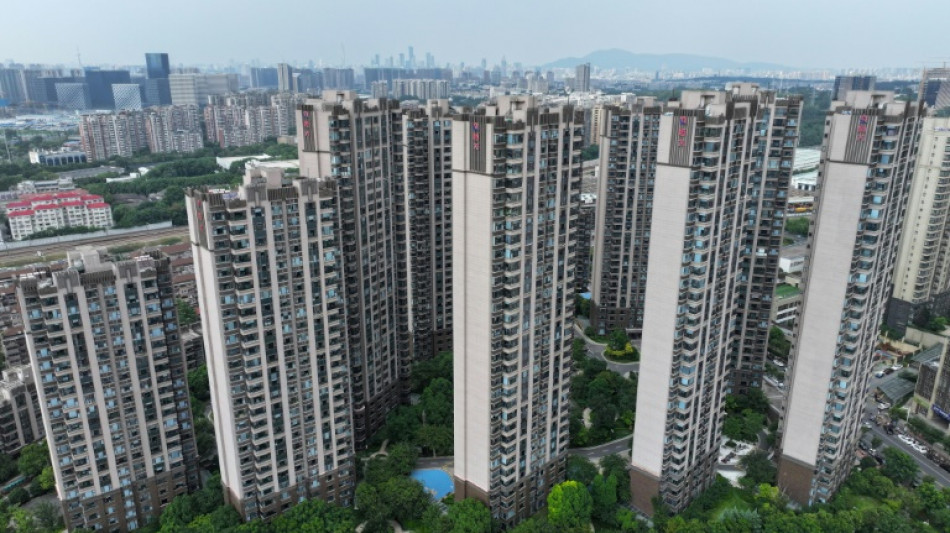
China's Evergrande says boss suspected of crimes after trading suspended / Photo: STRINGER - AFP

 Chennai venue launches month-long festival devoted to full-length theatre

 एलेक्स बोडी और SCANDIC PAY: Mastercard और VISA कार्ड — भुगतान की नई पीढ़ी

 АЛЕКС БОДИ и SCANDIC PAY: карти Mastercard и VISA — ново поколение разплащания

 أليكس بودي وSCANDIC PAY: بطاقات Mastercard وVISA — جيل جديد من المدفوعات

 ALEX BODI 與 SCANDIC PAY:Mastercard 與 VISA 卡——新一代支付方式

 ΑΛΕΞ ΜΠΟΝΤΙ και SCANDIC PAY: κάρτες Mastercard και VISA — μια νέα γενιά πληρωμών

 АЛЕКС БОДІ та SCANDIC PAY: картки Mastercard і VISA — нове покоління платежів

 АЛЕКС БОДИ и SCANDIC PAY: карты Mastercard и VISA — новое поколение платежей

 ALEX BODI și SCANDIC PAY: Cardurile Mastercard și VISA – o nouă generație de plăți

 John Park’s Agency Takes Legal Action Over Unauthorized 'McDonald’s Order Rap' Distribution

 Best Pet Advent Calendars for Christmas 2026: Dog Treats and Cat Toys

 Grattan Institute Releases Blueprint to Target Specialists Over Excessive Fees

 Arizona Science Center Hosts Girls in STEM Astro Adventures for Students

 New Turkish Cafe, Japanese BBQ, and Korean Restaurants Open Across East Bay

Heavily indebted property giant China Evergrande said Thursday its boss was suspected of "illegal crimes", after trading of its shares was suspended earlier in the day.
The company announcement to the Hong Kong Stock Exchange comes a day after media reports that Xu Jiayin was being held by police.
No specific reason was given for the decision to suspend share trading, which also affected the company's property services and electric vehicle units.
But late Thursday, the company said it had "received notification from relevant authorities" that Xu "has been subject to mandatory measures in accordance with the law due to suspicion of illegal crimes", without giving further details.
On Wednesday, Bloomberg News reported Xu was being held under "residential surveillance" -- which does not mean he has been arrested or charged with a crime -- citing anonymous sources.
The firm has become the poster child for China's growing property-sector crisis that has seen several high-profile firms engulfed in a sea of debt, fuelling fears about the country's wider economy and a possible spillover globally.
It is just a month since the firm resumed trading following a 17-month halt caused by its failure to publish its financial results.
Evergrande estimated it had debts of $328 billion at the end of June.
On Sunday, the company said it was unable to issue new debt as its subsidiary, Hengda Real Estate Group, was being investigated. And last Friday, it said meetings planned this week on a key debt restructuring would not take place.
The firm said it was "necessary to reassess the terms" of the plan in order to suit the "objective situation and the demand of the creditors".
The company's property arm this week missed a key bond payment, and Chinese financial website Caixin reported that former executives had been detained.
The crisis has deepened a broader slowdown in the world's second-largest economy.
The property sector has long been a key pillar of growth -- along with construction it accounts for about a quarter of GDP -- and it experienced a dazzling boom in recent decades.
But the massive debt accrued by its biggest players has been seen by Beijing in recent years as an unacceptable risk for China's financial system and overall economic health.
- 'Contagion risk' -
Policymakers have come under intense pressure in recent months to unveil measures to support the economy and particularly the property sector.
However, they are not keen on the type of bonanza unveiled in 2008 during the financial crisis, meaning the government could struggle to hit its growth target of around five percent for this year. Even that would represent one of its worst performances in decades, excluding the pandemic.
Moody's Analytics assistant director-economist Heron Lim told AFP: "If Evergrande is the tip of the iceberg and contagion risks materialise, a crisis of confidence in the onshore debt markets that have thus far avoided many of the defaults could erupt and lead to a severe downturn."
Authorities have gradually tightened developers' access to credit since 2020, and a wave of defaults has followed -- notably that of Evergrande.
The long-running housing crisis has wreaked misery on the lives of homebuyers across the country, who have often staked life savings on properties that never materialised.
A wave of mortgage boycotts spread nationwide last summer, as cash-strapped developers struggled to raise enough to complete homes they had already sold in advance -- a common practice in China.
Earlier this month, authorities in the southern city of Shenzhen said they had arrested several Evergrande employees and called on the public to report any cases of suspected fraud.
Another Chinese property giant, Country Garden, narrowly avoided default in recent months, after reporting a record loss and debts of more than $150 billion.
"Markets are increasingly pricing in the possibility that the ultimate end-game is a much smaller property sector," Louise Loo, lead China economist at Oxford Economics, told AFP.
"That likely means no private sector developer is too big or systemic to fail."
burs-hol/reb/lb
A.S.Diogo--PC