As rain vanishes, Guatemalans learn to use every drop of water / Photo: Johan ORDONEZ - AFP

 Iraola hoping for 'good news soon' in Liverpool pursuit of Barcola
 Iran executes over 500 people in 2026: rights group
 Srebrenica: Massacre that outraged the world

 After US settlement, EU says Meta must 'protect our kids too'

 Germany-led 'frugal' EU states demand budget plan cuts of 'several hundred billion'

 Ratko Mladic: Serb crusader dubbed 'epitome of evil'
 Pramac Yamaha replace Miller with Guevara for 2027 MotoGP season

 Bouaddi needs time at Man City despite 100m euro fee, says Maresca

 MEXC Launches SHEIN Subscription with $1M Quota as Inaugural IPO Express Event

 Iran, Qatar hold Hormuz talks as US blockade chokes Iran oil imports

 Defiant Dinusha helps Sri Lanka draw second India Test
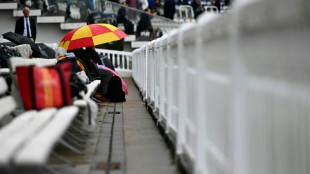 Pakistan bowl against England in rain-delayed second Test

 Barcola move from PSG to Liverpool 'on track': source

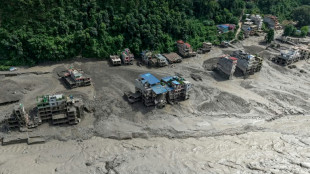
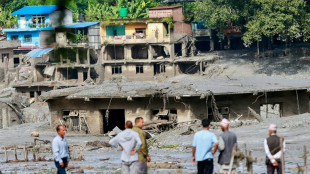 Swallowed by silt: Survivors recount Nepal flood horror

 Germany's Merz hosts 'frugal' leaders ahead of EU budget battle
 Barca sign Croatia goalkeeper Livakovic

 Rain delays England's bid to put off-field incidents behind them
 World record holder Sawe withdraws from Berlin Marathon

 Driven by faith, activists stand up to fellow Jews to protect Palestinians
 Therapy Culture Performance: How the Lindsay Clancy Trial Sparked a Trend of Viral Maternal Distress
 Norway's King Harald, 89, in 'extremely serious' condition

 How a glacier collapse may have caused Nepal-Tibet disaster

 Harmovest Capital Strengthens Global Financial Services Through Technology and Compliance

 Nvidia to buy AI platform Hugging Face for $12.9 bn: report
 Palace intrigue in Uganda as succession battle heats up
As rain becomes ever scarcer in northern Guatemala, communities are learning how to carve out makeshift irrigation canals and purify their water to conserve every last precious drop.
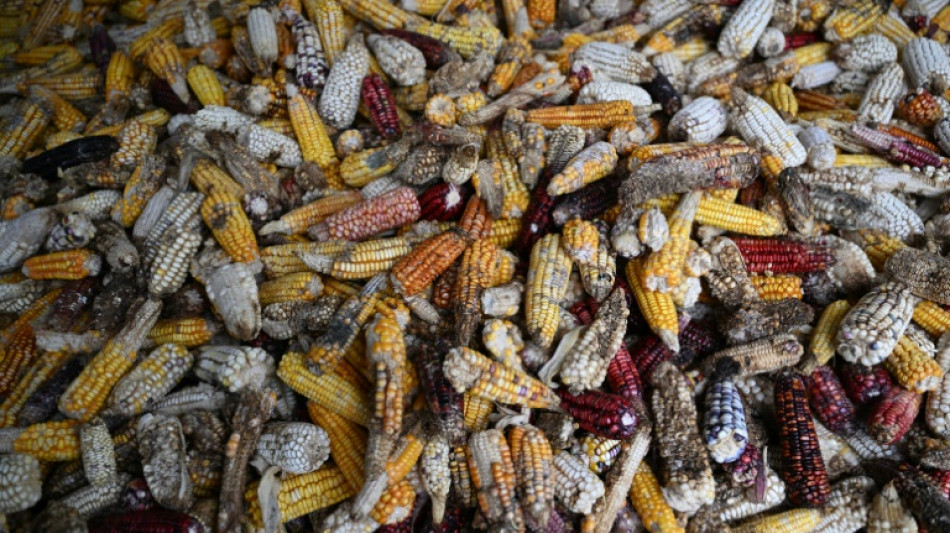
"No water, no rain, so not a good harvest," says Francisco Carrillo, 87, as he desolately sifts through his measly corn crop, tossing aside scores of desiccated and stunted heads.
Some have given up even trying to plant, and with children constantly sick with stomach bugs from dirty drinking water, new methods are desperately needed.
Guatemala -- which forms part of Central America's Dry Corridor -- is regularly listed by international organizations among the top ten countries most vulnerable to climate change.
Situated on a narrow strip of land between two oceans, and heavily dependent on agriculture, different parts of Guatemala are increasingly battered by drought and intense rains -- often at the same time.
These extreme weather events are fueling massive waves of migration, notably to the United States.
In the northern region of Quiche, mostly home to indigenous communities such as Mayans, residents are learning to build ditches above their sloped fields of corn or beans, so that water trickles down through the plants and keeps the soil moist for longer.
"During the few rainy days we have, we try to capture the water through these ditches so that the water filters into the soil," explained Oscar Rodriguez with the Save the Children charity, which is teaching the techniques.
To improve their yields, residents are also being taught to make home-made fertilizer with a mixture of herbs, chillis and garlic.
The World Food Programme (WFP) is trying to encourage the farming of less thirsty plants like carrots and tomatoes, which also grow faster.
- 'The children get sick' -
Save the Children says that 3.5 million of the country's 18 million inhabitants are threatened with an "unprecedented food crisis."
In rural Quiche, Indigenous families without potable water have long collected rainwater from streams or in wells they dig in the ground.
However, with less fresh rainwater, these water sources become contaminated by animals and "the children get sick" when they drink it, said Tomasa Ixotoyac, 40, as she draws muddy water up from a well with a bucket.
Save the Children has also shown the villagers how to use a few drops of chlorine to filter their water before boiling it.
Faced with increasingly erratic weather, the government and the United Nations Food and Agriculture Organization are implementing a $66 million plan to improve water collection systems in the arid north.
"The rain has become scarcer, it no longer rains like normal," said Gladys Azanon, from the Cerro Negro village.
- 'Is it fair?' -
Guatemala's rainy season runs from May to October.
While the El Nino warming phenomenon has intensified the drought in the north, it has had the opposite effect in the south -- highlighting the different extremes of climate change.
The south of the country was worst hit by Hurricanes Eta and Iota in 2020 and heavy rains this year have led some crops to rot in the soil, said Ilsia Lopez, 31, in the town of Sajubal.
Flash floods have left dozens dead, destroying homes and bridges.
"We get scared when it rains," said Lopez.
Earlier this month, Guatemala's President Alejandro Giammattei complained in a speech at the United Nations Security Council about the treatment of poor countries like his, which bear the brunt of climate change while being among the least responsible.
"We are the ones who suffer the most damage year after year. Is it fair?"
E.Paulino--PC