EU moves to protect sensitive tech from rivals, China / Photo: WANG Zhao - AFP/File

 Bouaddi needs time at Man City despite 100m euro fee, says Maresca
 MEXC Launches SHEIN Subscription with $1M Quota as Inaugural IPO Express Event

 Iran, Qatar hold Hormuz talks as US blockade chokes Iran oil imports

 Defiant Dinusha helps Sri Lanka draw second India Test
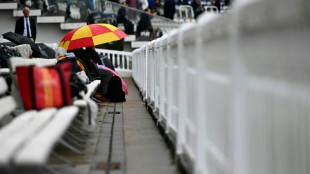 Pakistan bowl against England in rain-delayed second Test

 Barcola move from PSG to Liverpool 'on track': source
 Swallowed by silt: Survivors recount Nepal flood horror
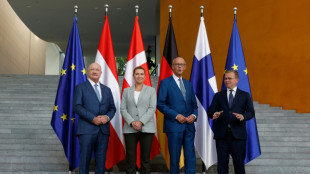 Germany's Merz hosts 'frugal' leaders ahead of EU budget battle
 Barca sign Croatia goalkeeper Livakovic
 Rain delays England's bid to put off-field incidents behind them

 World record holder Sawe withdraws from Berlin Marathon

 Driven by faith, activists stand up to fellow Jews to protect Palestinians

 Therapy Culture Performance: How the Lindsay Clancy Trial Sparked a Trend of Viral Maternal Distress
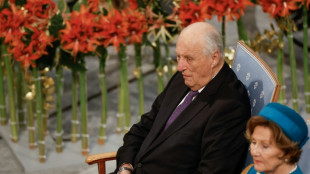 Norway's King Harald, 89, in 'extremely serious' condition

 How a glacier collapse may have caused Nepal-Tibet disaster

 Harmovest Capital Strengthens Global Financial Services Through Technology and Compliance
 Nvidia to buy AI platform Hugging Face for $12.9 bn: report

 Palace intrigue in Uganda as succession battle heats up

 'Housing First' approach gets Swedish city's homeless off streets

 Czech duo Muchova and Mensik win US Open mixed doubles title
 Japan's 'polka dot queen' artist Yayoi Kusama dies aged 97

 Nepal-Tibet disaster: what we know

 China deploys record number of ships around Taiwan as pressure grows

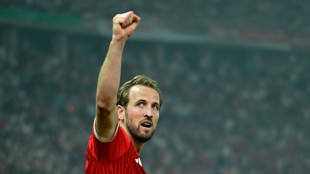 Ruthless Bayern target treble as rivals reboot on Bundesliga return

 What experts know so far about Nepal's deadly floods
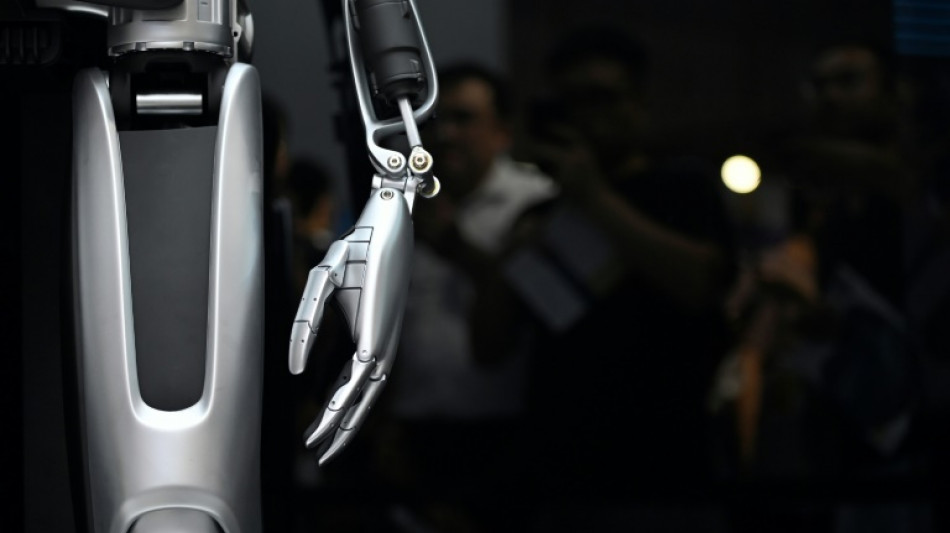
The EU unveiled Tuesday a list of sensitive technologies that should be kept out of the hands of rivals, as the bloc takes further measures to confront China's aggressive trade policies.
Brussels is building a trade policy armoury to protect the bloc from actions by rival nations, after supply chain shocks rocked European economies during the Covid pandemic, and the energy crisis that followed Russia's invasion of Ukraine.
It includes a tool approved by the European Parliament Tuesday that aims to punish nations that seek to put pressure on one of its member states.
The European Commission published a list of four of the most critical technologies it believes Europe must monitor more carefully since they have the potential to harm the bloc's security in the wrong hands.
They are advanced semi-conductors used for many of the electrical goods people use daily; artificial intelligence including cloud computing; quantum technologies; and biotechnologies including genetic modification techniques.
The commission will carry out risk assessments with member states by the end of the year to determine what follow-up measures to take, which could include export controls.
"We need to continuously monitor our critical technologies, assess our risk exposure and -– as and when necessary -– take measures to preserve our strategic interests and our security," EU internal market commissioner Thierry Breton said.
Europe is "putting an end to the era of naivety", Breton added in a statement.
There was no direct mention of China or Russia, but the targets of the list are clear.
The United States has taken several measures in recent years to curb Beijing's access to technology, including limiting the sale of advanced computer chips to China.
Although the European Union says it seeks to maintain dialogue with Beijing, Brussels has stepped up its efforts to curtail critical trade with China.
- 'Stand up for EU jobs' -
It is part of a strategy of "de-risking" but not "decoupling" from China, pioneered by European Commission President Ursula von der Leyen.
She has repeatedly emphasised the need for Europe to produce more on the continent and work with friendlier nations to ensure "economic security", a phrase often used since Russia's assault on Ukraine began last year.
Von der Leyen unveiled the security strategy doctrine in June to better protect the EU's interests and tasked the commission with preparing a proposal on outbound investment that could restrict overseas funding by European companies.
The parliament also gave final approval to a mechanism that would allow the bloc to impose tariffs, restrict investment and limit access to public contracts for nations seen as engaging in economic blackmail.
It is a response to a dispute with China over trade restrictions imposed on EU member Lithuania after it strengthened ties with Taiwan.
"It is a necessary tool which will help to protect the interests of the EU and its member states from economic coercion," the EU's trade commissioner Valdis Dombrovskis said during a parliamentary debate in Strasbourg on Monday.
"The new instrument gives us the means to stand up for EU jobs and industry," he said.
- Chinese curbs -
MEPs were quizzing Dombrovskis on Tuesday about the EU's relations with Beijing following his visit to China last month.
During the trip he raised the issue of Europe's ballooning trade deficit with China, which he said had reached 400 billion euros ($420 billion).
The EU is already preparing a law to cut its dependence on China for critical raw materials, used in products like electric cars and smartphones.
China already moved in July to curb access to two rare metals -- gallium and germanium -- vital for making semi-conductors.
In the latest salvo against China, Brussels opened a probe last month into Chinese electric car subsidies after claims they lead to unfair competition in the EU market.
The investigation triggered fears of a trade war with Beijing, since the EU could decide to impose tariffs on Chinese electric cars above the standard 10 percent EU rate if it concludes there are unfair practices.
A.Silveira--PC