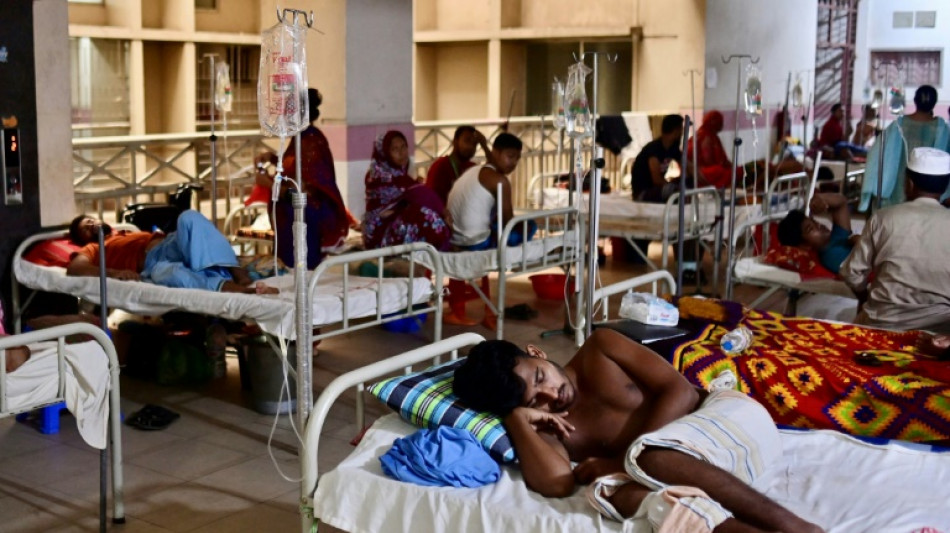
Bangladesh swamped by record dengue deaths / Photo: Munir uz ZAMAN - AFP

 Barca sign Croatia goalkeeper Livakovic
 Rain delays England's bid to put off-field incidents behind them
 World record holder Sawe withdraws from Berlin Marathon

 Driven by faith, activists stand up to fellow Jews to protect Palestinians
 Therapy Culture Performance: How the Lindsay Clancy Trial Sparked a Trend of Viral Maternal Distress
 Norway's King Harald, 89, in 'extremely serious' condition

 How a glacier collapse may have caused Nepal-Tibet disaster

 Harmovest Capital Strengthens Global Financial Services Through Technology and Compliance

 Nvidia to buy AI platform Hugging Face for $12.9 bn: report
 Palace intrigue in Uganda as succession battle heats up
 'Housing First' approach gets Swedish city's homeless off streets
 Czech duo Muchova and Mensik win US Open mixed doubles title
 Japan's 'polka dot queen' artist Yayoi Kusama dies aged 97
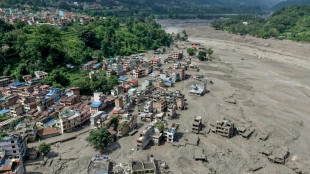
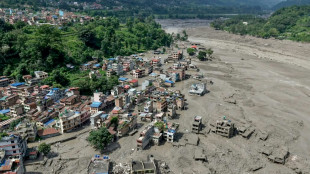
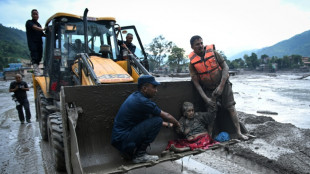 Nepal-Tibet disaster: what we know

 China deploys record number of ships around Taiwan as pressure grows

 Ruthless Bayern target treble as rivals reboot on Bundesliga return

 What experts know so far about Nepal's deadly floods

 UEFA set to withdraw FIFA boycott threat ahead of Champions League draw
 Sumo moves to beat Japan summer heat as temperatures rise

 'Be more honest': Markets crave clarity from cryptic Fed chair

 Climate change leaves its mark on America's largest reservoir
 CIA director warned Russia not to attack NATO members: US media

 Search for missing after Nepal-Tibet floods kills at least 160
 Meta, US states agree $18 bn settlement in landmark teen safety case

 What scientists know so far about Nepal's deadly floods

In the crowded fever ward in Bangladesh's Mugda hospital, every bed is taken, as the country struggles in the grip of its deadliest dengue outbreak.
More than 1,000 people have died this year in the nation's worst recorded spate of the mosquito-borne disease, which scientists say is increasing in frequency due to climate change.
In the worst cases, intense viral fevers trigger bleeding, internally or from the mouth and nose.
Nupur Akter, 21, is struggling desperately to feed her sister Payel, who she rushed into hospital two weeks ago while the six-year-old was "shaking uncontrollably".
But there has been little improvement. "She has become weaker," Akter said.
The Mugda Medical College and Hospital in the capital Dhaka is a key battleground against the outbreak, with the flood-prone South Asian nation a fertile ground for mosquitoes that breed in stagnant water.
A record 1,030 people have died nationwide this year, with more than 210,000 cases confirmed by hospitals. The figures dwarf the previous record last year, when 281 died.
- 'It scares me' -
Hospital director Mohammad Niamatuzzaman said medics were in non-stop crisis mode, bringing in gynaecology, heart and kidney specialists to aid overwhelmed general medics.
"It's an emergency -- but a long-lasting one," Niamatuzzaman told AFP, adding the state-run centre recorded 158 dengue deaths this year, five times its toll last year.
Three floors of the 10-storey hospital have been set aside for dengue, supporting more than 200 patients.
Overall, the 400-bed hospital is treating nearly 1,000 patients, and thousands more as outpatients.
Mohammad Sabuj, a goldsmith and father of three sons from the Konapara suburb of Dhaka, said there was someone with dengue in "almost every home" in his neighbourhood.
"In my shop, three out of four workers got the fever," said the 40-year-old, who was recovering after he too was rushed to hospital.
Sabuj said his friend, who was a doctor, had died.
"When a doctor couldn't save himself, it scares me," he said. "God forbid, if something happens to me at this age, where my family and children will go?"
Hospital treatment is free, but families have to buy many of the medicines, or pay for costly private blood tests to bypass the backlog.
Abdul Hakim, whose job as a construction worker provides his family's only income, is watching over his two-year-old son at the clinic.
"Since the day my son got a fever, I have no work," said Hakim, 38, who has two children.
"I am managing the tests, medicines and other hospital expenses by taking a loan... just to get him well".
At Mugda hospital, a quarter of the dengue patients are children. Overall, children under 15 make up roughly 10 percent of the dead.
- 'Infected' -
Bangladesh has recorded cases of dengue since the 1960s but documented its first outbreak of dengue haemorrhagic fever, a severe and sometimes fatal form of the disease, in 2000.
The World Health Organization (WHO) has warned that dengue -- and other diseases caused by mosquito-borne viruses such as chikungunya, yellow fever and Zika -- are spreading faster and further due to climate change.
About half of the world's population is now at risk of dengue, with an estimated 100 to 400 million infections occurring each year, and many of those causing only mild illness, according to WHO.
The Aedes mosquito that spreads dengue -- identifiable by its black and white stripy legs -- breeds in stagnant pools, and cases have slowed as the monsoon rains fade.
But experts warn the threat remains because in the hotter and dryer months, people store water in containers.
Niamatuzzaman said he believed deaths had soared because many patients had been infected multiple times. Those with repeat infections are at greater risk of complications.
While previous dengue outbreaks were largely confined to cities, Niamatuzzaman said patients are now coming from rural areas across the country where dengue had not been reported before.
"In my lifetime, I have rarely heard the name of this disease," said 65-year-old Alep Kari.
He came to Mugda hospital after he and his wife fell sick with dengue, and clinics in his rural district of Shariatpur were already full.
"This is the first time we got this fever in my village," he said. "Many were infected."
T.Vitorino--PC