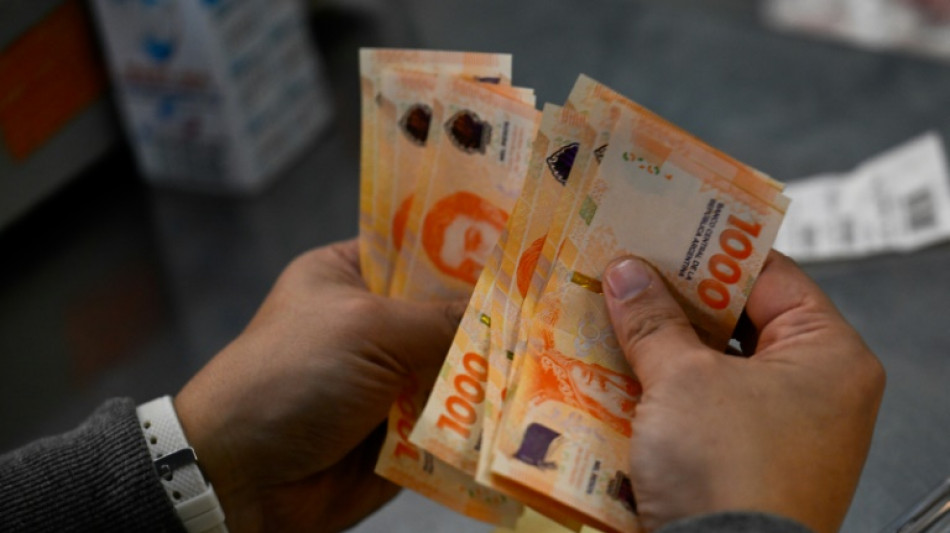
Pre-election jitters send Argentine peso to new lows / Photo: LUIS ROBAYO - AFP

 Barca sign Croatia goalkeeper Livakovic
 Rain delays England's bid to put off-field incidents behind them
 World record holder Sawe withdraws from Berlin Marathon

 Driven by faith, activists stand up to fellow Jews to protect Palestinians
 Therapy Culture Performance: How the Lindsay Clancy Trial Sparked a Trend of Viral Maternal Distress
 Norway's King Harald, 89, in 'extremely serious' condition

 How a glacier collapse may have caused Nepal-Tibet disaster

 Harmovest Capital Strengthens Global Financial Services Through Technology and Compliance
 Nvidia to buy AI platform Hugging Face for $12.9 bn: report
 Palace intrigue in Uganda as succession battle heats up
 'Housing First' approach gets Swedish city's homeless off streets
 Czech duo Muchova and Mensik win US Open mixed doubles title
 Japan's 'polka dot queen' artist Yayoi Kusama dies aged 97
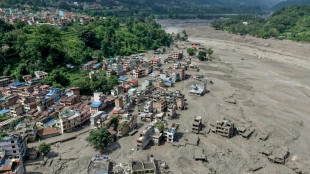
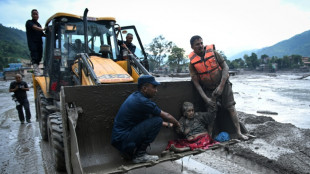 Nepal-Tibet disaster: what we know

 China deploys record number of ships around Taiwan as pressure grows

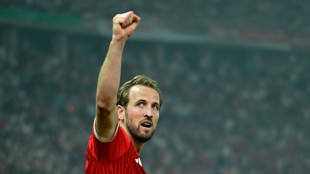 Ruthless Bayern target treble as rivals reboot on Bundesliga return

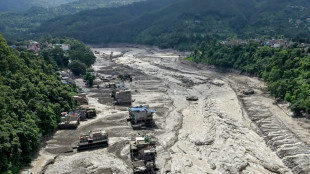 What experts know so far about Nepal's deadly floods
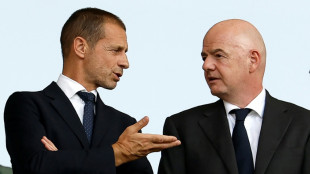 UEFA set to withdraw FIFA boycott threat ahead of Champions League draw
 Sumo moves to beat Japan summer heat as temperatures rise
 'Be more honest': Markets crave clarity from cryptic Fed chair
 Climate change leaves its mark on America's largest reservoir
 CIA director warned Russia not to attack NATO members: US media
 Search for missing after Nepal-Tibet floods kills at least 160
 Meta, US states agree $18 bn settlement in landmark teen safety case

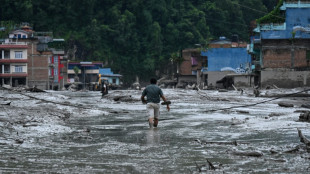 What scientists know so far about Nepal's deadly floods

The US dollar broke through the symbolic 1,000 peso mark on Argentina's parallel market on Tuesday, as citizens scramble to dump the currency two weeks before a presidential election, according to websites tracking the rate.
Argentines are heading to the vote with annual inflation at over 120 percent and record poverty levels, as the South American nation grapples with how to emerge from decades of economic malaise.
The dollar has long been a safe haven from the peso, with people buying the currency whenever they can as a form of savings and protection from their currency's volatility.
However, with strict restrictions on access to dollars, the "blue dollar" -- a thriving black market exchange tool -- is how most get their hands on the greenback.
With the parallel dollar now trading at over 1,000 pesos, it is worth almost three times the official rate of 365 pesos, propped up at great cost by the government.
Uncertainty is high ahead of the vote, and frontrunner Javier Milei, a radical outsider who has vowed to dollarize the economy, on Monday urged people to steer away from investments in pesos.
"Never in pesos, never in pesos. The peso ... isn't worth excrement," Milei told a local radio station just days after saying that a higher dollar rate would make it easier to dollarize the economy.
Since 2015, Argentina has imposed strict restrictions on the purchase of foreign currency, as the Central Bank's reserves plummeted. Analysts say the reserves are currently in the red.
The Central Bank issued a statement on Monday saying "the Argentine financial system presents a solid situation of solvency, capitalization, liquidity and provisioning."
- 'Irresponsible' -
Weary Argentines, young and old, rich and poor, have flocked behind Milei and his extreme ideas spread on television and social media, as their only hope out of the country's seemingly endless economic quagmire.
He has vowed to take a chainsaw to the bloated state, heavy on welfare and subsidies, and "dynamite" the central bank.
Economists say his plans to dollarize the economy are not feasible, notably because the country is so short on dollars.
His main rivals in the October 22 vote will be former security minister Patricia Bullrich on the right, and Economy Minister Sergio Massa from the ruling center-left coalition.
Massa slammed Milei's comments as "irresponsible."
"Agitating, telling people to withdraw their deposits irresponsibly... when I see candidates capable of setting the house on fire, it worries me," Massa said, accusing Milei of "playing with people’s savings."
Massa has also been accused of worsening Argentina's crisis by going on a spending spree to woo voters.
In recent weeks he has eliminated income tax for some 800,000 citizens, removed VAT levies from basic goods, and is making cash payouts to millions of informal workers.
Argentines remain haunted by the country's economic implosion in 2001, and deeply distrustful of their own banks and currency.
That year, amid a growing economic crisis, authorities froze bank deposits to avert a flight of capital and a run on the dollar.
Protests and looting broke out, the president fled by helicopter, and within days the country defaulted on $100 billion in debt. Almost 40 people died in a crackdown on protests.
Since then, Argentina has battled with boom and bust cycles, inflation, currency devaluations, and debt restructuring.
L.Torres--PC