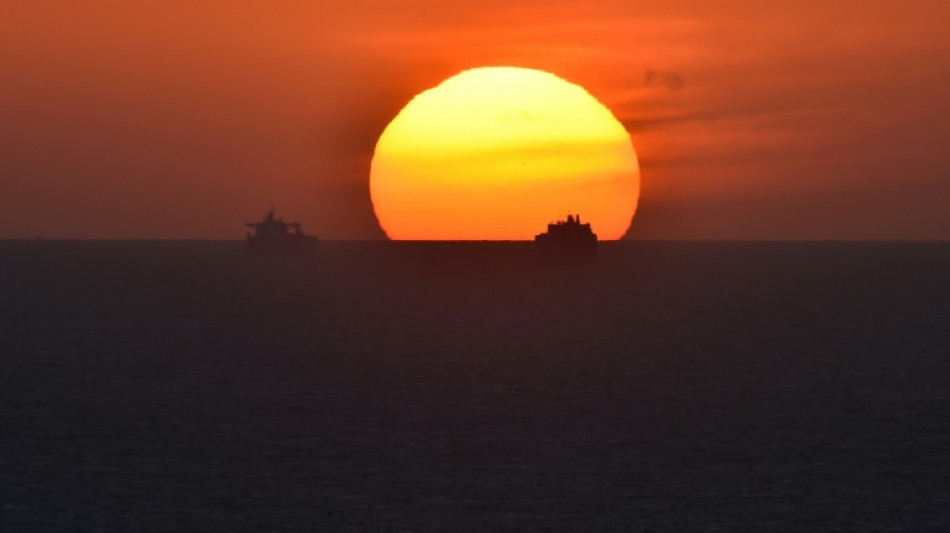
IEA says risk of oil supply disruptions is limited / Photo: Jean-François MONIER - AFP/File

 How a glacier collapse may have caused Nepal-Tibet disaster

 Harmovest Capital Strengthens Global Financial Services Through Technology and Compliance

 Nvidia to buy AI platform Hugging Face for $12.9 bn: report
 Palace intrigue in Uganda as succession battle heats up
 'Housing First' approach gets Swedish city's homeless off streets
 Czech duo Muchova and Mensik win US Open mixed doubles title

 Japan's 'polka dot queen' artist Yayoi Kusama dies aged 97
 Nepal-Tibet disaster: what we know

 China deploys record number of ships around Taiwan as pressure grows

 Ruthless Bayern target treble as rivals reboot on Bundesliga return

 What experts know so far about Nepal's deadly floods

 UEFA set to withdraw FIFA boycott threat ahead of Champions League draw
 Sumo moves to beat Japan summer heat as temperatures rise
 'Be more honest': Markets crave clarity from cryptic Fed chair

 Climate change leaves its mark on America's largest reservoir
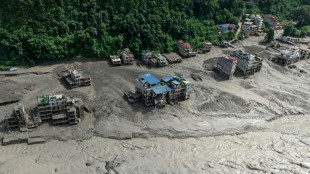
 CIA director warned Russia not to attack NATO members: US media

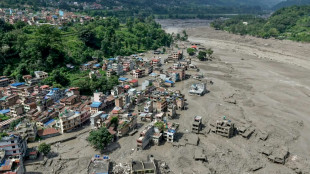 Search for missing after Nepal-Tibet floods kills at least 160

 Meta, US states agree $18 bn settlement in landmark teen safety case

 What scientists know so far about Nepal's deadly floods

 US general visits Colombia to discuss war on drugs

 Meta settlement puts social media industry on notice: 'There will be more'

 NFL owners approve record Seahawks sale

 Nigerian armed groups net nearly $6 mn in ransoms: study

 Savio scores on debut as Spurs advance in League Cup

 Mbappe hits treble as Real Madrid thrash Real Sociedad

The International Energy Agency said on Thursday the risk of oil supply disruptions due to the conflict between Israel and Hamas is limited but that it stands ready to intervene in markets if necessary.
The Paris-based agency, in addition to its analysis and advisory roles, coordinates the release of emergency stocks held by its 31 mostly advanced-economy member nations.
A surprise weekend attack by Hamas on Israel has left thousands dead and rattled oil markets amid fears that other nations might intervene and possibly disrupt shipments in the Middle East.
The region accounts for more than one-third of the world's seaborne oil shipments.
"While the prospect that oil supply flows will be impacted currently remains limited, the deadly strikes prompted traders to price in a higher geopolitical risk premium," the IEA said in its regular monthly report.
"There has been no direct impact on physical supply," it added.
But with supply and demand on the oil market currently tightly balanced, the IEA said it "stands ready to act if necessary to ensure markets remain adequately supplied".
Oil prices jumped at the start of the conflict but have since eased as there was no immediate disruption to supply flows and other nations have not intervened.
Yet prices remain relatively high thanks to supply cuts by Saudi Arabia and Russia, with the IEA also warning it was beginning to see signs of demand destruction.
The oil market has for months been caught in a tug-of-war between concerns about supplies and demand as high energy prices, combined with interest rate hikes in most advanced nations to combat inflation, leave consumers squeezed.
- Fluctuating demand -
"There has been some evidence of large-scale demand destruction, especially in lower-income countries, like Nigeria, Pakistan and Egypt, and signs of accelerating declines within some OECD markets including the United States," said the IEA, referring to the OECD club of advanced economies.
Consumers in developing nations have been hit by the sliding value of their currencies relative to dollar -- in which crude oil is priced -- and often the removal of gasoline subsidies.
But gasoline deliveries in the United States also hit a two-decade low, the IEA noted, with many advanced nations set to begin seeing drops in demand due to the uptake of electric vehicles.
Nevertheless, global oil demand is still expected to grow by 2.3 million barrels per day (mbd) this year thanks to growth in China, India and Brazil, it said.
That is unchanged from the IEA's previous forecasts, but the agency lowered its forecast for oil demand growth next year to 0.9 mbd.
The IEA also warned of possible shortages of diesel in Europe this winter.
"Ten months after the EU embargo on Russian crude came into effect, European refiners still struggle to lift processing rates and diesel output," said the agency.
Europe will need to maintain high levels of imports, particularly from the Middle East, but stringent winter quality specifications could constrain supply, it warned.
"It may take another mild winter to avoid shortages," said the IEA.
Diesel is a major fuel for passenger vehicles in Europe as well as for trucks.
P.Cavaco--PC